Day: 15 July 2026

  • Why Most New Businesses Fail and How to Avoid Common Mistakes

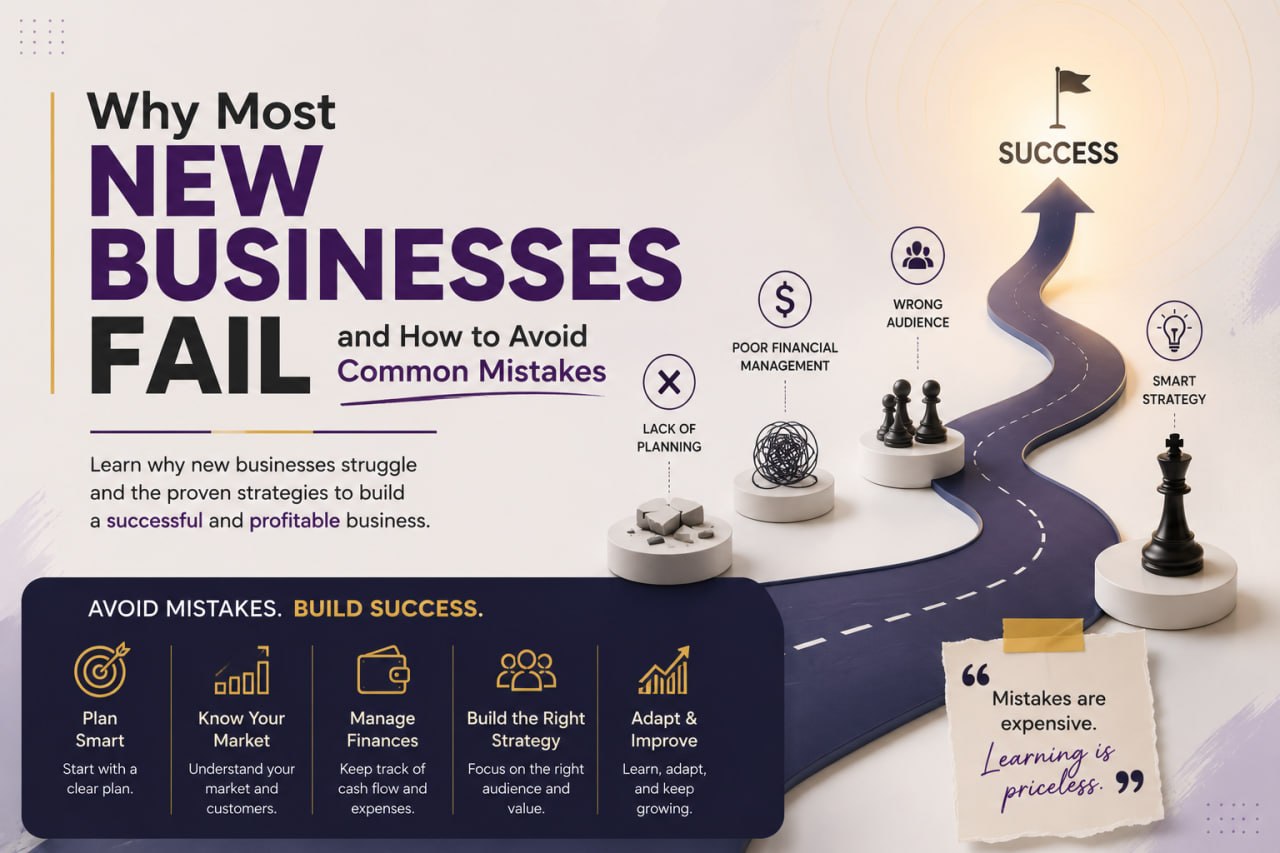
    Why Most New Businesses Fail and How to Avoid Common Mistakes

    Starting a business is exciting. But the statistics are sobering: a large percentage of new businesses don’t make it past their first few years. If you’re building a business right now, understanding common business startup mistakes isn’t about fear it’s about awareness. Knowing what typically derails new entrepreneurs gives you the power to avoid the same traps.

    I’ve coached many women entrepreneurs at the very beginning of their journey, and the businesses that last share a common thread: they’re built with clear positioning, sound pricing, and a realistic plan not just passion alone.

    This guide breaks down the most common business startup mistakes, practical entrepreneurship tips to avoid them, and what actually drives small business success in the long run.

    1. Why Do Most New Businesses Fail?

    Business startup mistakes are rarely about a single bad decision. They usually stem from a combination of unclear positioning, poor financial planning, and inconsistent execution over time.

    According to U.S. Bureau of Labor Statistics data often cited in small business research, roughly half of new businesses close within their first five years. The good news: most of the underlying causes are predictable and preventable.

    Top Root Causes of Business Failure

    •    No clear market need or validated demand

    •    Running out of cash due to poor financial planning

    •    Underpricing services or products

    •    Inconsistent or absent marketing strategy

    •    Trying to serve everyone instead of a defined niche

    2. The Top Business Startup Mistakes to Avoid

    Mistake 1: Skipping Market Validation

    Launching before confirming that real people want and will pay for your offer is one of the most common business startup mistakes.

    Mistake 2: Underpricing From the Start

    New entrepreneurs often price too low out of fear, which limits profitability and makes it harder to raise prices later.

    Mistake 3: No Clear Niche or Positioning

    Trying to appeal to everyone dilutes your message and makes marketing far less effective.

    Mistake 4: Poor Cash Flow Management

    Not tracking expenses, income, and runway closely enough leads to preventable financial strain.

    Mistake 5: Inconsistent Marketing

    Sporadic visibility efforts fail to build the trust needed for consistent client or customer flow.

    3. Failure Causes: Product-Focused vs. Market-Focused Businesses

    Approach Product-Focused Market-Focused
    Starting point “I have a great idea” “This is a validated need”
    Risk level Higher assumes demand Lower demand is confirmed first
    Marketing Explains the product Speaks directly to the problem
    Outcome Higher failure risk Stronger small business success odds

    Businesses built around a validated market need consistently show stronger long-term small business success than those built purely around a product idea.

    4. The 5-Step Framework to Build a Resilient Business

    Step 1: Validate Before You Build

    Talk to potential customers, run small tests, and confirm real demand before investing heavily in your offer.

    Step 2: Price for Profitability From Day One

    Build pricing around sustainable margins, not just what feels comfortable to charge as a beginner.

    Step 3: Define a Clear Niche

    Choose a specific audience and problem to solve first. You can expand later, but clarity accelerates early traction.

    Step 4: Build a Simple Financial System

    Track income, expenses, and cash flow monthly, even if your business is small. Awareness prevents avoidable crises.

    Step 5: Commit to Consistent Marketing

    Choose one marketing channel and show up reliably, rather than experimenting sporadically across many platforms.

    5. Entrepreneurship Tips for the First Year

    1.   Set realistic revenue goals based on validated demand, not hope

    2.   Build a simple 90-day plan instead of an overwhelming 5-year strategy

    3.   Track key metrics monthly: leads, conversions, revenue, expenses

    4.   Get support through mentorship or coaching early, not after struggling for years

    5.   Reinvest in visibility and positioning before adding unnecessary tools or software

    6. What Actually Drives Small Business Success

    Success Factors Backed by Research and Experience

    •    Clear positioning that speaks to a specific audience

    •    Sustainable pricing that supports profit, not just survival

    •    Consistent, focused marketing over time

    •    Strong cash flow awareness and planning

    •    Willingness to adapt based on real client feedback

    7. Common Mindset Mistakes New Entrepreneurs Make

    •    Waiting for perfect conditions before starting or launching

    •    Comparing early-stage progress to established competitors

    •    Avoiding visibility out of fear of judgment

    •    Treating pricing objections as personal rejection

    •    Trying to do everything alone instead of seeking guidance

    8. Myth vs. Fact: Business Failure Edition

    Myth Fact
    Businesses fail mainly because of bad ideas. Most failures stem from poor execution, pricing, and cash flow, not the idea itself.
    You need a large amount of funding to succeed. Many profitable small businesses launch lean and grow through validated demand.
    Passion alone determines success. Passion supports resilience, but strategy and positioning determine sustainability.
    Failure means you’re not cut out for entrepreneurship. Failure often reflects fixable, predictable business mistakes, not personal capability.

    9. Expert Tips for Long-Term Business Resilience

    •    Revisit your niche and pricing every 6–12 months as your business matures

    •    Build financial buffers before scaling spending or hiring

    •    Treat early customer feedback as data, not criticism

    •    Invest in confidence and strategic guidance, not just tactics

    Inside my coaching programs, I help new women entrepreneurs avoid these common business startup mistakes by building strategic positioning, sustainable pricing, and consistent marketing systems from the start.

    Related Reading on This Site

    See the amethyst business solutions coaching page, the business strategy services page, and the client success stories page for real examples of entrepreneurs building resilient businesses.

    Frequently Asked Questions

    What are the most common business startup mistakes?

    The most common mistakes include skipping market validation, underpricing, unclear niche positioning, poor cash flow management, and inconsistent marketing.

    Why do most new businesses fail in the first few years?

    Most failures result from a combination of unclear positioning, financial mismanagement, and lack of consistent marketing, rather than a single cause.

    How can I validate my business idea before launching?

    Talk directly to potential customers, offer a small test version of your product or service, and confirm people are willing to pay before scaling.

    Is underpricing really a major cause of business failure?

    Yes. Underpricing limits profitability, creates burnout, and makes it harder to reinvest in growth.

    What entrepreneurship tips matter most in the first year?

    Focus on validated demand, sustainable pricing, consistent marketing, and tracking key financial metrics monthly.

    How important is niche positioning for small business success?

    Very important. A clear niche makes marketing more effective and helps build trust faster with the right audience.

    Can a good business idea fail due to poor execution?

    Yes. Many failures come from weak execution, pricing, or marketing rather than a flawed idea itself.

    How do I manage cash flow as a new entrepreneur?

    Track income and expenses monthly, build a financial buffer, and avoid overspending before revenue is consistent.

    Does passion guarantee business success?

    No. Passion supports resilience, but strategic positioning, pricing, and marketing are what drive sustainable success.

    When should I get coaching or mentorship as a new entrepreneur?

    Early. Getting strategic guidance from the start helps you avoid common, costly mistakes rather than correcting them after years of struggle.

    Key Takeaways

    •    Most business startup mistakes come from unclear positioning, weak pricing, and inconsistent marketing not lack of effort.

    •    Validating demand before launching significantly reduces the risk of failure.

    •    Sustainable pricing from day one supports long-term profitability.

    •    Consistent, focused marketing outperforms sporadic effort across many platforms.

    •    Small business success depends more on strategy and execution than on passion alone.

    •    Getting coaching or mentorship early helps new entrepreneurs avoid preventable, costly mistakes.

    Final Thoughts

    Most new businesses don’t fail because the founder lacked passion or effort. They fail because of predictable, avoidable business startup mistakes: unclear positioning, underpricing, weak cash flow management, and inconsistent marketing. When you build your business with validated demand, sustainable pricing, and a consistent visibility strategy, you dramatically improve your odds of lasting small business success.

    Ready to Build a Business That Lasts?

    If you’re serious about avoiding common business startup mistakes and building a business with real staying power, I can help. Inside my coaching programs, we work together on positioning, pricing, and marketing strategy so your business is built on a strong, sustainable foundation from the start.

    Visit https://amethystbusinesssolutions.com/ to book a discovery call and start building your business the smart way.
  • Client Attraction Strategies That Actually Work for New Entrepreneurs

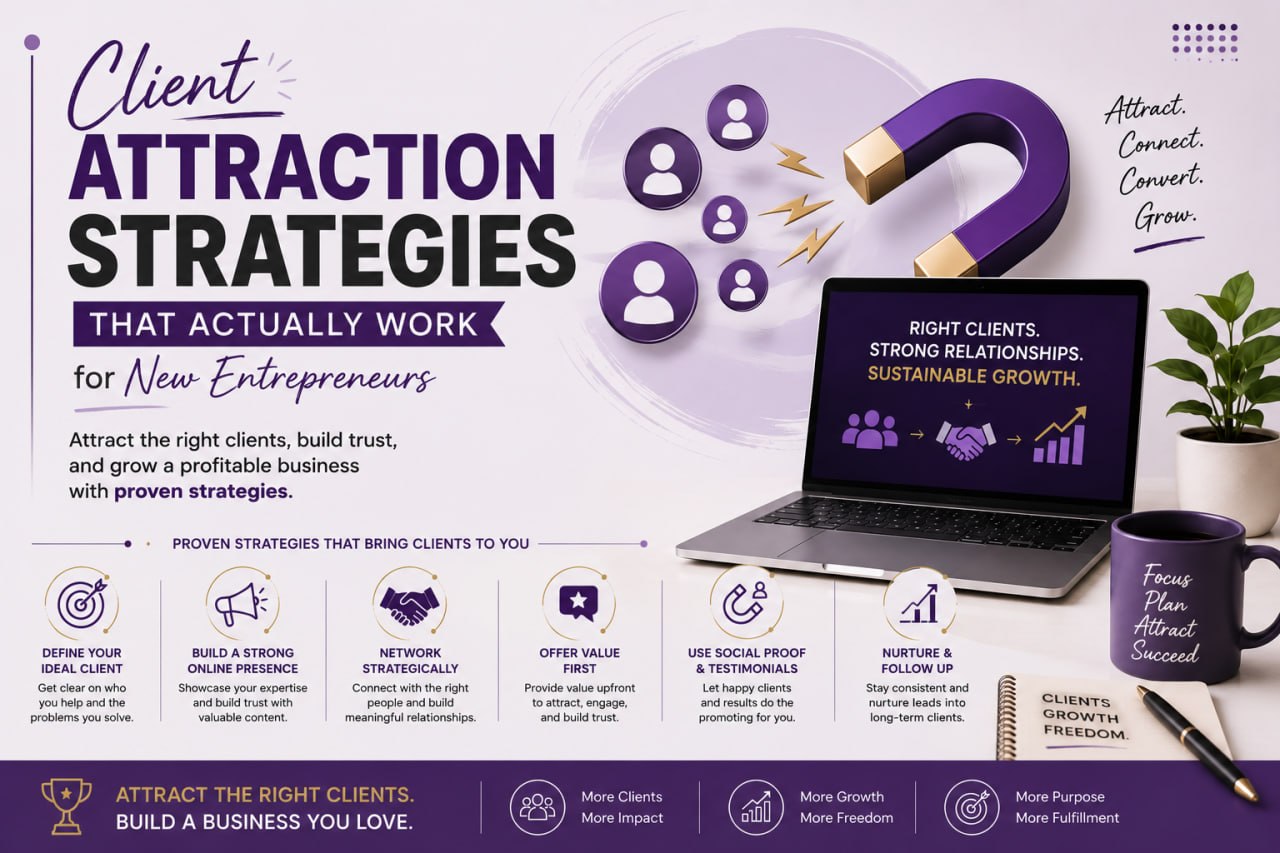
    Client Attraction Strategies That Actually Work for New Entrepreneurs

    When you’re just starting out, the question that keeps you up at night usually isn’t “how do I deliver great work?” It’s “how do I actually get clients?” If you’ve tried posting randomly, waiting for referrals, or hoping the right person finds you, you already know that hope is not a strategy. Effective client attraction strategies require intention, consistency, and a clear system not luck.

    I’ve worked with dozens of new women entrepreneurs who had real skill but no steady stream of clients. The turning point was never a new logo or a fancier website. It was building a repeatable system to attract, nurture, and convert the right people into paying clients.

    This guide walks you through proven client attraction strategies, how to get coaching clients specifically, and how to set up lead generation for service businesses that doesn’t rely on chasing people or feeling salesy.

    1. What Are Client Attraction Strategies?

    Client attraction strategies are the intentional methods a business uses to consistently draw in ideal clients, rather than waiting passively for referrals or inquiries. They combine positioning, visibility, and a clear conversion path so the right people find you, trust you, and take action.

    Core Components of Client Attraction

    •    Clear messaging that speaks directly to your ideal client’s problem

    •    Consistent visibility where your audience already spends time

    •    A lead generation system that captures interest before the sale

    •    A simple, low-friction path from “interested” to “booked”

    2. Why New Entrepreneurs Struggle to Get Clients

    Most new entrepreneurs don’t struggle because their offer is bad. They struggle because they’re relying on inconsistent, reactive tactics instead of a proven system.

    •    Posting on social media without a clear call to action

    •    Waiting for referrals instead of generating leads proactively

    •    Talking about services instead of the client’s transformation

    •    No consistent way to capture and follow up with interested leads

    3. Outbound vs. Inbound Client Attraction: What’s the Difference?

    Understanding the difference between outbound and inbound client attraction strategies helps you choose the right mix for your stage of business.

    Aspect Outbound Attraction Inbound Attraction
    Approach You reach out directly to prospects Prospects come to you through content and visibility
    Speed Faster initial results Slower to build, more sustainable long term
    Examples Cold outreach, networking, referral asks Content marketing, SEO, social media, speaking
    Best for New businesses needing fast traction Established visibility and long-term lead generation

    Most new entrepreneurs need both: outbound efforts to generate early momentum, and inbound lead generation for service businesses to build sustainable growth over time.

    4. The 6-Step Client Attraction Framework

    Step 1: Clarify Your Ideal Client

    Define exactly who you serve, their biggest pain point, and the outcome they want most. Vague targeting produces vague results.

    Step 2: Craft a Clear, Compelling Offer

    State what you help clients achieve in simple, specific language. Avoid jargon that requires explanation.

    Step 3: Choose One Primary Visibility Channel

    Pick the platform where your ideal clients already spend time, and commit to consistent presence there before expanding.

    Step 4: Build a Lead Capture System

    Create a simple way to capture interested prospects: a newsletter, a free resource, or a discovery call booking link.

    Step 5: Nurture Leads With Value

    Follow up consistently with helpful content, insights, or check-ins so you stay top of mind before someone is ready to buy.

    Step 6: Create a Simple Conversion Path

    Make it easy for interested leads to take the next step, whether that’s booking a call, replying to an email, or filling out a form.

    5. How to Get Coaching Clients Specifically

    Coaches often struggle because their value is intangible and harder to demonstrate upfront. Here’s how to get coaching clients consistently:

    1.   Offer a low-commitment entry point, like a free discovery call or short workshop

    2.   Share client transformation stories, not just tips and advice

    3.   Use social proof and testimonials prominently in your marketing

    4.   Host live conversations (webinars, lives, Q&As) to build trust quickly

    5.   Follow up with warm leads instead of assuming they’ll come back on their own

    6. Lead Generation for Service Businesses: Practical Tactics

    Organic Tactics

    •    Publish consistent, value-driven content on one main platform

    •    Optimize your website and bio for your ideal client’s search terms

    •    Build an email list with a relevant free resource

    •    Ask for referrals proactively, not passively

    Relationship-Based Tactics

    •    Partner with complementary entrepreneurs for referrals

    •    Attend or speak at niche-relevant events and communities

    •    Offer strategic guest content or podcast interviews

    7. Common Client Attraction Mistakes to Avoid

    •    Trying every platform at once instead of mastering one

    •    Talking only about services instead of client outcomes

    •    No clear next step or call to action in your content

    •    Inconsistent posting or outreach schedule

    •    Never following up with interested leads

    •    Underestimating the power of direct, personal outreach

    8. Myth vs. Fact: Client Attraction Edition

    Myth Fact
    You need to be on every social platform. Consistency on one primary platform outperforms scattered effort across many.
    Clients will find you if your work is good enough. Visibility and a clear conversion path are required, regardless of skill level.
    Cold outreach doesn’t work anymore. Thoughtful, personalized outreach still generates real client relationships.
    Lead generation requires a big budget. Many effective lead generation for service businesses tactics are organic and low-cost.

    9. Expert Tips for Consistent Client Flow

    •    Track where your best clients actually come from, and double down there

    •    Give your audience a clear, specific next step in every piece of content

    •    Don’t wait for perfect messaging to start refine as you go

    •    Pair visibility efforts with genuine relationship-building, not just broadcasting

    Inside my coaching programs, I help women entrepreneurs build client attraction strategies that align with their strengths, so growing a client base feels sustainable, not exhausting.

    Related Reading on This Site

    See the amethyst business solutions coaching page, the personal branding services page, and the client success stories page for real examples of these strategies in action.

    Frequently Asked Questions

    What are the best client attraction strategies for beginners?

    Start with clarifying your ideal client, choosing one visibility platform, and building a simple lead capture and follow-up system.

    How do I get coaching clients without a big following?

    Focus on relationship-based tactics like discovery calls, referrals, and warm outreach rather than relying only on audience size.

    What is lead generation for service businesses?

    It’s the process of attracting and capturing potential client interest through content, referrals, and outreach before converting them into paying clients.

    How long does it take to see results from client attraction strategies?

    Outbound efforts can produce leads within weeks, while inbound strategies like content and SEO typically take 3–6 months to build momentum.

    Should I focus on outbound or inbound strategies first?

    New entrepreneurs often benefit from starting with outbound outreach for early traction, then building inbound systems for long-term growth.

    How many social platforms should I use to attract clients?

    One primary platform, used consistently, typically outperforms spreading effort thin across several.

    What’s the biggest mistake in client attraction?

    Failing to follow up with interested leads is one of the most common and costly mistakes.

    Do I need paid ads to generate leads?

    No. Many effective lead generation tactics are organic, including referrals, content, and direct outreach.

    How do I know if my messaging is attracting the right clients?

    Track who is engaging and inquiring if it’s not your ideal client, revisit your positioning and messaging clarity.

    What role does follow-up play in client attraction?

    Consistent, value-driven follow-up is often what converts an interested lead into a paying client.

    Key Takeaways

    •    Client attraction strategies work best as a repeatable system, not random effort.

    •    A mix of outbound and inbound tactics gives new entrepreneurs both fast traction and sustainable growth.

    •    Getting coaching clients often depends more on trust-building and follow-up than audience size.

    •    Lead generation for service businesses doesn’t require a big budget consistency and clarity matter most.

    •    Following up with interested leads is one of the highest-leverage, most overlooked steps.

    •    Choosing one primary channel and mastering it beats spreading effort across many platforms.

    Final Thoughts

    Attracting clients consistently isn’t about luck, and it isn’t about being everywhere at once. It’s about building a clear, repeatable system: knowing exactly who you serve, showing up consistently where they are, and making it easy for them to say yes. When you combine strong client attraction strategies with genuine follow-through, growing your business stops feeling unpredictable and starts feeling sustainable.

    Ready to Build a Client Attraction System That Works?

    If you’re ready to stop guessing and start attracting clients consistently, I can help you build a client attraction strategy tailored to your strengths and your business. Inside my coaching programs, we work together on positioning, lead generation, and the confidence to convert conversations into clients.

    Visit https://amethystbusinesssolutions.com to book a discovery call and start building a steady stream of the right clients.