Day: 20 July 2026

  • How to Get Your First 10 Clients Without Paid Advertising 

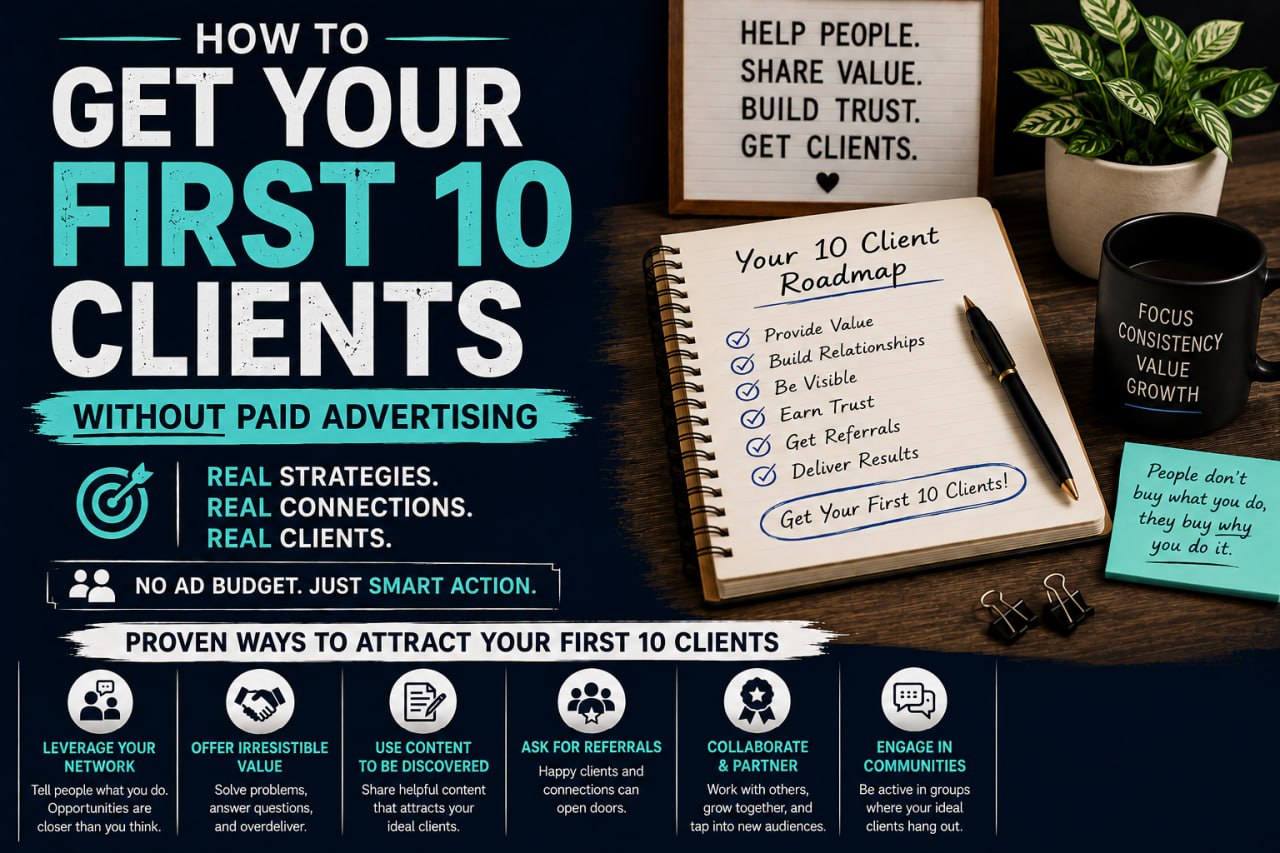
    How to Get Your First 10 Clients Without Paid Advertising 

    You don’t need a big ad budget to land your first clients. You need a clear process. Most new service providers assume paid ads are the fastest path to revenue, but for first-time entrepreneurs, organic client acquisition is usually faster, cheaper, and builds a stronger foundation, because it forces you to get specific about who you help and why.

    Here’s exactly how to get your first clients using strategies that cost time and consistency, not ad spend.

    Why Organic Client Acquisition Works Better Early On

    Paid ads can bring traffic before you’ve validated your offer, your pricing, or your message which means you can burn budget testing things organic methods would have taught you for free. Early on, organic client acquisition forces the muscle-building that every service business needs: clear positioning, real conversations, and word-of-mouth trust.

    Step 1: Get Painfully Specific About Who You Serve

    “Small business owners” is not a niche. “Solo consultants who are drowning in admin work and ready to hire their first assistant” is a niche. The more specific your ideal client, the easier every part of this process becomes, from messaging to outreach to referrals.

    Step 2: Turn Your Existing Network Into Your First Pipeline

    Your first clients are almost never strangers. They come from people who already trust you.

    •       List 30–50 people who know, like, or have worked with you before

    •       Reach out personally, not with a mass post, but a direct message

    •       Tell them specifically what you’re doing and who you help

    •       Ask directly: do they know anyone who fits, or need it themselves?

    This single step accounts for a large share of first clients for most new service businesses, precisely because trust is already built.

    Step 3: Show Up Where Your Ideal Clients Already Are

    Service business marketing without ad spend means meeting people where they already gather, instead of trying to build an audience from zero.

    •       Join 2–3 online communities or forums your ideal client frequents

    •       Answer questions genuinely before you ever mention your services

    •       Attend local or virtual networking events tied to your niche

    •       Guest on podcasts or contribute to newsletters your audience follows

    The goal isn’t visibility for its own sake — it’s becoming a familiar, helpful presence before you make any ask.

    Step 4: Publish Content That Demonstrates, Not Just Announces

    Content is one of the most sustainable organic client acquisition channels because it works while you’re not actively selling. The key is demonstrating your expertise rather than announcing it.

    1.      Share one specific, useful insight per post, not general motivation

    2.      Answer a real question your ideal client has asked you before

    3.      Show your process or a mini case study, even from early results

    4.      End with a soft, low-pressure invitation to reach out

    Consistency beats virality here. Ten thoughtful posts over ten weeks will outperform one viral post you can’t repeat.

    Step 5: Make Referrals Part of the Process, Not an Afterthought

    Referrals shouldn’t happen by accident. Build them into how you work:

    •       Ask happy clients directly: “Do you know one or two people who’d benefit from this?”

    •       Make it easy, give them exact language to pass along

    •       Follow up warmly instead of leaving it to chance

    •       Thank every referral publicly or personally to reinforce the behavior

    Step 6: Offer a Low-Risk Entry Point

    Your first clients are often more willing to try a smaller, lower-commitment offer than your full program or retainer. A short paid audit, a single strategy session, or a small starter package can convert warm leads faster while still building your portfolio and testimonials.

    What to Avoid When Getting Your First Clients

    •       Waiting for a “perfect” website before reaching out to anyone

    •       Posting generically instead of speaking to one specific person

    •       Undercharging out of fear instead of offering a smaller-scoped package

    •       Going silent after one outreach message instead of following up

    FAQs About Getting Your First Clients

    How long does it take to get your first clients organically?

    Most new service providers land their first few clients within 4–8 weeks when they combine direct outreach to their network with consistent visibility in relevant communities.

    Is organic client acquisition better than paid ads for beginners?

    For most first-time entrepreneurs, yes. Organic strategies cost time rather than money, and they validate your offer and messaging before you invest in paid promotion.

    What’s the fastest way to get my first client this week?

    Reach out personally to people in your existing network who fit your niche or know someone who does. Direct, personal outreach converts faster than any public post.

    Want a done-for-you client acquisition plan instead of piecing it together alone? Amethyst Business Solutions helps service providers build a repeatable path to their first clients as part of a complete business roadmap. Book your free 30-minute consultation at amethystbusinesssolutions.com.
  • The Ultimate Business Roadmap for First-Time Entrepreneurs

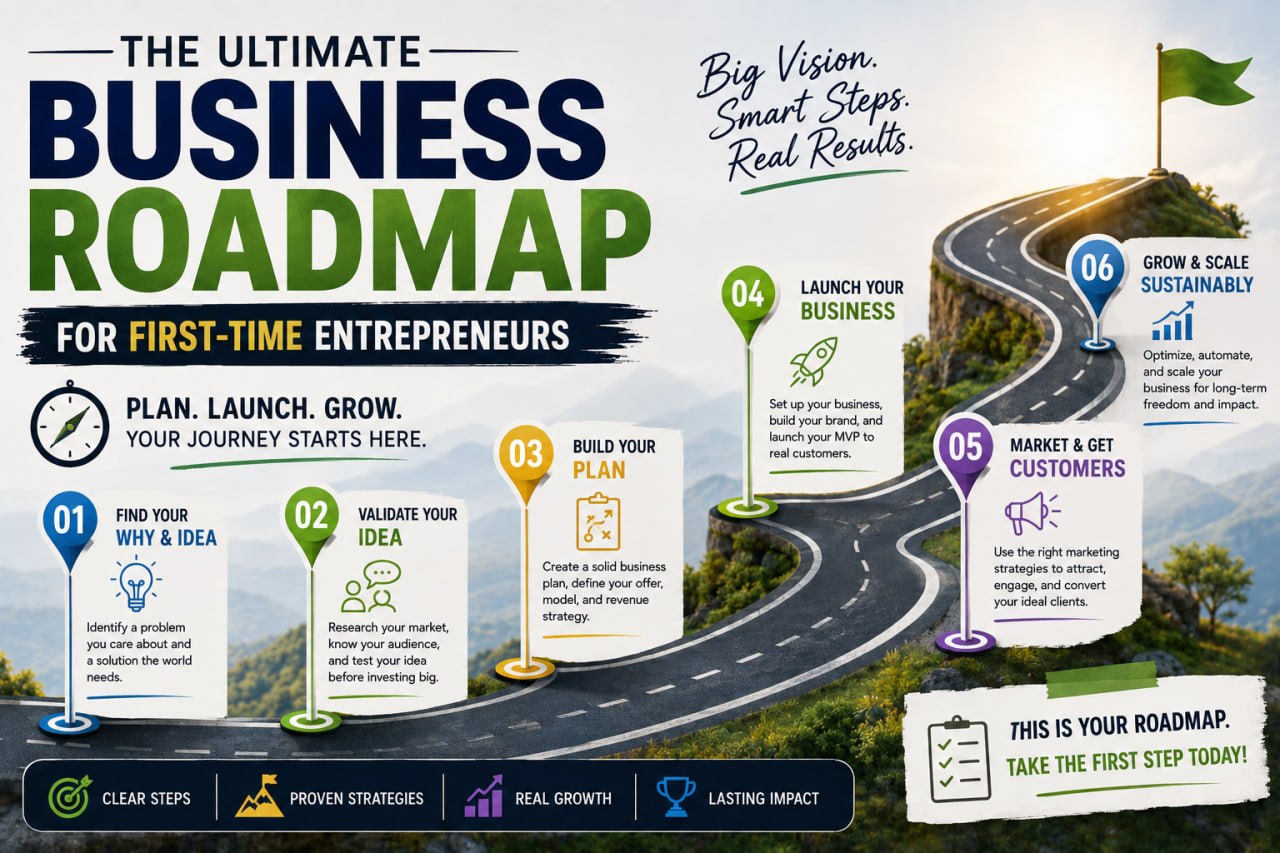
    The Ultimate Business Roadmap for First-Time Entrepreneurs

    Starting a business for the first time feels a lot like standing at the base of a mountain with no map. You know the summit exists. You just don’t know which trail gets you there without wasting months on false starts. That’s exactly why every first-time founder needs a business roadmap for beginners before they spend a single dollar on branding, tools, or ads.

    This guide breaks down a complete entrepreneur roadmap you can actually follow, step by step, whether you’re leaving a 9-to-5 or building a business on the side. No fluff, no jargon, just the startup business planning framework that turns “I have an idea” into “I have a business.”

    Why First-Time Entrepreneurs Need a Roadmap, Not Just Motivation

    Motivation gets you started. It doesn’t get you through month four when clients aren’t calling and the to-do list feels endless. A structured roadmap does what motivation can’t: it tells you what to do next, in what order, so you stop spinning your wheels on tasks that don’t move the needle.

    Most first-time entrepreneurs fail not because their idea was bad, but because they built in the wrong order — spending on a logo before validating the offer, or launching a website before defining who it’s actually for. A clear roadmap prevents that.

    The 5-Stage Business Roadmap for Beginners

    Think of this as your GPS for entrepreneurship. Each stage builds on the one before it, so resist the urge to skip ahead.

    Stage 1: Decide on Your Destination

    Before any planning happens, get radically clear on three things:

    •       What does success actually look like for you — income, freedom, impact?

    •       Who do you need to become to run this business well?

    •       What lifestyle are you building this business to support?

    Skipping this step is why so many entrepreneurs build a business they later resent. Destination clarity is the foundation every other stage rests on.

    Stage 2: Draw Your Personalized Business Map

    This is where startup business planning gets concrete. You need:

    •       A profitable product or service that solves a real, specific problem

    •       A defined niche or ideal client, not “everyone who might want this”

    •       A simple business model that shows how money actually moves in

    •       A one-page business plan you can revisit and revise monthly

    You don’t need a 40-page business plan. You need one page that’s specific enough to act on.

    Stage 3: Plan Your Route

    With your destination and map set, plan the strategies that get you there:

    •       Branding that reflects who you serve, not just what looks nice

    •       Pricing built on value delivered, not guesswork or competitor-copying

    •       A sales process you can repeat, not reinvent every time

    •       A marketing strategy matched to where your ideal clients actually spend time

    Stage 4: Hit the Road

    Implementation is where most entrepreneur roadmaps get abandoned, because this is the unglamorous middle. Here’s what belongs in this stage:

    1.      Set up your legal and financial business foundations

    2.      Build a simple, functional online presence, not a perfect one

    3.      Solve the inevitable technical hiccups without letting them stall you

    4.      Start building trust and community with your first audience

    5.      Create a repeatable day-to-day management rhythm

    Progress beats perfection at this stage, every time.

    Stage 5: Arrive at the Destination

    The final stretch is where a business starts to feel real and sustainable:

    •       Acquiring your first paying clients consistently

    •       Hiring your first support, when the time is right

    •       Understanding your numbers well enough to make confident decisions

    •       Mastering cash flow so growth doesn’t outpace stability

    Common Roadmap Mistakes First-Time Founders Make

    •       Building the website before validating the offer

    •       Chasing every marketing channel instead of mastering one

    •       Underpricing out of fear instead of pricing on value

    •       Waiting for “ready” instead of taking the next visible step

    As business coach Brian Tracy put it, a goal without a plan is just a dream. A roadmap is what turns the dream into a sequence of doable actions.

    How Long Should Your Roadmap Take?

    Most first-time entrepreneurs can move from idea to a live, functioning business in about 12 weeks when they follow a structured roadmap instead of building reactively. That timeline shortens dramatically with guidance, because you stop guessing which step comes next.

    FAQs About Building a Business Roadmap

    What is a business roadmap for beginners?

    It’s a step-by-step plan that sequences the decisions and actions a first-time entrepreneur needs, from clarifying their goal to acquiring their first clients so they build in the right order instead of guessing.

    Do I need a business roadmap if I already have a business idea?

    Yes. An idea tells you what you want to build. A roadmap tells you how to build it, in what order, and how to avoid the common mistakes that stall first-time founders.

    How is an entrepreneur roadmap different from a business plan?

    A business plan is a document. An entrepreneur roadmap is a process, it includes the plan, but also the sequencing, milestones, and implementation steps that turn that plan into a running business.

    Ready to stop guessing and start building? Amethyst Business Solutions helps first-time entrepreneurs create a personalized MAP and launch their business in as little as 12 weeks. Book your free 30-minute consultation at amethystbusinesssolutions.com.