Day: 22 July 2026

  • How to Build Confidence as a New Entrepreneur

    How to Build Confidence as a New Entrepreneur

    Starting a business puts you in unfamiliar territory constantly: pricing conversations, visibility, decision-making with incomplete information. If you feel less confident now than you expected to, you’re not failing — you’re simply new at this. Building real confidence for entrepreneurs is a skill, not a personality trait you either have or don’t.

    I’ve worked with many new entrepreneurs who had strong skills but weak self-trust, and it showed up everywhere: underpricing, hesitating to be visible, second-guessing every decision. The shift wasn’t about becoming a different person. It was building a genuine entrepreneurial mindset through consistent, small actions.

    This guide walks you through exactly how to build lasting confidence, and where business confidence coaching can accelerate the process.

    1. What Does Confidence Actually Look Like for Entrepreneurs?

    Confidence for entrepreneurs isn’t the absence of fear or doubt. It’s the ability to make decisions, take action, and show up consistently despite uncertainty. It’s demonstrated through behavior, not just internal feeling.

    Signs of Genuine Entrepreneurial Confidence

    •    Making decisions with available information, without endless delay

    •    Stating prices and boundaries clearly, without over-explaining

    •    Showing up visibly despite fear of judgment

    •    Treating setbacks as information rather than proof of failure

    2. Why New Entrepreneurs Struggle With Confidence

    New entrepreneurs face unfamiliar decisions daily, without the structure or feedback loops of traditional employment. This uncertainty naturally triggers self-doubt, especially without a track record yet to point to.

    Psychological research on self-efficacy, a concept studied extensively by psychologist Albert Bandura, shows that confidence is built primarily through direct experience and small successes, not through waiting to feel ready.

    3. Confidence-Waiting vs. Confidence-Building: A Comparison

    Approach Confidence-Waiting Confidence-Building
    Mindset “I’ll act once I feel confident” “Confidence builds as I take action”
    Typical result Prolonged hesitation and delay Steady growth through experience
    Response to fear Avoidance Action despite discomfort
    Long-term outcome Confidence rarely fully arrives Confidence compounds over time

    4. The 5-Step Framework to Build Entrepreneurial Confidence

    Step 1: Take Small, Consistent Actions Despite Fear

    Choose manageable actions that stretch your comfort zone slightly, rather than waiting for fear to disappear entirely.

    Step 2: Track Your Evidence of Capability

    Keep a written record of wins, client results, and completed challenges to reference when self-doubt creeps in.

    Step 3: Reframe Fear as a Normal Part of Growth

    Recognize that fear often signals meaningful growth, not danger, and can coexist with confident action.

    Step 4: Set Decision Deadlines

    Give yourself a clear timeframe to decide, preventing the spiral of endless overthinking.

    Step 5: Surround Yourself With Supportive Accountability

    Connect with mentors, peers, or a coach who reinforces confident action and provides perspective during setbacks.

    Framework Summary: Take Action → Track Evidence → Reframe Fear → Set Deadlines → Build Support.

    5. Daily Habits That Strengthen an Entrepreneurial Mindset

    1.   Start each day by naming one confident action you’ll take, regardless of mood

    2.   Replace self-critical thoughts with factual, objective language

    3.   Review your wins list weekly, especially during high-pressure periods

    4.   Practice stating your prices or boundaries out loud before real conversations

    5.   Celebrate consistent effort, not just major outcomes

    6. Common Confidence Mistakes New Entrepreneurs Make

    •    Waiting to feel fully ready before launching or taking action

    •    Comparing your early stage to someone further along in their journey

    •    Treating every rejection as a reflection of your worth

    •    Avoiding visibility out of fear of judgment or criticism

    •    Seeking constant external validation instead of building self-trust

    7. Myth vs. Fact: Entrepreneurial Confidence Edition

    Myth Fact
    You need confidence before you can take action. Confidence typically builds through taking action, not before it.
    Confident entrepreneurs never feel fear or doubt. Confidence means acting despite fear, not the absence of fear.
    Confidence is a fixed trait you either have or don’t. Entrepreneurial confidence is a skill that can be developed with practice.
    Struggling with confidence means you’re not cut out for business. Confidence struggles are common among new entrepreneurs and are fixable, not disqualifying.

    8. Expert Tips From Business Confidence Coaching

    •    Revisit your evidence of capability regularly, especially before high-stakes decisions

    •    Practice decisions out loud or in writing before acting on them

    •    Work with a coach or mentor to shorten the confidence-building learning curve

    •    Treat confidence-building as an ongoing practice, not a one-time fix

    Inside my coaching programs, I help new entrepreneurs build a genuine entrepreneurial mindset through structured business confidence coaching, so confidence becomes something you practice and strengthen, not something you wait to feel.

    Related Reading on This Site

    See the Amethyst Business Solutions coaching page, the confidence and mindset coaching page, and the client success stories page for real examples of this mindset shift in action.

    Frequently Asked Questions

    How do I build confidence as a brand-new entrepreneur?

    Take small, consistent actions despite fear, track evidence of your capability, and reframe fear as a normal part of growth rather than a stop sign.

    Is confidence something you’re born with or can you build it?

    Confidence for entrepreneurs is largely built through direct experience and small successes, not an innate, fixed trait.

    Why do I feel less confident since starting my business?

    New, unfamiliar decisions without an established track record naturally trigger more self-doubt than the structure of traditional employment.

    What is an entrepreneurial mindset?

    It’s a way of thinking that supports decisive action, resilience, and self-trust, even amid uncertainty and incomplete information.

    How long does it take to build real entrepreneurial confidence?

    Meaningful shifts often begin within weeks of consistent practice, with deeper confidence building over several months of sustained action.

    Does business confidence coaching actually help?

    Yes. Coaching provides structure, accountability, and outside perspective that often accelerates confidence-building compared to working alone.

    How do I stop comparing myself to more established entrepreneurs?

    Focus on tracking your own evidence of progress and capability rather than measuring yourself against someone further along in their journey.

    What should I do when fear stops me from taking action?

    Take the smallest possible version of the action despite the fear, since confidence often builds through action, not before it.

    Can confidence struggles mean I’m not cut out for entrepreneurship?

    No. Confidence struggles are common among new entrepreneurs and are a fixable skill gap, not evidence of unsuitability.

    What’s the fastest way to build entrepreneurial confidence?

    Taking small, consistent actions and tracking evidence of your wins tends to build confidence faster than waiting to feel ready.

    Key Takeaways

    •    Confidence for entrepreneurs is built through action, not achieved before taking it.

    •    New entrepreneurs commonly struggle with confidence due to unfamiliar decisions and lack of track record.

    •    Tracking evidence of past wins helps reinforce genuine self-trust.

    •    Reframing fear as normal, rather than dangerous, supports a stronger entrepreneurial mindset.

    •    Common mistakes include waiting to feel ready and avoiding visibility out of fear.

    •    Business confidence coaching can accelerate the process through structure and accountability.

    Final Thoughts

    Building confidence for entrepreneurs isn’t about eliminating fear or waiting until you feel completely ready. It’s about taking consistent, small actions, tracking your evidence of capability, and reframing fear as a normal part of growth. When you strengthen your entrepreneurial mindset through practice rather than waiting, confidence becomes something you can rely on, even in uncertain moments.

    Ready to Build Real, Lasting Confidence in Your Business?

    If self-doubt has been holding you back from pricing confidently, showing up visibly, or making bold decisions, I can help. Through business confidence coaching, we’ll build the entrepreneurial mindset and practical habits that let you lead your business with genuine self-trust.

    Visit amethystbusinesssolutions.com to book a discovery call and start building the confidence your business needs.
  • The Best Marketing Strategies for Service-Based Businesses in 2026

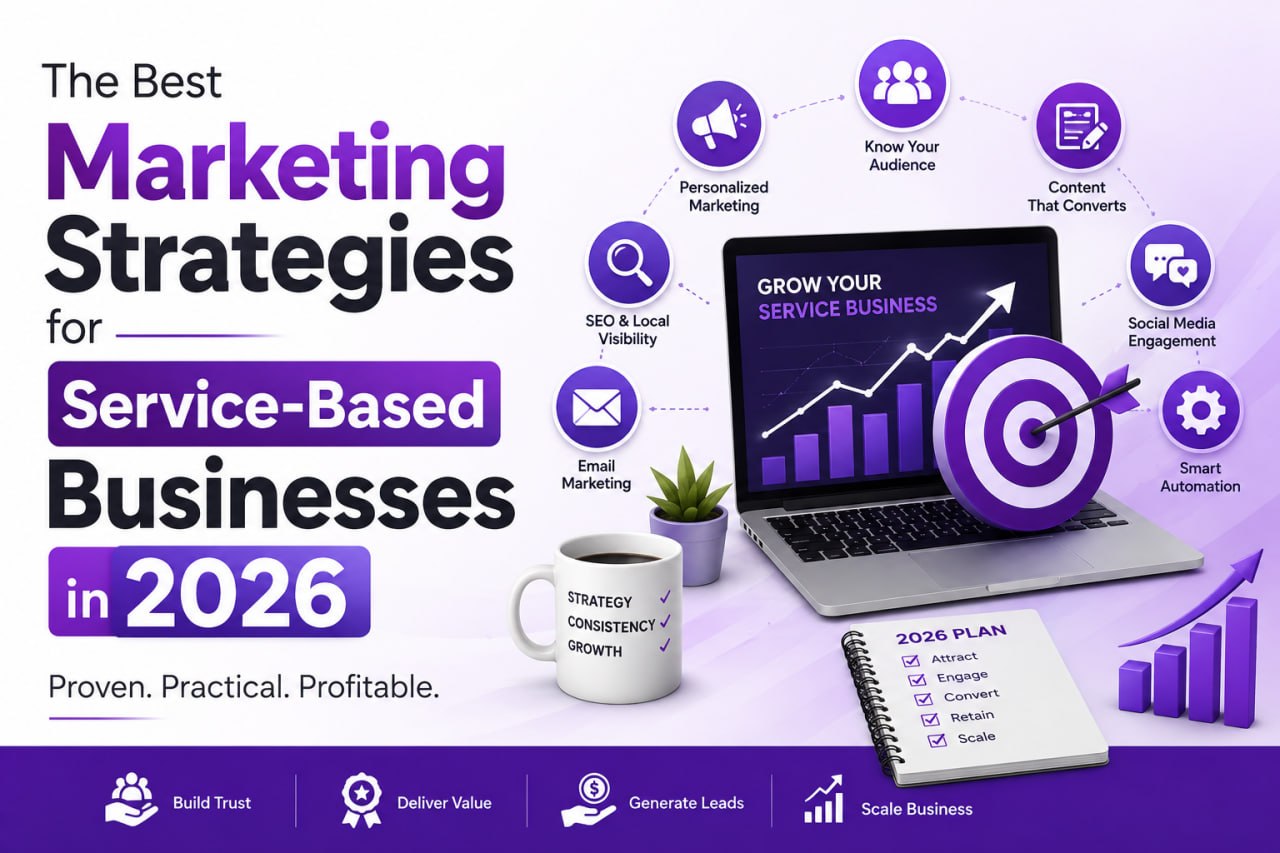
    The Best Marketing Strategies for Service-Based Businesses in 2026

    Marketing has changed fast. Between AI search tools, shifting social platforms, and shrinking attention spans, what worked a few years ago doesn’t always work now. If you’re wondering which marketing strategies for service businesses actually still work in 2026, you’re asking a smart, necessary question.

    I’ve helped many service-based entrepreneurs cut through the noise and focus on what actually drives client acquisition, instead of chasing every new tactic that trends online.

    This guide breaks down the service business marketing strategies worth your time this year, and how to build a client acquisition strategy that doesn’t require constant reinvention.

    1. How Service Business Marketing Has Changed

    Service business marketing in 2026 reflects a few major shifts: AI-powered search tools now influence how people discover experts, attention is more fragmented across platforms, and trust-building has become even more central to conversion.

    Key Shifts Shaping 2026 Marketing

    •    Growth of AI search assistants influencing discovery and recommendations

    •    Increased skepticism toward overly polished or generic marketing

    •    Continued importance of authentic, relationship-based visibility

    •    Search engines rewarding clear, well-structured, helpful content

    2. Why Some Strategies Still Work While Others Fade

    Strategies rooted in genuine trust and clear value tend to remain effective across changing platforms and algorithms. Tactics that rely purely on gaming a specific platform’s algorithm tend to fade quickly as those platforms evolve.

    This is why a client acquisition strategy built on real relationships and clear positioning consistently outperforms short-term platform hacks over time.

    3. Organic vs. Paid Marketing in 2026: A Comparison

    Aspect Organic Marketing Paid Marketing
    Cost Time investment, lower direct cost Ongoing budget required
    Trust building Builds gradually through consistency Requires repeated exposure to build trust
    Longevity Compounds over time (SEO, content) Stops generating leads when spend stops
    Best for Service businesses building authority Businesses with proven offers ready to scale

    For most service businesses, a blended approach works best: organic strategies for sustainable authority, with paid options layered in once messaging and offers are proven.

    4. The 6-Step Modern Client Acquisition Strategy

    Step 1: Clarify Your Positioning for Search and Humans Alike

    Write clear, specific messaging that both potential clients and AI search tools can easily understand and summarize.

    Step 2: Choose One or Two Core Channels

    Focus your energy on the platforms where your ideal clients are most active, rather than spreading thin.

    Step 3: Publish Consistently Valuable Content

    Share insights that genuinely help your audience, not just promotional messaging.

    Step 4: Build an Email or Direct Contact List

    Own a direct line of communication with your audience that isn’t dependent on any single platform’s algorithm.

    Step 5: Strengthen Relationship-Based Outreach

    Combine content marketing with direct outreach, referrals, and partnerships for faster, more reliable results.

    Step 6: Track and Adjust Based on Real Data

    Review what’s actually generating leads and clients each quarter, and adjust your effort accordingly.

    Framework Summary: Clarify Positioning → Choose Channels → Publish Consistently → Build a List → Strengthen Outreach → Track and Adjust.

    5. Marketing Channels Worth Prioritizing This Year

    1.   LinkedIn and niche professional communities for B2B service businesses

    2.   Instagram or short-form video for consumer-facing service businesses

    3.   Email marketing for consistent, algorithm-independent relationship building

    4.   SEO-optimized website content for long-term organic visibility

    5.   Podcasts, guest content, and speaking for authority-building

    6. Getting Found by AI Search Tools and Assistants

    How to Optimize for AI-Driven Discovery

    •    Write clear, well-structured content that directly answers common questions

    •    Use descriptive headings and simple language that summarizes easily

    •    Keep your website and bios consistent and factually accurate across platforms

    •    Publish original insights and case studies, not just generic advice

    As AI search tools increasingly summarize and recommend experts, clarity and consistency in your service business marketing matter more than ever.

    7. Common Marketing Mistakes to Avoid in 2026

    •    Chasing every new platform or trend instead of mastering core channels

    •    Relying entirely on one platform’s algorithm for visibility

    •    Publishing generic content instead of original insights and experience

    •    Ignoring email or direct contact list building

    •    Neglecting clear, structured website content that search tools can easily summarize

    8. Myth vs. Fact: 2026 Marketing Edition

    Myth Fact
    You need to be active on every platform to succeed. Focusing on one or two core channels consistently outperforms scattered effort.
    AI search tools have replaced the need for good content. AI search tools reward clear, well-structured, genuinely helpful content even more.
    Paid ads are required to compete in 2026. Many service businesses still grow successfully through organic, relationship-based marketing.
    Marketing strategies need constant reinvention. Core strategies rooted in trust and clarity remain effective even as platforms change.

    9. Expert Tips for Staying Adaptable

    •    Review your channel performance quarterly, not just once a year

    •    Repurpose core content across formats instead of constantly creating from scratch

    •    Stay focused on clear, helpful content rather than chasing algorithm trends

    •    Build owned assets, like an email list, that don’t depend on any single platform

    Inside my coaching programs, I help service-based entrepreneurs build a client acquisition strategy that stays effective even as platforms and algorithms continue to shift.

    Related Reading on This Site

    See the Amethyst Business Solutions coaching page, the business strategy services page, and the client success stories page for real examples of service business marketing in action.

    Frequently Asked Questions

    What are the best marketing strategies for service businesses in 2026?

    The most effective strategies combine consistent organic content, relationship-based outreach, and clear, search-friendly positioning.

    Do I still need paid advertising to grow in 2026?

    Not necessarily. Many service businesses grow successfully through organic marketing, though paid ads can accelerate growth once messaging is proven.

    How do AI search tools affect service business marketing?

    AI search tools increasingly summarize and recommend experts based on clear, well-structured, helpful content, making clarity more important than ever.

    Which social platform is best for service business marketing?

    The best platform depends on where your ideal clients spend time; B2B businesses often favor LinkedIn, while consumer businesses may favor visual platforms.

    How important is email marketing in 2026?

    Very important. Email remains one of the few owned channels that isn’t dependent on a platform’s changing algorithm.

    What’s the biggest marketing mistake service businesses make?

    Spreading effort across too many platforms instead of consistently mastering one or two core channels.

    How often should I review my client acquisition strategy?

    Review your strategy and channel performance quarterly to stay aligned with what’s actually generating leads and clients.

    Is content marketing still effective for service businesses?

    Yes. Consistent, valuable content continues to build trust and supports both search engine and AI-search visibility.

    How do I optimize my website for AI search tools?

    Use clear headings, direct answers to common questions, and consistent, factual information across your website and profiles.

    Should I focus more on organic or paid marketing as a new service business?

    New service businesses often benefit from starting with organic marketing to build trust before investing in paid strategies.

    Key Takeaways

    •    Effective marketing strategies for service businesses in 2026 combine organic content, relationships, and search visibility.

    •    AI search tools reward clear, structured, genuinely helpful content more than ever.

    •    Owned channels like email remain essential, regardless of platform algorithm changes.

    •    Focusing on one or two core channels outperforms spreading effort too thin.

    •    A strong client acquisition strategy blends organic and, eventually, paid tactics.

    •    Reviewing and adjusting your strategy quarterly keeps your marketing effective as trends shift.

    Final Thoughts

    Marketing in 2026 rewards clarity, consistency, and genuine value more than chasing every new trend. The most effective marketing strategies for service businesses combine organic content, relationship-based outreach, and search-friendly positioning that works for both human readers and AI search tools. When you build a client acquisition strategy around trust rather than algorithm tricks, your marketing stays effective even as platforms continue to change.

    Ready to Build a Marketing Strategy That Actually Works?

    If you’re tired of chasing trends and ready for a client acquisition strategy that actually holds up over time, I can help. Inside my coaching programs, we work together on positioning, content, and outreach so your service business marketing generates real, consistent results.

    Visit amethystbusinesssolutions.com to book a discovery call and start building a marketing strategy that lasts.