Day: 28 July 2026

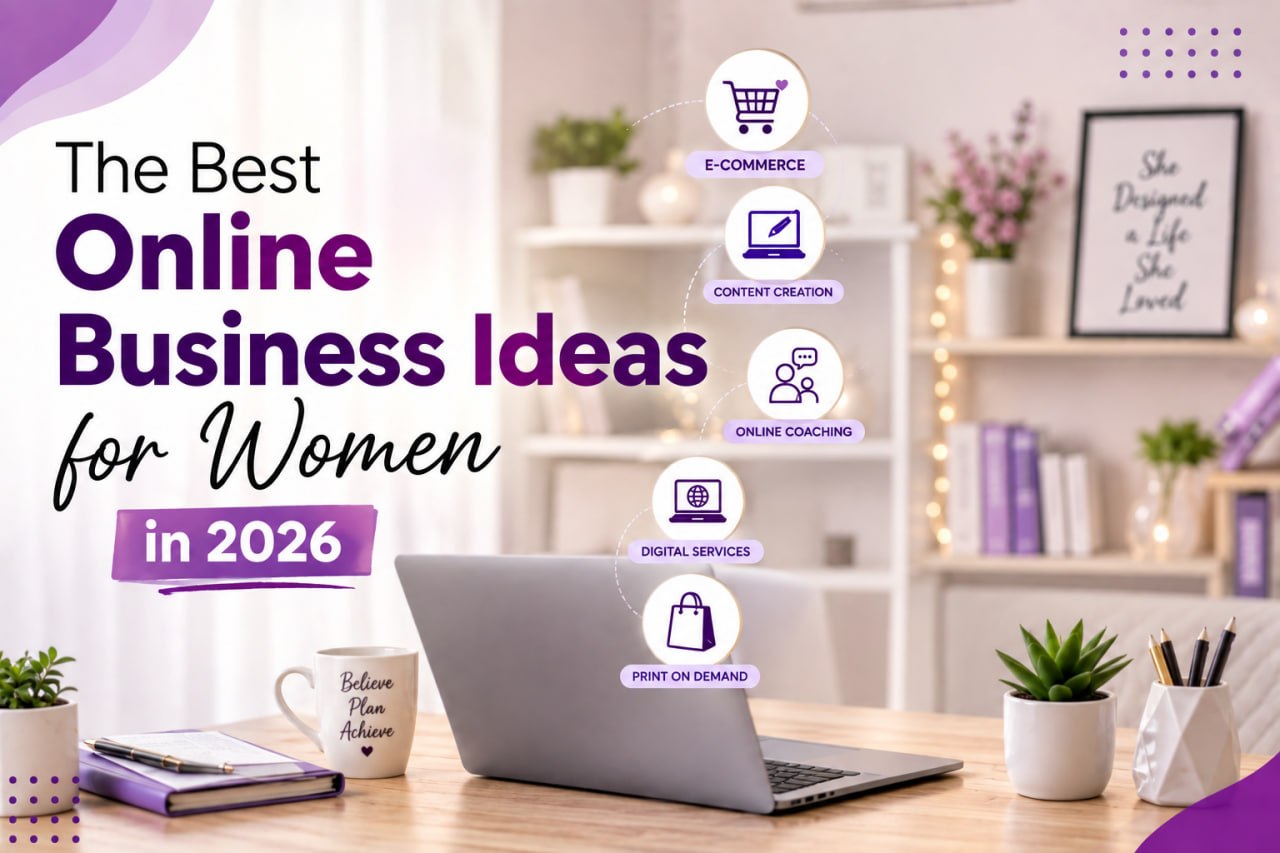
  • The Best Online Business Ideas for Women in 2026

    The Best Online Business Ideas for Women in 2026

    If you’ve been searching for online business ideas for women, you’re in good company. Women-owned businesses have become one of the fastest-growing segments of the U.S. economy with millions of women-led companies now generating trillions of dollars in combined annual revenue. The barriers that once made starting a business difficult office space, large capital, a team have largely disappeared for online, service- and knowledge-based businesses.

    The challenge now isn’t access. It’s choice. With so many profitable business ideas available, the real question is which one fits your skills, your schedule, and your financial goals. This guide breaks down the best women-owned business ideas for 2026, organized by how quickly they typically generate income and how much they cost to start.

    It’s worth saying upfront: there is no single “best” idea that works for every woman reading this. The right choice depends on the skills you already have, how much time you can realistically dedicate each week, and what kind of income timeline you’re working with. Use this guide as a starting map, not a ranked list to follow in order.

    What Makes a Business Idea Right for You in 2026

    Before diving into the list, it helps to filter ideas through three questions:

    1.      Do I already have relevant skills or experience, or would I need to build them from scratch?

    2.      How much time and money can I realistically invest before I need to see income?

    3.      Does this business model fit the life I actually want — flexible hours, remote work, room to scale, or something else?

    The “best” business idea isn’t the most popular one on a list. It’s the one that matches your resources, your strengths, and your goals right now.

    Service-Based Business Ideas (Fastest Path to Income)

    Service-based businesses tend to have the lowest startup costs and the fastest path to your first paying client, because you’re monetizing skills you likely already have.

    Virtual Assistant Services

    Virtual assistants support business owners with scheduling, email management, customer service, and administrative tasks remotely. It’s one of the most accessible online business ideas for women because it requires minimal upfront investment just organizational skill and reliable communication.

    Freelance Writing and Content Creation

    Businesses constantly need blog posts, website copy, email newsletters, and social content. Freelance writing scales from part-time side income to full-time agency work, and specializing in a niche (finance, health, tech) typically commands higher rates than generalist writing.

    Social Media Management

    Many small businesses know they need a social media presence but don’t have the time or expertise to manage it well. Social media managers handle content calendars, posting, engagement, and basic strategy — often for multiple clients at once, which allows the business to scale steadily.

    Bookkeeping and Virtual Financial Services

    Bookkeeping is in consistent demand because every business needs it, regardless of economic conditions. It requires more specific training than some other service businesses, but that specialization also supports higher, more stable pricing.

    Online Coaching and Consulting

    If you have expertise in a specific area — career transitions, marketing, wellness, leadership — coaching and consulting let you monetize your knowledge directly. This model has some of the highest margins of any business on this list, since your primary cost is your time.

    Digital Product Business Ideas (Scalable, Lower Time Investment Over Time)

    Digital products take more upfront work to create but don’t require you to trade hours for dollars once they’re built.

    Online Courses

    Teaching what you already know through video lessons, workbooks, or guided programs — turns your expertise into a repeatable, scalable product. Course platforms have made this more accessible than ever, requiring no technical background to launch.

    E-books and Digital Guides

    Writing and selling e-books, templates, or planners is a low-cost way to generate income from expertise or creative work, particularly when paired with an engaged audience or email list.

    Printables and Templates

    Planners, worksheets, and templates sold on marketplaces or your own site are a popular entry point into digital products, since they require design skills rather than significant capital.

    Membership Sites and Communities

    Recurring revenue from a paid community or membership site offering ongoing content, coaching, or resources builds more predictable income than one-time product sales, though it typically requires an existing audience or strong early marketing.

    E-Commerce Business Ideas (Product-Based, More Scalable)

    Print-on-Demand and Handmade Goods

    Selling custom-designed or handmade products through platforms like Etsy or Shopify lets you build a product-based brand without holding significant inventory, particularly with print-on-demand models where items are produced only after they sell.

    Dropshipping

    Dropshipping allows you to sell products online without managing inventory or fulfillment yourself, since a third-party supplier ships directly to the customer. It’s one of the lowest-barrier ways to start an e-commerce business, though margins tend to be thinner than other models.

    Curated Product Lines

    Building a focused product line beauty, wellness, home goods around a specific audience or aesthetic allows for stronger branding and customer loyalty than a broad, unfocused catalog.

    Content and Personal Brand Business Ideas

    Blogging with Affiliate Marketing

    Blogging remains a viable long-term business model, particularly when monetized through affiliate marketing, sponsored content, and ads once traffic and audience trust are established.

    Content Creation and Personal Branding

    Building a personal brand around your expertise or perspective — through video, social platforms, or newsletters — has become one of the fastest-growing paths to entrepreneurship, often leading to multiple income streams: sponsorships, digital products, and consulting.

    Podcasting

    A podcast focused on a specific niche or audience can build authority and community quickly, eventually supporting sponsorships, coaching offers, or product sales.

    Specialized and Emerging Business Ideas

    Data and AI-Adjacent Consulting

    As more small businesses adopt AI tools and generate more data than ever, consultants who can help them make sense of it — from basic analytics to responsible AI adoption — are increasingly in demand.

    Cybersecurity and Digital Safety Consulting

    With more business operating online, cybersecurity awareness has become essential even for very small companies, creating an opening for consultants who can make digital safety practical and accessible.

    E-Design and Online Interior Design

    Remote interior design services, where consultations and mood boards are delivered digitally rather than in person, have grown significantly as a lower-cost alternative to traditional design services.

    How to Choose the Right Idea From This List

    With so many profitable business ideas available, narrowing down to one can feel harder than the list makes it look. A few questions can help:

    •        What would you do even if it took longer than expected to become profitable? Sustainable motivation matters more than trends.

    •        What skill do people already come to you for? Existing expertise shortens your path to your first paying client significantly.

    •        How much financial runway do you have? Service businesses tend to generate income faster; digital products and content businesses often take longer to build momentum but can scale further.

    •        What does your ideal week actually look like? Some models (coaching, consulting) involve more client interaction; others (digital products, e-commerce) run more independently once built.

    There’s no universally “best” answer only the best fit for your specific skills, resources, and goals. It’s also worth remembering that many successful founders don’t land on their final business model on the first try. Starting with a service-based offer to generate early income while building toward a digital product or brand is a common, practical path not a compromise.

    Turning an Idea Into an Actual Business

    A list of online business ideas for women is only the starting point. The real work and the real opportunity — is in choosing the right one for you, validating that real demand exists, and building the foundations that turn an idea into sustainable income. That process looks different for every founder, which is exactly why generic advice so often falls short.

    Amethyst Business Solutions helps women move from “which idea is right for me?” to a validated, structured plan built around their specific skills, goals, and life circumstances.

    [Book your free 30-minute consultation](https://amethystbusinesssolutions.com/contact/) and get personalized guidance on the online business idea that fits you best in 2026.

    Frequently Asked Questions

    What is the most profitable online business idea for women in 2026?

    Profitability depends heavily on skills, niche, and effort, but service-based businesses like consulting, coaching, and specialized freelance work tend to have the highest margins because overhead costs stay low relative to what you can charge.

    What online business can I start with little to no money?

    Service-based businesses virtual assistant work, freelance writing, social media management, and consulting typically require the lowest upfront investment, since you’re primarily monetizing existing skills and time.

    How long does it take to make money with an online business?

    Timelines vary by business model. Service-based businesses can generate income within weeks of launching, while digital products, content-based businesses, and e-commerce brands often take longer to build momentum before becoming consistently profitable.

    Do I need technical skills to start an online business?

    Not necessarily. Many of today’s platforms for e-commerce, course creation, and digital products are designed for non-technical users, though a willingness to learn basic tools will help regardless of which business model you choose.

  • How to Validate Your Business Idea Before You Invest Time and Money 

    How to Validate Your Business Idea Before You Invest Time and Money 

    Here’s a scenario that plays out constantly: someone spends months building a website, designing a logo, and perfecting their offer only to launch to silence. Not because the idea was bad, but because no one ever confirmed real people wanted to pay for it before the time and money went in. Learning how to validate a business idea is the single most underrated skill in startup planning, and it’s the difference between building something people want and building something you hope they’ll want.

    This guide walks through exactly how to validate business idea concepts before you invest another dollar or another weekend so your energy goes toward a business with real demand behind it.

    What Business Idea Validation Actually Means

    Business idea validation is the process of testing your assumptions about a product or service against reality, before you build it fully. It answers three core questions:

    1.      Does this problem actually exist for the people you think have it?

    2.      Will people pay to solve it not just say it’s a “good idea”?

    3.      Can you deliver the solution in a way that’s sustainable for you?

    Notice what validation is not: it’s not asking friends and family if they like your idea. It’s not counting likes on a social post. It’s not assuming demand because you personally would buy it. Real validation involves talking to your actual target market and watching what they do, not just what they say.

    Why Skipping Validation Is the Most Expensive Mistake in Startup Planning

    It’s tempting to skip straight to building a website, a product, a full service menu because that feels like progress. But building without validation is a gamble dressed up as productivity. The cost isn’t just wasted money on tools, branding, and inventory. It’s wasted months you can’t get back, and often, a hit to your confidence that makes the next attempt feel even scarier.

    Validation flips that order. Instead of “build, then hope people want it,” you get proof first, then build with confidence.

    Step 1: Get Specific About the Problem You’re Solving

    Vague ideas are impossible to validate. “I want to help women feel more confident” is a mission, not a business. Narrow it down:

    •        Who exactly experiences this problem? (Be specific: role, life stage, income level, situation.)

    •        What does the problem cost them in time, money, stress, or missed opportunity?

    •        How are they currently solving it, if at all?

    A well-defined problem statement sounds like: “Mid-career professional women who want to leave corporate jobs but don’t know how to build a financial runway or validate a business idea before quitting.” That’s specific enough to actually test.

    Step 2: Talk to Real People in Your Target Market

    This is the step most people skip, and it’s the most valuable one. Have 10–15 real conversations with people who match your ideal client profile. A few rules make these conversations far more useful:

    •        Ask about their past behavior, not hypothetical future behavior. “Have you paid for anything to solve this?” is more revealing than “Would you pay for this?”

    •        Listen for the problem in their own words. Their language often becomes your best marketing copy later.

    •        Resist the urge to pitch. You’re gathering information, not selling selling too early skews the feedback.

    •        Pay attention to hesitation. What they push back on tells you more than what they compliment.

    If people struggle to describe the problem, minimize it, or say they’ve never actually tried to solve it, that’s a signal worth taking seriously not something to argue past.

    Step 3: Look for Evidence That People Already Pay for This

    One of the clearest validation signals is discovering that people are already spending money to solve this problem just not with you yet. Research:

    •        Existing competitors if others are charging for a similar solution and staying in business, there’s already a market.

    •        Communities and forums where your target market discusses this problem, and what solutions they mention trying.

    •        Search demand are people actively searching for solutions to this problem online?

    A complete absence of any existing market can mean you’ve found an untapped opportunity but far more often, it means the market isn’t there yet, or the problem isn’t painful enough for people to pay to solve.

    Step 4: Create a Minimum Viable Offer

    You don’t need a fully-built business to validate business idea, you need a minimum viable offer the simplest version of your product or service that lets real people say yes or no with real money or real commitment. Depending on your business model, this might look like:

    •        A single service offered to a handful of beta clients, delivered manually before you build any systems.

    •        A simple landing page describing the offer, with a way for people to join a waitlist or make a deposit.

    •        A pre-sale of a digital product before it’s fully created.

    •        A pilot version of your course or program with a small founding cohort.

    The goal is to get a real yes a payment, a signed commitment, a waitlist signup with intent not just enthusiasm.

    Step 5: Set Clear Validation Benchmarks in Advance

    Before you start testing, decide what “validated” actually looks like for you. Without a benchmark, it’s easy to talk yourself into moving forward on weak signals, or to talk yourself out of a genuinely strong idea because of a few no’s. Reasonable benchmarks might include:

    •        A specific number of paying beta clients within a set timeframe.

    •        A conversion rate from conversation to sale that meets a minimum threshold.

    •        A waitlist that reaches a target size within a few weeks of announcing it.

    Setting the bar in advance keeps your assessment honest, rather than shifting the goalposts after the fact based on how you feel that day.

    Step 6: Pay Attention to What the Market Tells You to Change

    Validation rarely returns a simple yes or no it usually returns a “yes, but.” Maybe the price needs adjusting, the audience needs narrowing, or the offer needs repositioning. This is normal, and it’s valuable. The purpose of validation isn’t just to confirm your original idea; it’s to refine it into something the market actually wants, based on real signals instead of guesswork.

    Founders who treat early feedback as useful data rather than as a verdict on their worth or ability move through this stage faster and end up with a stronger offer on the other side.

    Common Mistakes That Undermine Business Idea Validation

    •        Only asking people who love you. Friends and family want to support you, which makes their feedback unreliable.

    •        Asking leading questions. “Don’t you think this is a great idea?” invites agreement, not honesty.

    •        Ignoring lukewarm responses. Polite interest isn’t the same as a paying customer.

    •        Validating too broadly. Testing a vague idea with a vague audience produces vague, unusable results.

    •        Stopping after one round. A single conversation or a handful of surveys rarely tells the full story validation is a process, not a single event.

    How Long Should Business Idea Validation Take?

    Most focused validation processes take somewhere between two and six weeks enough time for meaningful conversations, a small test offer, and a clear read on demand, without dragging into indefinite “research mode.” If validation is stretching on for months without a clear answer, that’s often a sign it’s time to either commit to a small test with real stakes, or revisit whether the idea needs to change.

    Validation Doesn’t Have to Be a Solo Project

    Business idea validation can feel uncomfortable putting your idea in front of real people and risking a “no” takes a certain amount of courage. But it’s far less risky than building an entire business around an untested assumption. With the right framework and a little support, startup planning becomes a process of confident, informed decisions instead of hopeful guesswork.

    At Amethyst Business Solutions, validation is a core part of every founder’s roadmap because a business built on evidence is a business built to last.

    [Book your free 30-minute consultation](https://amethystbusinesssolutions.com/contact/) and get support validating your idea before you invest another dollar building it.

    Frequently Asked Questions

    What is business idea validation?

    Business idea validation is the process of testing whether real people in your target market have the problem you think they have, and whether they’re willing to pay for your solution, before you invest significant time or money building it out.

    How many people should I talk to when validating a business idea?

    Most founders get meaningful signal from 10–15 in-depth conversations with people who closely match their target market, though the right number can vary depending on how niche the audience is.

    What’s the difference between market research and validation?

    Market research tends to focus on broad trends and existing competitors, while validation is more direct testing your specific offer with real potential customers to see whether they’ll actually commit or pay.

    Can I validate a business idea without spending money?

    Yes. Conversations, landing pages, waitlists, and small pre-sales can all validate demand with little to no upfront investment, which is one of the biggest advantages of validating before you build.