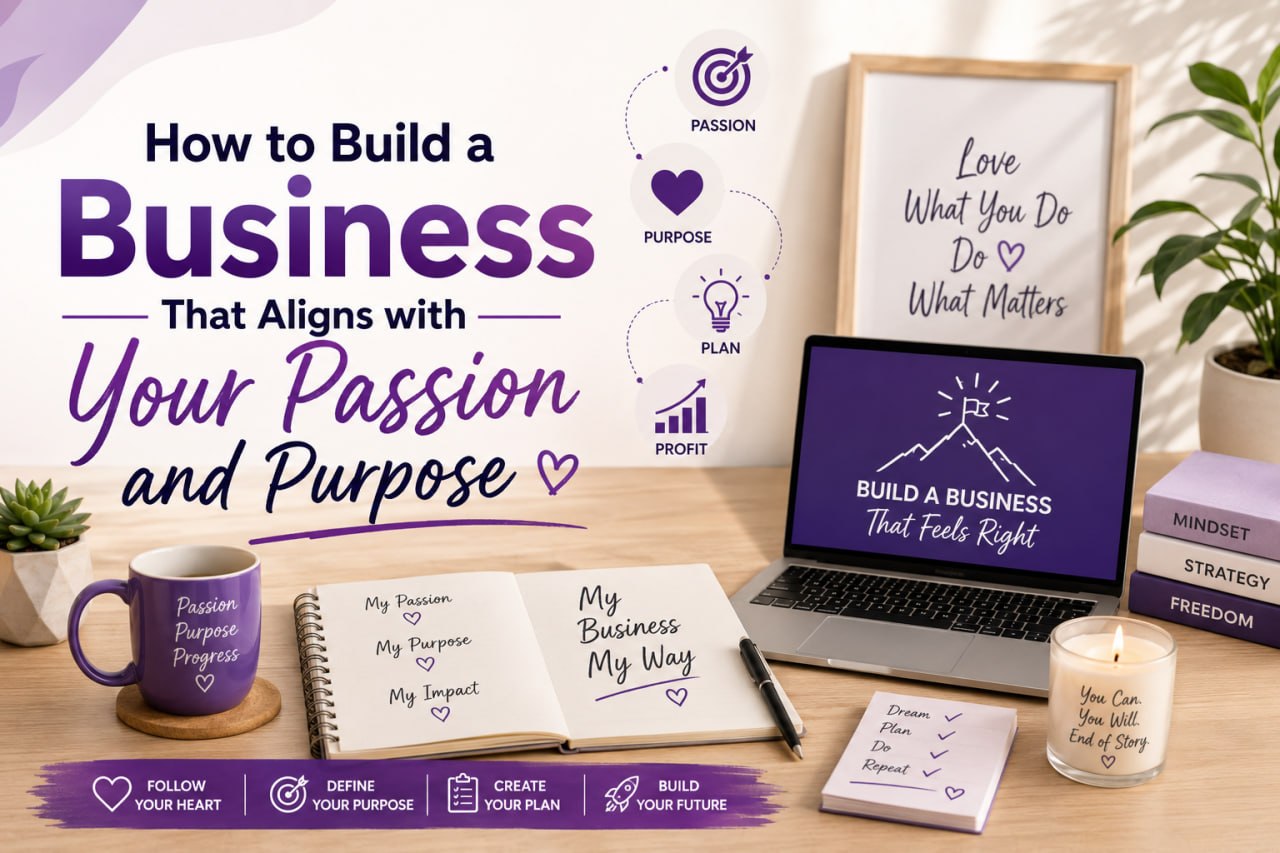
How to Build a Business That Aligns with Your Passion and Purpose
Starting a business is more than choosing a profitable product or service. For many entrepreneurs, the real goal is to build something that reflects their passion, values, skills, and purpose.
A business that aligns with your purpose can give you a stronger sense of direction while helping you create meaningful value for your customers. Instead of focusing only on revenue, a purpose-driven business considers a bigger question:
“Why does this business exist, and what positive value does it create?”
Your purpose does not have to be a global mission or a complicated social cause. It can be as simple as helping small businesses save time, making professional services more accessible, solving a frustrating customer problem, or using your expertise to help people achieve a specific goal.
When passion and purpose are connected with a practical business model, you can create a company that is both meaningful and commercially sustainable.
In this guide, you’ll learn how to turn your passion and purpose into a business strategy that supports long-term growth.
What Is a Purpose-Driven Business?
A purpose-driven business is a company built around a clear reason for existing beyond simply generating revenue.
Profit remains important because a business needs financial sustainability. However, purpose-driven companies also consider the value they create for customers, employees, communities, or a particular industry.
For example, a purpose-driven business might exist to:
- Help entrepreneurs overcome common business challenges
- Make professional services more affordable
- Support sustainable products and practices
- Help people develop valuable skills
- Improve access to technology
- Solve an underserved customer problem
- Create better experiences within an industry
The key is that your business purpose influences your decisions, not just your marketing.
A strong purpose can shape your products, services, customer experience, company culture, content, and long-term goals.
Why Align Passion With Business Purpose?
Passion can give you motivation, while purpose can give your business direction.
When the two work together, you are more likely to build a business that feels personally meaningful while creating real value for your customers.
1. You Have a Stronger Reason to Keep Going
Entrepreneurship involves uncertainty, challenges, and setbacks.
If your only motivation is making money, difficult periods can quickly reduce your motivation.
When your business is connected to something you genuinely care about, you have a deeper reason to continue improving.
2. Your Business Feels More Authentic
Customers can often recognize when a brand genuinely understands the problem it is solving.
When your business is connected to your experience, values, and expertise, your messaging becomes more natural and credible.
3. Purpose Can Differentiate Your Brand
Many businesses offer similar products and services.
Your purpose can help answer:
“Why should customers choose you instead of another company?”
A meaningful reason behind your business can become part of your unique positioning.
4. It Helps You Make Better Decisions
A clear business purpose can act as a decision-making filter.
When evaluating a new product, partnership, marketing campaign, or business opportunity, ask:
“Does this support what we are trying to accomplish?”
If the answer is no, the opportunity may not be right for your business.
Step 1: Identify What You Are Truly Passionate About
Before developing your business idea, identify the areas that naturally hold your attention.
Ask yourself:
- What subjects can I talk about for hours?
- What problems do I enjoy solving?
- What skills do people frequently ask me for help with?
- What type of work gives me energy?
- What experiences have shaped my perspective?
- What would I enjoy learning more about?
Your passion does not necessarily have to be a hobby.
You might be passionate about:
- Helping businesses grow
- Technology
- Education
- Design
- Health and wellness
- Financial literacy
- Marketing
- Sustainability
- Leadership
- Entrepreneurship
Look for the intersection between what you enjoy, what you are good at, and what people need.
Step 2: Find a Problem Worth Solving
Passion alone does not create a successful business.
A viable business needs to solve a problem or fulfill a meaningful need.
Once you identify your interests, ask:
“Who could benefit from this passion or expertise?”
For example, someone passionate about organization may discover that small-business owners struggle with administrative tasks.
Someone passionate about technology may identify businesses that need help adopting digital tools.
Someone passionate about education may discover a demand for specialized training.
This is where meaningful business ideas begin to take shape.
The strongest ideas often sit at the intersection of:
Passion + Skills + Customer Need + Business Opportunity
Step 3: Define Your Business Purpose
Your business purpose should explain why your company exists and what value it intends to create.
A simple framework is:
We exist to help [target audience] achieve [desired outcome] by providing [solution].
For example:
“We help small businesses operate more efficiently by providing practical business support and professional solutions.”
Your purpose statement does not need to be perfect on the first attempt.
It should simply provide enough clarity to guide your business decisions.
A strong business purpose should be:
- Clear
- Authentic
- Customer-focused
- Meaningful
- Practical
- Relevant to your long-term vision
Step 4: Turn Your Passion Into a Valuable Offer
Your passion needs to become something customers are willing to pay for.
This could be a:
- Service
- Product
- Course
- Consulting package
- Membership
- Digital product
- Software solution
- Coaching program
- Subscription
- Educational resource
For example, if your passion is helping entrepreneurs, you could offer consulting services, business planning, digital marketing support, training, or operational assistance.
Do not try to monetize everything you love.
Instead, identify where your passion and expertise can create measurable value.
Step 5: Understand Your Ideal Customer
A purpose-driven business still needs a clearly defined audience.
Identify:
Who do you want to help?
Then understand:
- Their biggest problems
- Their goals
- Their frustrations
- Their buying behavior
- Their budget
- Their expectations
- The alternatives they currently use
The more clearly you understand your audience, the easier it becomes to develop relevant products, services, content, and marketing.
Your purpose should connect with a real customer need.
Step 6: Create a Sustainable Business Model
Purpose does not replace profitability.
If your business cannot generate enough revenue to cover costs and support growth, it will eventually struggle to fulfill its purpose.
Consider:
- Pricing
- Operating costs
- Revenue streams
- Customer acquisition costs
- Profit margins
- Sales channels
- Recurring revenue opportunities
- Growth potential
Ask yourself:
“Can this business create meaningful impact while remaining financially sustainable?”
The answer should be yes.
A financially healthy business has more resources to invest in its customers, employees, community, innovation, and long-term mission.
Step 7: Build Your Brand Around Your Purpose
Once your business purpose is clear, communicate it consistently.
Your purpose can influence:
- Brand messaging
- Website copy
- Social media
- Content marketing
- Advertising
- Customer service
- Visual identity
- Partnerships
Avoid simply claiming that you are “purpose-driven.”
Show it through your actions.
For example, if your purpose is helping small businesses succeed, your content could provide practical education, useful resources, and actionable advice.
Your customers should be able to understand your purpose through their experience with your brand.
Step 8: Make Your Purpose Part of Your Content Strategy
Content is one of the most effective ways to communicate your purpose.
Create content around the problems your audience cares about.
You could publish:
- Educational blog posts
- Industry insights
- Customer success stories
- Tutorials
- Founder stories
- Case studies
- Videos
- Guides
- Social media posts
- Frequently asked questions
Share not only what your business sells, but also why you built it.
This helps your audience understand the person and values behind the company.
Step 9: Build a Business That Supports Your Lifestyle
Purpose is not only about customers or society.
Your business should also support the life you want to build.
Think about:
- How much time you want to work
- Where you want to work
- Your financial goals
- Your preferred level of responsibility
- Whether you want employees
- Whether you want to remain a solo entrepreneur
- How much travel or flexibility you want
A business can be successful financially and still be the wrong business for you.
The best business model supports both your professional goals and personal priorities.
Step 10: Measure More Than Revenue
Revenue is important, but it should not be your only measure of success.
A purpose-driven business can track:
Financial Metrics
- Revenue
- Profit
- Customer acquisition cost
- Customer lifetime value
- Recurring revenue
Customer Metrics
- Customer satisfaction
- Retention
- Referrals
- Reviews
- Repeat purchases
Purpose Metrics
- Customers helped
- Problems solved
- Community impact
- Educational resources created
- Social or environmental outcomes
Choose metrics that reflect both the commercial and meaningful outcomes you want to achieve.
Common Mistakes to Avoid
Choosing Passion Without Market Demand
You may love an idea, but customers still need to want or need the solution.
Validate your idea before investing heavily.
Confusing Purpose With a Slogan
A purpose statement on your website means little if your actual business decisions do not reflect it.
Your purpose should influence how you operate.
Trying to Help Everyone
A broad mission can make your marketing unclear.
Start with a specific audience and problem.
Ignoring Profitability
Purpose and profit are not opposites.
A profitable business can create more long-term impact because it has the resources to continue operating and growing.
Changing Direction Too Often
Building a meaningful business takes consistency.
Give your business model enough time to gather customer feedback before making major changes.
How Amethyst Business Solutions Can Help
Turning an idea into a sustainable business requires more than passion. You need strategy, structure, and practical execution.
Amethyst Business Solutions helps businesses and entrepreneurs develop practical strategies that support growth and long-term success.
Whether you are refining your business idea, improving your operations, strengthening your marketing, or looking for better ways to organize your business, having the right strategic support can help you move from an idea to action.
Your purpose is the starting point.
Your strategy turns that purpose into a business.
Your execution turns the strategy into results.
Final Thoughts: Build Something That Matters
Building a business around your passion and purpose can be one of the most rewarding entrepreneurial journeys.
But meaningful entrepreneurship is not simply about doing what you love.
It is about finding the intersection between:
What you care about + What you are good at + What people need + What can become financially sustainable.
That intersection can become the foundation of a powerful purpose-driven business.
Start by identifying your passion. Find a problem worth solving. Define your business purpose. Validate your idea. Build an offer that creates genuine value, and develop a sustainable business model around it.
Most importantly, remember that your purpose can evolve.
As your customers, skills, market, and business change, your understanding of your purpose may become clearer too.
You do not need to build the perfect business from day one.
You simply need to build a business that moves you closer to the impact you want to create.
Ready to turn your business goals into a practical strategy? Connect with Amethyst Business Solutions and take the next step toward building a purposeful, sustainable business.