Day: 12 August 2026

  • How to Build a Business Around Your Expertise Without Starting From Scratch

    How to Build a Business Around Your Expertise Without Starting From Scratch

    Introduction

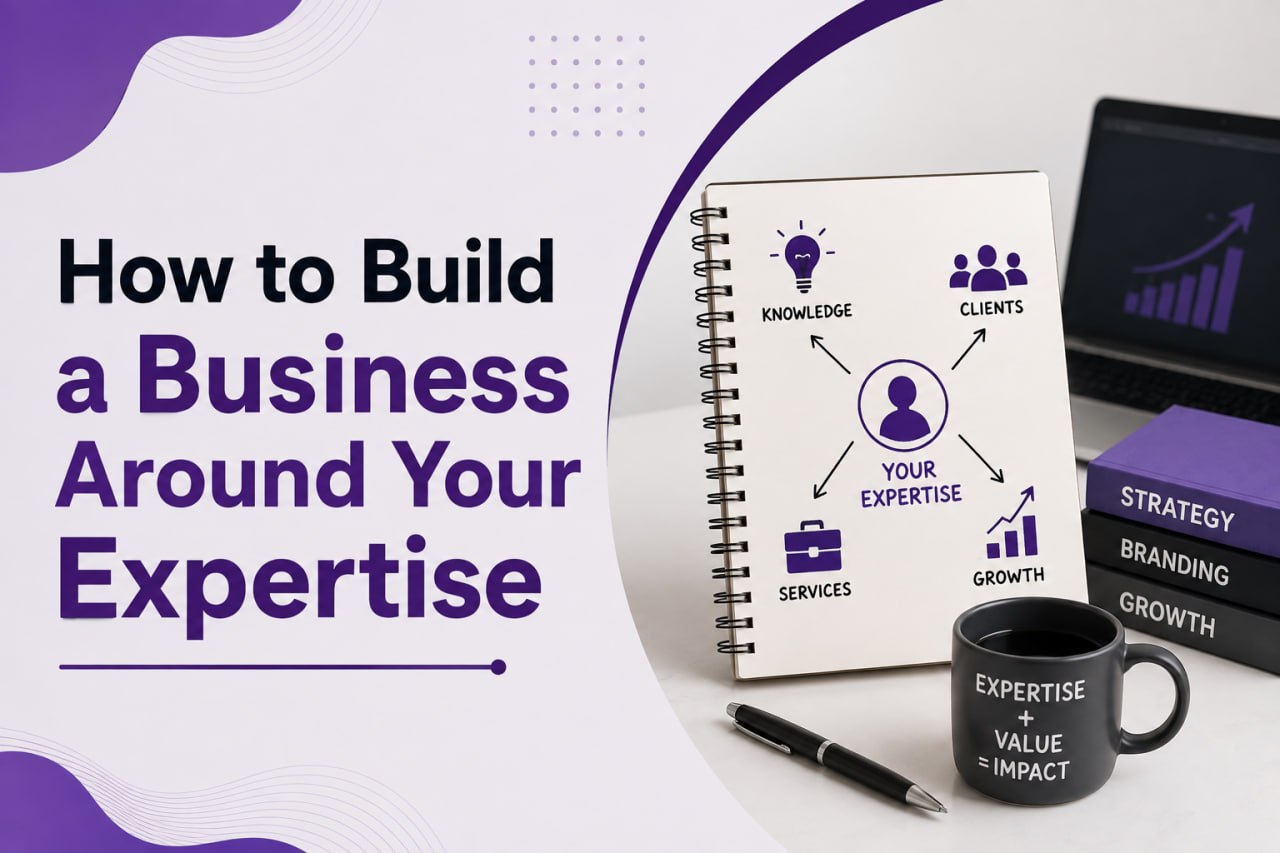
    Starting a business is often described as starting from zero, but for professionals with real experience, that framing is misleading. If you’ve spent years developing expertise, you’re not starting from scratch, you’re starting from an asset most founders spend years trying to build. Learning how to build a business around your expertise is fundamentally about structuring what you already know into something a client can hire, not inventing something new.

    At Amethyst Business Solutions, we help experienced professionals design a professional service business around the expertise they already have, without pretending the slate is blank. Here’s the approach that consistently works.

    Why Starting “From Scratch” Is the Wrong Mental Model

    Treating a new business as a blank slate leads founders to second-guess expertise they’ve already validated in a previous role, and to spend unnecessary time building credibility they arguably already have. The more accurate framing: you’re not building a business from nothing, you’re building the container that lets your existing expertise be sold directly instead of through an employer.

    Step 1: Audit What You Actually Bring, Beyond Just the Skill

    Expertise built inside an organization often includes more than the core skill itself. Before designing the business, take stock of:

    •     The specific skill or knowledge itself.

    •     Adjacent experience — industries you understand, types of organizations you’ve worked within, problems you’ve seen repeatedly.

    •     Existing relationships and reputation that can act as an early distribution channel.

    •     Any proprietary frameworks, methods, or processes you’ve developed, even informally.

    Step 2: Choose the Right Expertise-Based Business Model

    Not every expertise-based business model looks the same. A few common structures, each with different trade-offs:

    1:1 Consulting or Advisory

    Highest personal involvement, fastest to launch, but capped by your available hours. Often the natural starting point.

    Productized Service

    A defined, repeatable deliverable at a fixed price and scope. Easier to market and sell than open-ended consulting, and a natural next step once you understand the most common client need.

    Group Programs or Cohort-Based Offerings

    Delivers your expertise to multiple clients simultaneously, increasing revenue per hour, but requires a more structured curriculum and stronger marketing to fill cohorts.

    Licensed or Training-Based Models

    Teaching your method to others (internal teams, other practitioners) rather than applying it directly yourself. Highest leverage, but usually requires an already-established reputation to sell effectively.

    Step 3: Translate Expertise Into a Specific Offer

    A professional service business needs a defined offer, not just an open-ended description of your background. Define:

    1.   The specific outcome the engagement delivers.

    2.   The scope and format (duration, deliverables, level of access).

    3.   The ideal client profile who has this problem and can pay to solve it.

    Step 4: Use Existing Relationships as Your First Distribution Channel

    Former colleagues, industry contacts, and past collaborators are typically the fastest path to first clients, since the trust-building work is already partially done. Reach out directly and specifically rather than broadly announcing the new business and hoping for inbound interest.

    Step 5: Build New Proof Independent of Your Former Title

    Once you’re outside the credibility of an employer’s name, independently earned proof (case studies, testimonials, specific results) becomes essential. Prioritize gathering this early, even from smaller or discounted initial engagements, since it becomes the foundation your business’s credibility rests on going forward.

    Common Mistakes When Building an Expertise-Based Business

    •     Undervaluing the expertise because it feels routine after years of practicing it.

    •     Trying to serve too broad a range of client types instead of the specific one you’re best positioned to help.

    •     Delaying launch while waiting to feel “expert enough,” rather than starting with the credible experience already in hand.

    •     Choosing a business model (like group programs) that doesn’t match current capacity or audience size.

    Frequently Asked Questions

    Q: Do I need to develop new skills to build a business around my expertise?

    A: Usually not. The primary work is packaging and positioning existing expertise into a specific, sellable offer, not acquiring entirely new skills before starting.

    Q: What’s the best expertise-based business model to start with?

    A: 1:1 consulting or advisory work is often the fastest starting point, since it requires the least additional infrastructure. Other models, like productized services or group programs, can be layered in once demand is validated.

    Q: How is a professional service business different from a typical consulting practice?

    A: The terms overlap significantly. “Professional service business” is often used more broadly to include productized or scaled offerings, while “consulting” can imply a more traditional 1:1 advisory structure, though usage varies.

    Q: How do I price my expertise if I’ve never sold it independently before?

    A: Anchor pricing to the value and outcome the expertise delivers for a client, not your former salary. Researching what comparable independent providers charge in your space is also a useful starting benchmark.

    Final Thoughts

    You don’t need to start from scratch to build a business around your expertise, you need to structure what you already know into something a client can clearly understand, trust, and buy. Choosing the right expertise-based business model and packaging your experience deliberately turns years of professional knowledge into a real professional service business, not a reinvention from zero.

    At Amethyst Business Solutions, we help experienced professionals structure their expertise into a business that reflects the value they already bring. If you’re ready to make that shift, our team can help you build the plan.
  • What Does a Business Strategy Consultant Actually Help You With?

    What Does a Business Strategy Consultant Actually Help You With?

    Introduction

    The title “consultant” gets used broadly enough that it’s often unclear what someone actually does day to day. A business strategy consultant in particular is easy to confuse with a coach, a marketing consultant, or a generalist advisor, when the role actually covers a specific, well-defined set of work centered on how a business grows and where it focuses its resources.

    At Amethyst Business Solutions, we work as strategy consultants with founders across stages, and the confusion about what that actually involves comes up often enough that it’s worth answering directly. Here’s a clear breakdown of what strategic business planning support really looks like in practice.

    Strategy Consulting vs. Other Types of Business Support

    Before getting into specifics, it helps to distinguish strategy consulting from adjacent roles it’s often confused with:

    •     A business coach often focuses on the founder’s habits, mindset, and accountability over time.

    •     A marketing consultant focuses specifically on visibility, channels, and demand generation.

    •     A business strategy consultant focuses on the overall direction of the business: where to focus, what to prioritize, and how resources should be allocated to get there.

    In practice, these roles often overlap, and many founders benefit from more than one at different points, but strategy work specifically centers on the big-picture architecture of the business, not just one function within it.

    1. Clarifying What the Business Should Actually Be Optimizing For

    Many founders pursue growth, revenue, visibility, and expansion simultaneously without a clear sense of which matters most right now. A strategy consultant helps identify the single most important objective for the current stage of the business, so decisions across the organization can align around it.

    2. Diagnosing the Real Constraint on Growth

    Founders often assume the constraint on growth is marketing, when it’s actually pricing, delivery capacity, or an unclear offer, or vice versa. A core part of business growth strategy work is correctly diagnosing which constraint is actually limiting progress before prescribing a fix.

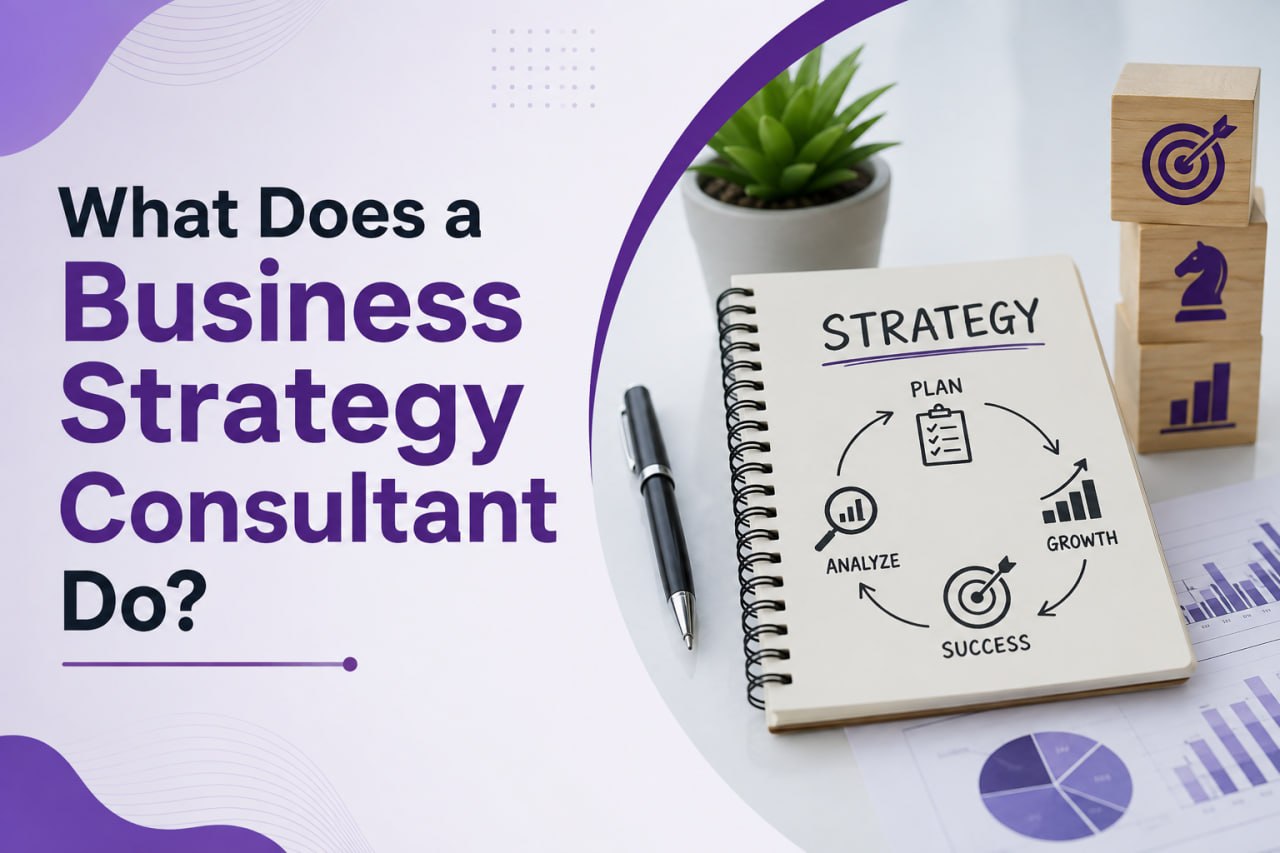
    3. Building a Prioritized, Sequenced Plan

    Rather than a long list of everything that could be improved, effective strategic planning identifies the two or three highest-leverage initiatives and sequences them logically, so effort compounds instead of scattering across too many priorities at once.

    4. Evaluating Major Decisions Before They’re Made

    Consultants are frequently brought in for a specific, high-stakes decision: entering a new market, launching a new offer, restructuring pricing, or considering a significant hire. Strategic business planning at this level means stress-testing the decision against the broader direction of the business before it’s finalized, not just executing it once it’s been decided.

    5. Building Systems for Ongoing Strategic Review

    Beyond a single plan, good strategy consulting often leaves behind a repeatable process, a quarterly review rhythm, a simple set of metrics to track, a framework for evaluating new opportunities, so the business doesn’t need outside strategic support for every future decision.

    6. Providing an Outside, Unbiased Perspective

    Founders are inevitably close to their own business, which makes certain blind spots difficult to see from the inside. A consultant’s objectivity, informed by pattern recognition across other businesses, often surfaces issues or opportunities that internal teams miss entirely.

    What Working With a Business Strategy Consultant Typically Looks Like

    1.   An initial diagnostic phase reviewing the current state of the business across key areas (offer, pricing, marketing, operations).

    2.   Identification of the core constraint or opportunity to prioritize.

    3.   Development of a specific, sequenced strategic plan with clear milestones.

    4.   Ongoing check-ins (weekly, biweekly, or monthly depending on the engagement) to track progress and adjust as needed.

    5.   A defined end point or transition to a lighter-touch advisory relationship.

    When to Bring in a Strategy Consultant vs. Other Types of Support

    •     If the core issue is a lack of clear direction or a specific high-stakes decision — strategy consulting.

    •     If the core issue is follow-through, habits, or confidence — coaching may be a better fit.

    •     If the core issue is visibility or lead generation specifically — a marketing consultant may be more targeted.

    •     If you’re unsure which applies, a strategy consultant can often help diagnose that as a starting point.

    Frequently Asked Questions

    Q: What’s the difference between a business strategy consultant and a business coach?

    A: A strategy consultant typically focuses on the overall direction and resource allocation of the business, while a coach focuses more on the founder’s habits, accountability, and follow-through. The two roles often work well together.

    Q: How long does a typical strategic business planning engagement last?

    A: Engagements vary, but many run 8–12 weeks for an initial diagnostic and plan, with some founders continuing at a lighter cadence for ongoing strategic check-ins.

    Q: Do I need a business strategy consultant if my business is already growing?

    A: Growth doesn’t rule out the need for strategy support. Many founders bring in a consultant specifically at growth inflection points, to make sure scaling happens deliberately rather than reactively.

    Q: What does a business growth strategy engagement typically produce?

    A: A well-run engagement typically produces a clear, prioritized plan with specific milestones, along with a repeatable framework the founder can use for future strategic decisions independently.

    Final Thoughts

    A business strategy consultant isn’t there to run the business for you, they’re there to bring clarity, sequencing, and objectivity to decisions that are hard to make well from the inside. Whether the need is a single high-stakes decision or a full business growth strategy reset, the right engagement leaves you with both a clear plan and a better process for making the next decision on your own.

    At Amethyst Business Solutions, we provide exactly this kind of strategic clarity for founders navigating pivotal decisions. If you’re not sure what type of support your business needs right now, our team is happy to help you figure that out.