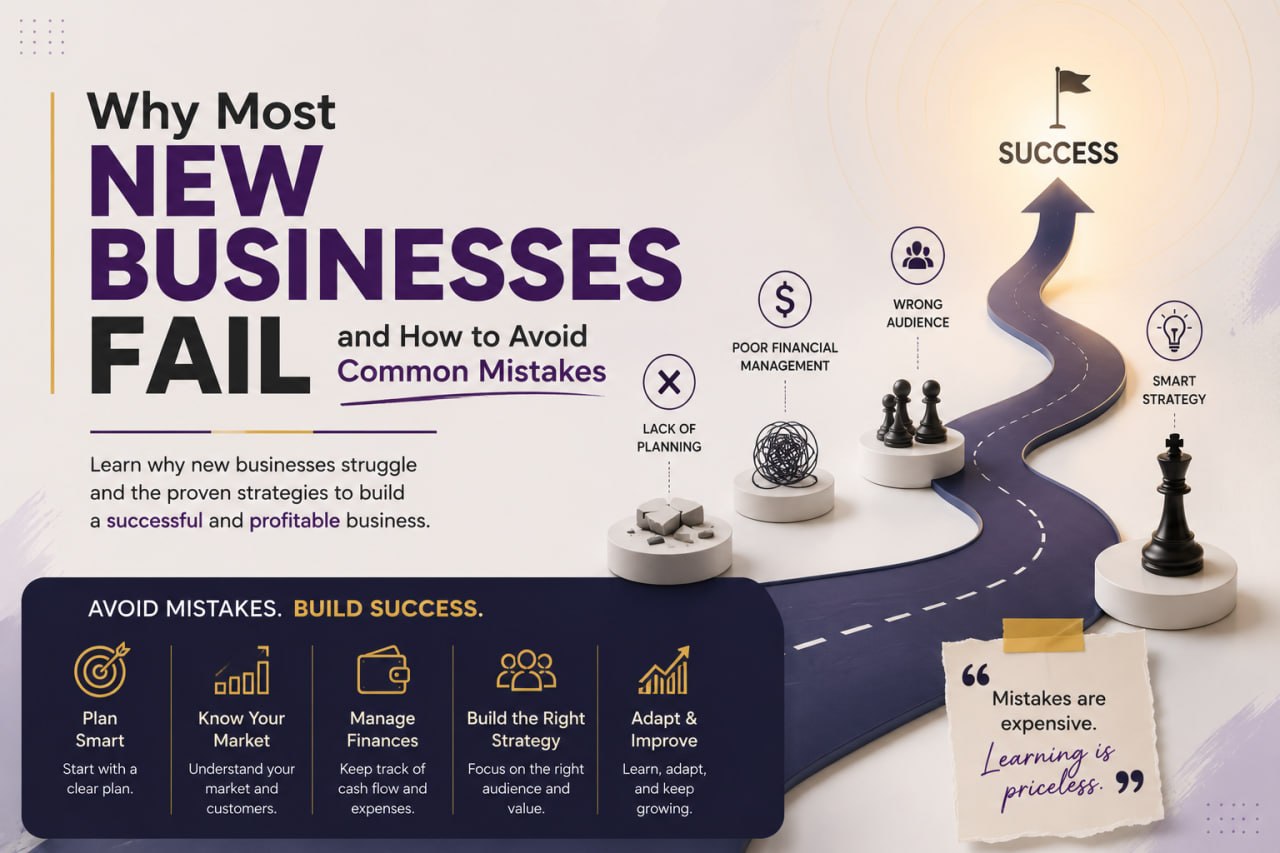
Category: Blogs

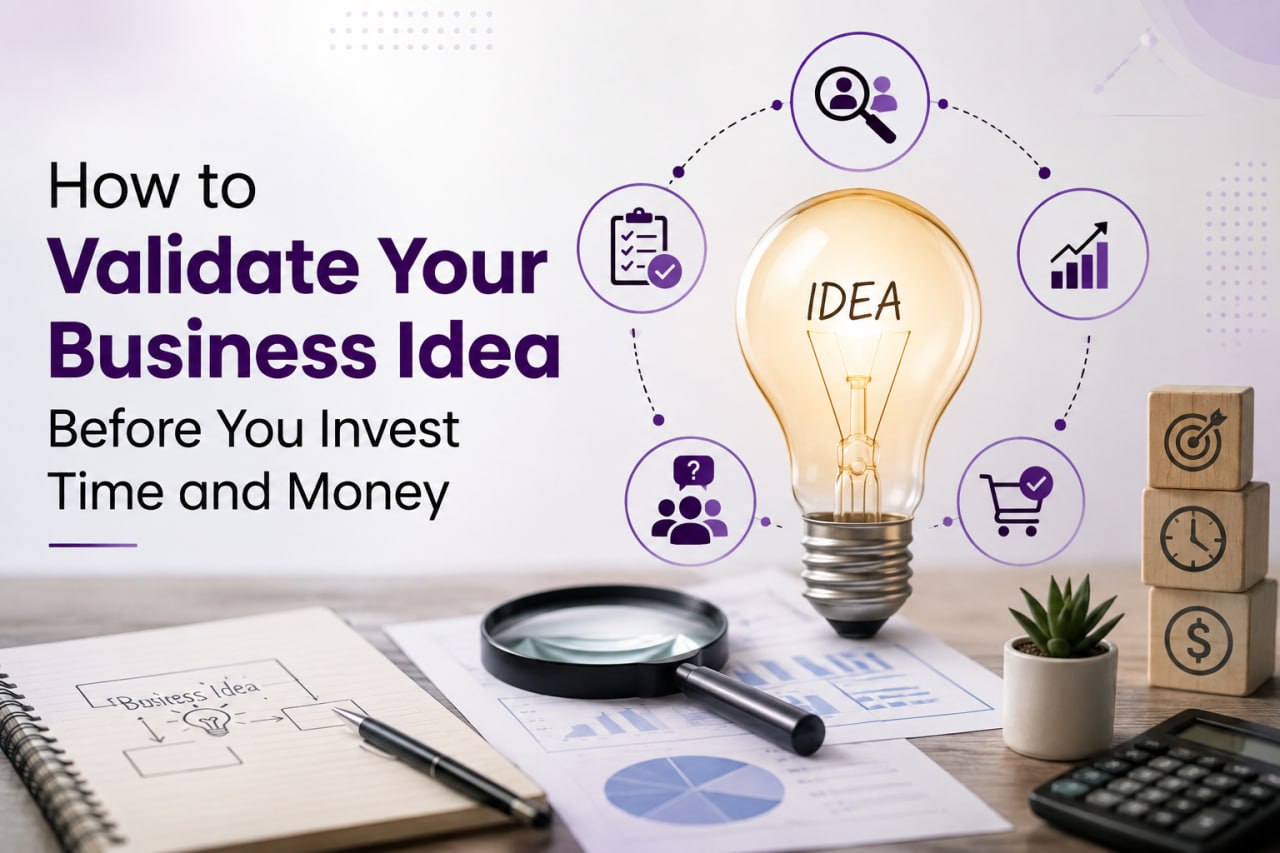
  • How to Validate Your Business Idea Before You Invest Time and Money 

    How to Validate Your Business Idea Before You Invest Time and Money 

    Here’s a scenario that plays out constantly: someone spends months building a website, designing a logo, and perfecting their offer only to launch to silence. Not because the idea was bad, but because no one ever confirmed real people wanted to pay for it before the time and money went in. Learning how to validate a business idea is the single most underrated skill in startup planning, and it’s the difference between building something people want and building something you hope they’ll want.

    This guide walks through exactly how to validate business idea concepts before you invest another dollar or another weekend so your energy goes toward a business with real demand behind it.

    What Business Idea Validation Actually Means

    Business idea validation is the process of testing your assumptions about a product or service against reality, before you build it fully. It answers three core questions:

    1.      Does this problem actually exist for the people you think have it?

    2.      Will people pay to solve it not just say it’s a “good idea”?

    3.      Can you deliver the solution in a way that’s sustainable for you?

    Notice what validation is not: it’s not asking friends and family if they like your idea. It’s not counting likes on a social post. It’s not assuming demand because you personally would buy it. Real validation involves talking to your actual target market and watching what they do, not just what they say.

    Why Skipping Validation Is the Most Expensive Mistake in Startup Planning

    It’s tempting to skip straight to building a website, a product, a full service menu because that feels like progress. But building without validation is a gamble dressed up as productivity. The cost isn’t just wasted money on tools, branding, and inventory. It’s wasted months you can’t get back, and often, a hit to your confidence that makes the next attempt feel even scarier.

    Validation flips that order. Instead of “build, then hope people want it,” you get proof first, then build with confidence.

    Step 1: Get Specific About the Problem You’re Solving

    Vague ideas are impossible to validate. “I want to help women feel more confident” is a mission, not a business. Narrow it down:

    •        Who exactly experiences this problem? (Be specific: role, life stage, income level, situation.)

    •        What does the problem cost them in time, money, stress, or missed opportunity?

    •        How are they currently solving it, if at all?

    A well-defined problem statement sounds like: “Mid-career professional women who want to leave corporate jobs but don’t know how to build a financial runway or validate a business idea before quitting.” That’s specific enough to actually test.

    Step 2: Talk to Real People in Your Target Market

    This is the step most people skip, and it’s the most valuable one. Have 10–15 real conversations with people who match your ideal client profile. A few rules make these conversations far more useful:

    •        Ask about their past behavior, not hypothetical future behavior. “Have you paid for anything to solve this?” is more revealing than “Would you pay for this?”

    •        Listen for the problem in their own words. Their language often becomes your best marketing copy later.

    •        Resist the urge to pitch. You’re gathering information, not selling selling too early skews the feedback.

    •        Pay attention to hesitation. What they push back on tells you more than what they compliment.

    If people struggle to describe the problem, minimize it, or say they’ve never actually tried to solve it, that’s a signal worth taking seriously not something to argue past.

    Step 3: Look for Evidence That People Already Pay for This

    One of the clearest validation signals is discovering that people are already spending money to solve this problem just not with you yet. Research:

    •        Existing competitors if others are charging for a similar solution and staying in business, there’s already a market.

    •        Communities and forums where your target market discusses this problem, and what solutions they mention trying.

    •        Search demand are people actively searching for solutions to this problem online?

    A complete absence of any existing market can mean you’ve found an untapped opportunity but far more often, it means the market isn’t there yet, or the problem isn’t painful enough for people to pay to solve.

    Step 4: Create a Minimum Viable Offer

    You don’t need a fully-built business to validate business idea, you need a minimum viable offer the simplest version of your product or service that lets real people say yes or no with real money or real commitment. Depending on your business model, this might look like:

    •        A single service offered to a handful of beta clients, delivered manually before you build any systems.

    •        A simple landing page describing the offer, with a way for people to join a waitlist or make a deposit.

    •        A pre-sale of a digital product before it’s fully created.

    •        A pilot version of your course or program with a small founding cohort.

    The goal is to get a real yes a payment, a signed commitment, a waitlist signup with intent not just enthusiasm.

    Step 5: Set Clear Validation Benchmarks in Advance

    Before you start testing, decide what “validated” actually looks like for you. Without a benchmark, it’s easy to talk yourself into moving forward on weak signals, or to talk yourself out of a genuinely strong idea because of a few no’s. Reasonable benchmarks might include:

    •        A specific number of paying beta clients within a set timeframe.

    •        A conversion rate from conversation to sale that meets a minimum threshold.

    •        A waitlist that reaches a target size within a few weeks of announcing it.

    Setting the bar in advance keeps your assessment honest, rather than shifting the goalposts after the fact based on how you feel that day.

    Step 6: Pay Attention to What the Market Tells You to Change

    Validation rarely returns a simple yes or no it usually returns a “yes, but.” Maybe the price needs adjusting, the audience needs narrowing, or the offer needs repositioning. This is normal, and it’s valuable. The purpose of validation isn’t just to confirm your original idea; it’s to refine it into something the market actually wants, based on real signals instead of guesswork.

    Founders who treat early feedback as useful data rather than as a verdict on their worth or ability move through this stage faster and end up with a stronger offer on the other side.

    Common Mistakes That Undermine Business Idea Validation

    •        Only asking people who love you. Friends and family want to support you, which makes their feedback unreliable.

    •        Asking leading questions. “Don’t you think this is a great idea?” invites agreement, not honesty.

    •        Ignoring lukewarm responses. Polite interest isn’t the same as a paying customer.

    •        Validating too broadly. Testing a vague idea with a vague audience produces vague, unusable results.

    •        Stopping after one round. A single conversation or a handful of surveys rarely tells the full story validation is a process, not a single event.

    How Long Should Business Idea Validation Take?

    Most focused validation processes take somewhere between two and six weeks enough time for meaningful conversations, a small test offer, and a clear read on demand, without dragging into indefinite “research mode.” If validation is stretching on for months without a clear answer, that’s often a sign it’s time to either commit to a small test with real stakes, or revisit whether the idea needs to change.

    Validation Doesn’t Have to Be a Solo Project

    Business idea validation can feel uncomfortable putting your idea in front of real people and risking a “no” takes a certain amount of courage. But it’s far less risky than building an entire business around an untested assumption. With the right framework and a little support, startup planning becomes a process of confident, informed decisions instead of hopeful guesswork.

    At Amethyst Business Solutions, validation is a core part of every founder’s roadmap because a business built on evidence is a business built to last.

    [Book your free 30-minute consultation](https://amethystbusinesssolutions.com/contact/) and get support validating your idea before you invest another dollar building it.

    Frequently Asked Questions

    What is business idea validation?

    Business idea validation is the process of testing whether real people in your target market have the problem you think they have, and whether they’re willing to pay for your solution, before you invest significant time or money building it out.

    How many people should I talk to when validating a business idea?

    Most founders get meaningful signal from 10–15 in-depth conversations with people who closely match their target market, though the right number can vary depending on how niche the audience is.

    What’s the difference between market research and validation?

    Market research tends to focus on broad trends and existing competitors, while validation is more direct testing your specific offer with real potential customers to see whether they’ll actually commit or pay.

    Can I validate a business idea without spending money?

    Yes. Conversations, landing pages, waitlists, and small pre-sales can all validate demand with little to no upfront investment, which is one of the biggest advantages of validating before you build.

  • The Best Online Business Ideas for Women in 2026

    The Best Online Business Ideas for Women in 2026

    If you’ve been searching for online business ideas for women, you’re in good company. Women-owned businesses have become one of the fastest-growing segments of the U.S. economy with millions of women-led companies now generating trillions of dollars in combined annual revenue. The barriers that once made starting a business difficult office space, large capital, a team have largely disappeared for online, service- and knowledge-based businesses.

    The challenge now isn’t access. It’s choice. With so many profitable business ideas available, the real question is which one fits your skills, your schedule, and your financial goals. This guide breaks down the best women-owned business ideas for 2026, organized by how quickly they typically generate income and how much they cost to start.

    It’s worth saying upfront: there is no single “best” idea that works for every woman reading this. The right choice depends on the skills you already have, how much time you can realistically dedicate each week, and what kind of income timeline you’re working with. Use this guide as a starting map, not a ranked list to follow in order.

    What Makes a Business Idea Right for You in 2026

    Before diving into the list, it helps to filter ideas through three questions:

    1.      Do I already have relevant skills or experience, or would I need to build them from scratch?

    2.      How much time and money can I realistically invest before I need to see income?

    3.      Does this business model fit the life I actually want — flexible hours, remote work, room to scale, or something else?

    The “best” business idea isn’t the most popular one on a list. It’s the one that matches your resources, your strengths, and your goals right now.

    Service-Based Business Ideas (Fastest Path to Income)

    Service-based businesses tend to have the lowest startup costs and the fastest path to your first paying client, because you’re monetizing skills you likely already have.

    Virtual Assistant Services

    Virtual assistants support business owners with scheduling, email management, customer service, and administrative tasks remotely. It’s one of the most accessible online business ideas for women because it requires minimal upfront investment just organizational skill and reliable communication.

    Freelance Writing and Content Creation

    Businesses constantly need blog posts, website copy, email newsletters, and social content. Freelance writing scales from part-time side income to full-time agency work, and specializing in a niche (finance, health, tech) typically commands higher rates than generalist writing.

    Social Media Management

    Many small businesses know they need a social media presence but don’t have the time or expertise to manage it well. Social media managers handle content calendars, posting, engagement, and basic strategy — often for multiple clients at once, which allows the business to scale steadily.

    Bookkeeping and Virtual Financial Services

    Bookkeeping is in consistent demand because every business needs it, regardless of economic conditions. It requires more specific training than some other service businesses, but that specialization also supports higher, more stable pricing.

    Online Coaching and Consulting

    If you have expertise in a specific area — career transitions, marketing, wellness, leadership — coaching and consulting let you monetize your knowledge directly. This model has some of the highest margins of any business on this list, since your primary cost is your time.

    Digital Product Business Ideas (Scalable, Lower Time Investment Over Time)

    Digital products take more upfront work to create but don’t require you to trade hours for dollars once they’re built.

    Online Courses

    Teaching what you already know through video lessons, workbooks, or guided programs — turns your expertise into a repeatable, scalable product. Course platforms have made this more accessible than ever, requiring no technical background to launch.

    E-books and Digital Guides

    Writing and selling e-books, templates, or planners is a low-cost way to generate income from expertise or creative work, particularly when paired with an engaged audience or email list.

    Printables and Templates

    Planners, worksheets, and templates sold on marketplaces or your own site are a popular entry point into digital products, since they require design skills rather than significant capital.

    Membership Sites and Communities

    Recurring revenue from a paid community or membership site offering ongoing content, coaching, or resources builds more predictable income than one-time product sales, though it typically requires an existing audience or strong early marketing.

    E-Commerce Business Ideas (Product-Based, More Scalable)

    Print-on-Demand and Handmade Goods

    Selling custom-designed or handmade products through platforms like Etsy or Shopify lets you build a product-based brand without holding significant inventory, particularly with print-on-demand models where items are produced only after they sell.

    Dropshipping

    Dropshipping allows you to sell products online without managing inventory or fulfillment yourself, since a third-party supplier ships directly to the customer. It’s one of the lowest-barrier ways to start an e-commerce business, though margins tend to be thinner than other models.

    Curated Product Lines

    Building a focused product line beauty, wellness, home goods around a specific audience or aesthetic allows for stronger branding and customer loyalty than a broad, unfocused catalog.

    Content and Personal Brand Business Ideas

    Blogging with Affiliate Marketing

    Blogging remains a viable long-term business model, particularly when monetized through affiliate marketing, sponsored content, and ads once traffic and audience trust are established.

    Content Creation and Personal Branding

    Building a personal brand around your expertise or perspective — through video, social platforms, or newsletters — has become one of the fastest-growing paths to entrepreneurship, often leading to multiple income streams: sponsorships, digital products, and consulting.

    Podcasting

    A podcast focused on a specific niche or audience can build authority and community quickly, eventually supporting sponsorships, coaching offers, or product sales.

    Specialized and Emerging Business Ideas

    Data and AI-Adjacent Consulting

    As more small businesses adopt AI tools and generate more data than ever, consultants who can help them make sense of it — from basic analytics to responsible AI adoption — are increasingly in demand.

    Cybersecurity and Digital Safety Consulting

    With more business operating online, cybersecurity awareness has become essential even for very small companies, creating an opening for consultants who can make digital safety practical and accessible.

    E-Design and Online Interior Design

    Remote interior design services, where consultations and mood boards are delivered digitally rather than in person, have grown significantly as a lower-cost alternative to traditional design services.

    How to Choose the Right Idea From This List

    With so many profitable business ideas available, narrowing down to one can feel harder than the list makes it look. A few questions can help:

    •        What would you do even if it took longer than expected to become profitable? Sustainable motivation matters more than trends.

    •        What skill do people already come to you for? Existing expertise shortens your path to your first paying client significantly.

    •        How much financial runway do you have? Service businesses tend to generate income faster; digital products and content businesses often take longer to build momentum but can scale further.

    •        What does your ideal week actually look like? Some models (coaching, consulting) involve more client interaction; others (digital products, e-commerce) run more independently once built.

    There’s no universally “best” answer only the best fit for your specific skills, resources, and goals. It’s also worth remembering that many successful founders don’t land on their final business model on the first try. Starting with a service-based offer to generate early income while building toward a digital product or brand is a common, practical path not a compromise.

    Turning an Idea Into an Actual Business

    A list of online business ideas for women is only the starting point. The real work and the real opportunity — is in choosing the right one for you, validating that real demand exists, and building the foundations that turn an idea into sustainable income. That process looks different for every founder, which is exactly why generic advice so often falls short.

    Amethyst Business Solutions helps women move from “which idea is right for me?” to a validated, structured plan built around their specific skills, goals, and life circumstances.

    [Book your free 30-minute consultation](https://amethystbusinesssolutions.com/contact/) and get personalized guidance on the online business idea that fits you best in 2026.

    Frequently Asked Questions

    What is the most profitable online business idea for women in 2026?

    Profitability depends heavily on skills, niche, and effort, but service-based businesses like consulting, coaching, and specialized freelance work tend to have the highest margins because overhead costs stay low relative to what you can charge.

    What online business can I start with little to no money?

    Service-based businesses virtual assistant work, freelance writing, social media management, and consulting typically require the lowest upfront investment, since you’re primarily monetizing existing skills and time.

    How long does it take to make money with an online business?

    Timelines vary by business model. Service-based businesses can generate income within weeks of launching, while digital products, content-based businesses, and e-commerce brands often take longer to build momentum before becoming consistently profitable.

    Do I need technical skills to start an online business?

    Not necessarily. Many of today’s platforms for e-commerce, course creation, and digital products are designed for non-technical users, though a willingness to learn basic tools will help regardless of which business model you choose.

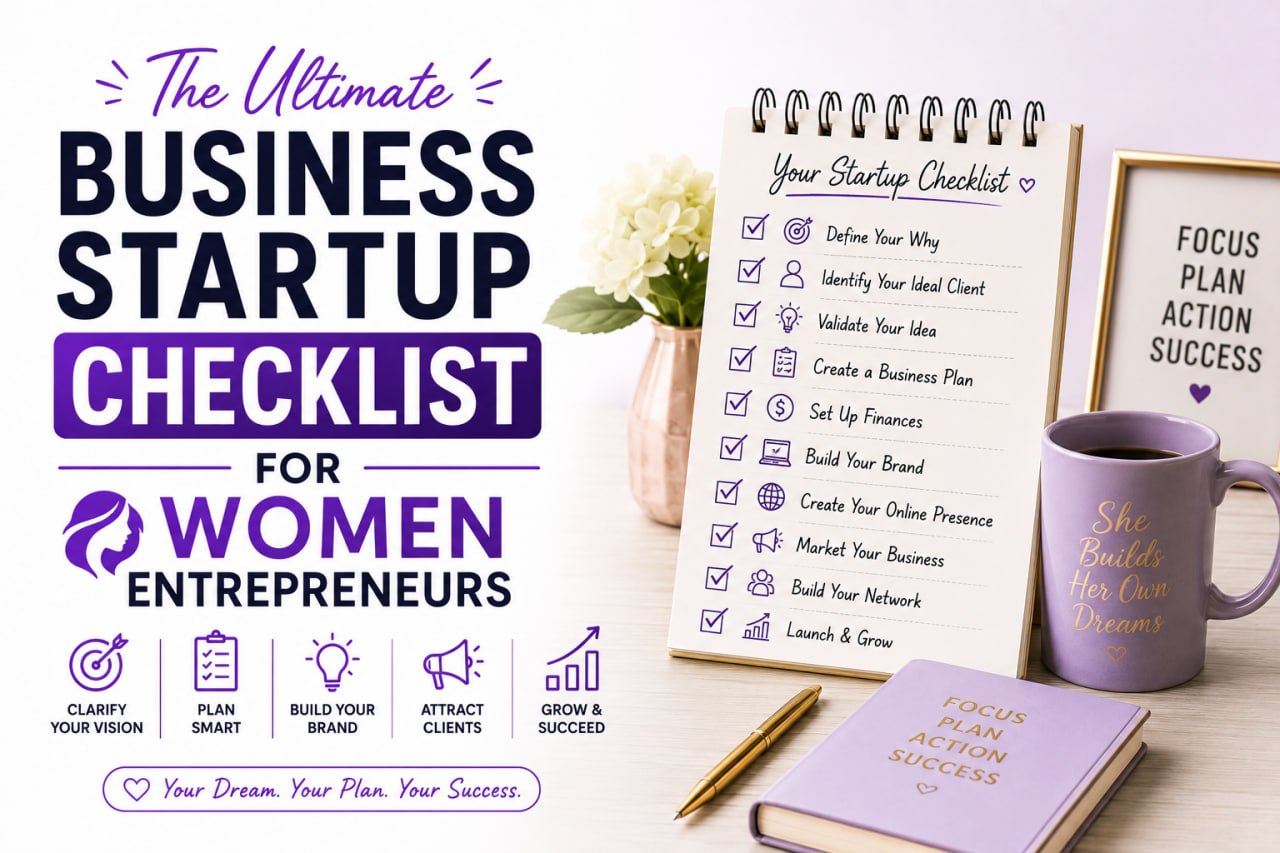
  • The Ultimate Business Startup Checklist for Women Entrepreneurs 

    The Ultimate Business Startup Checklist for Women Entrepreneurs 

    Starting a business can feel like standing at the bottom of a mountain with no map. There’s so much advice out there some of it contradictory, most of it generic that it’s easy to spend months “researching” without ever actually launching. A clear business startup checklist changes that. It turns an overwhelming goal into a series of manageable steps you can actually check off.

    This guide is built specifically with women entrepreneurs in mind because business planning for women often means balancing a launch with existing responsibilities, limited time, and a completely different risk tolerance than the average startup guide assumes. Whether you’re leaving a corporate job or building a business on the side, here’s everything you need to cover before you launch.

    Think of this less as a rigid rulebook and more as a map. Not every item will apply to every business, and you may find yourself moving between phases rather than marching through them in a perfectly straight line. What matters is that nothing critical gets missed simply because no one told you it needed doing.

    Why a Startup Checklist Matters More Than a Perfect Plan

    Perfectionism is one of the biggest reasons promising businesses never get off the ground. A checklist works because it replaces “I need to figure everything out” with “I need to complete this next item.” It gives you momentum instead of paralysis, and it ensures nothing critical slips through the cracks while you’re focused on the exciting parts, like branding or your first sale.

    Let’s walk through the checklist in order, from idea to launch.

    Phase 1: Clarify Your Business Idea

    Define the problem you solve

    ☐     Every viable business starts with a clear problem and a clear audience. Write one sentence: “I help [specific person] solve [specific problem].” If you can’t do this yet, this is your starting point not branding, not a logo, not a business name.

    Identify your ideal client

    ☐     Get specific. Not “women who need help,” but a defined person with a defined situation, budget, and urgency around the problem you solve. The more specific your ideal client, the easier every future marketing decision becomes.

    Research your market and competitors

    ☐     Look at 5–10 businesses solving a similar problem. What are they charging? What are they missing? Where do their customers complain? This isn’t about copying it’s about understanding where you can genuinely stand out.

    Validate demand before you build

    ☐     Talk to real people in your target market. Share your idea, ask what they’d pay, and pay close attention to what makes them hesitate. Validation is one of the most skipped and most important items on any startup guide.

    Phase 2: Build Your Business Foundations

    Choose your business structure

    ☐     Decide whether you’ll operate as a sole proprietor, LLC, or another structure. This affects your taxes, liability, and credibility with clients it’s worth getting right early rather than restructuring later.

    Register your business name

    ☐     Check availability, register with your state or local authority, and secure a matching domain name and social handles while you’re at it.

    Get an EIN and open a business bank account

    ☐     Keeping business and personal finances separate from day one makes bookkeeping, taxes, and eventually fundraising far easier.

    Understand your licensing and legal requirements

    ☐     Requirements vary by industry and location research what applies to you, from general business licenses to industry-specific certifications.

    Set up basic bookkeeping

    ☐     Choose a simple system (a spreadsheet or accounting software) before revenue starts coming in, not after. Retroactively organizing a year of transactions is a headache you can avoid.

    Phase 3: Build Your Offer and Pricing

    Define your core product or service

    ☐     Start with one clear offer, not five vague ones. A focused offer is easier to market, easier to sell, and easier to deliver well.

    Price for profitability

    ☐     Factor in your time, your expenses, and your desired income not just what competitors charge. Underpricing is one of the most common mistakes among new women entrepreneurs, often rooted in self-doubt rather than market reality.

    Create a simple service or sales process

    ☐     Map out what happens from a potential client’s first inquiry to onboarding. A clear process builds trust and prevents you from reinventing the wheel with every new client.

    Phase 4: Build Your Brand and Online Presence

    Develop your brand identity

    ☐     Your name, colors, and visual style should reflect your business and appeal to your ideal client not just what you personally like best.

    Build a simple, professional website

    ☐     You don’t need a complex site to launch. You need a clear homepage, an explanation of what you offer, and an easy way for people to contact or book you.

    Choose 1–2 marketing channels to focus on

    ☐     Trying to be everywhere at once every social platform, every tactic is a fast track to burnout. Pick the one or two channels where your ideal client actually spends time.

    Create a simple content or outreach plan

    ☐     Consistency beats intensity. A sustainable weekly rhythm of content or outreach will outperform sporadic bursts of effort every time.

    Phase 5: Plan Your Finances

    Build a startup budget

    ☐     Know exactly what you need to launch website, tools, legal fees, initial marketing and how you’ll fund it.

    Set financial goals and milestones

    ☐     Define what revenue you need to replace your income (if applicable), and set realistic milestones for your first 3, 6, and 12 months.

    Create a financial runway if you’re leaving employment

    ☐     If this business is replacing a corporate income, build savings or a transition plan so financial pressure doesn’t force premature decisions.

    Phase 6: Prepare for Launch

    Line up your first clients or customers

    ☐     Ideally, you have interest or even paying clients lined up before your official launch. Beta clients, referrals, and your existing network are the fastest starting point.

    Set up simple systems and tools

    ☐     Scheduling, invoicing, email, and project management tools don’t need to be elaborate at launch just functional and easy to maintain.

    Plan your launch announcement

    ☐     Decide how and where you’ll announce your business email, social media, your network and prepare the messaging in advance so launch week isn’t chaotic.

    Build a support system

    ☐     Whether it’s a coach, mentor, mastermind, or fellow entrepreneur, don’t underestimate how much a guided roadmap and community shortens the learning curve compared to figuring it all out alone.

    The Most Common Startup Checklist Mistakes

    Even with a checklist in hand, a few patterns trip up new founders again and again:

    •        Skipping validation and building a full offer before confirming anyone wants it.

    •        Overbuilding before launch spending months perfecting a website instead of getting in front of clients.

    •        Underpricing out of fear rather than pricing based on value and financial need.

    •        Trying to do everything alone, from legal setup to marketing to sales, without support or structure.

    •        Waiting for certainty instead of taking the next actionable step on the list.

    Recognizing these patterns in advance is often enough to avoid them. If you notice yourself stuck on one item for weeks with no forward progress, that’s usually a sign it’s time to simplify the step, ask for outside input, or move on and circle back later rather than letting it block everything else.

    How Long Should It Take to Complete a Business Startup Checklist?

    Timelines vary by industry and how much time you can dedicate each week, but with focused effort, most founders can move through validation, foundations, offer development, and a simple launch in about three months. The goal isn’t speed for its own sake it’s steady, deliberate progress instead of stalling indefinitely in the planning phase.

    You Don’t Have to Check Every Box Alone

    A business startup checklist gives you direction, but direction is easier to follow with someone who’s walked the path before. That’s exactly the gap Amethyst Business Solutions fills personalized business planning for women who are ready to move from idea to income, with a clear roadmap instead of scattered advice.

    [Book your free 30-minute consultation](https://amethystbusinesssolutions.com/contact/) and get a startup guide built specifically around your business, not a generic template.

    Frequently Asked Questions

    What’s the first step on a business startup checklist?

    The first step is clarifying the specific problem you solve and for whom before registering a name, building a website, or designing a logo. Everything else is easier once that’s clear.

    Do I need a business plan before I start?

    You need clarity on your offer, audience, and finances, but a full formal business plan isn’t always necessary to start. Many founders begin with a lean plan and refine it as they validate demand.

    How much does it cost to start a small business?

    Costs vary widely by industry, but many service-based businesses can launch with a modest budget covering registration, a simple website, and basic tools often far less than people assume.

    What makes business planning different for women entrepreneurs?

    Women often navigate startup planning alongside existing caregiving responsibilities, different risk tolerances, and, in some industries, less access to funding and mentorship making a tailored, supportive roadmap especially valuable.

  • How to Overcome Fear and Self-Doubt When Starting a Business

    How to Overcome Fear and Self-Doubt When Starting a Business

    You can have the perfect business idea, a validated market, and a solid plan and still feel completely paralyzed by fear. If that sounds familiar, you’re not broken, and you’re not alone. Learning how to overcome entrepreneurial fear is one of the most important, least talked-about skills in building a business. The strategy matters, but so does the mindset behind it.

    Fear doesn’t mean you’re on the wrong path. In fact, it usually means you’re on exactly the right one stepping toward something meaningful enough to actually matter. This guide walks through where that fear comes from, and practical ways to build real confidence for entrepreneurs so it stops running the show.

    If you’ve ever caught yourself rewriting the same email ten times, delaying a launch “just a little longer,” or quietly assuming everyone else feels more certain than you do, this is for you. None of that means you’re unprepared. It usually just means no one ever taught you how to work with fear instead of waiting for it to disappear.

    Why Fear and Self-Doubt Are So Common Among New Entrepreneurs

    Starting a business asks you to give up certainty a steady paycheck, a defined role, an existing structure in exchange for something you’re building yourself. That trade is inherently uncomfortable, and a few specific fears tend to show up again and again:

    •        Fear of financial failure. What if the business doesn’t work and I’ve wasted my savings, or worse?

    •        Fear of judgment. What will people think if I fail publicly, after telling everyone I was doing this?

    •        Fear of not being “enough.” Enough experience, enough skill, enough credibility to charge what I’m worth.

    •        Fear of losing identity. Who am I without the job title, the team, the structure I’ve built my identity around?

    •        Imposter syndrome. The nagging sense that you’ll be “found out” as underqualified, even when your track record says otherwise.

    None of these fears are irrational they’re logical responses to real uncertainty. The goal isn’t to eliminate fear entirely. It’s to stop letting it make your decisions for you.

    Understanding the Difference Between Fear and Intuition

    One of the most useful skills you can build is learning to tell the difference between fear and genuine intuition, because they can feel remarkably similar in the moment.

    •        Fear tends to be vague, repetitive, and focused on worst-case scenarios: “What if this all falls apart?”

    •        Intuition tends to be specific and actionable: “This particular client isn’t the right fit” or “I need more information before I commit to this.”

    When a worry shows up, ask yourself: is this pointing me toward a specific, useful action — or is it just spinning worst-case scenarios on repeat? That distinction alone can quiet a surprising amount of noise.

    Practical Strategies to Overcome Entrepreneurial Fear

    1. Name the specific fear, not the vague anxiety

    “I’m scared” is hard to work with. “I’m scared that if I raise my prices, no one will hire me” is something you can actually examine and address. Get specific about what you’re afraid of it shrinks the fear from an overwhelming cloud into a solvable problem.

    2. Separate facts from stories

    Fear often tells a story: “I’ll fail and everyone will know.” The facts are usually far more manageable: “I have relevant experience, I’ve validated demand, and I have a financial plan in place.” Write both down side by side. The gap between them is usually where the fear is doing its damage. This exercise sounds simple, but seeing it in writing rather than looping in your head — often makes the distortion obvious in a way that just “thinking it through” rarely does.

    3. Build evidence through small wins

    Confidence isn’t something you wait to feel before you act it’s something you build by acting. Each small win a client conversation, a completed task, a first sale becomes evidence that counters the fear. Momentum builds confidence far more reliably than reassurance alone.

    4. Reframe failure as information

    Every setback in business a client who says no, a launch that underperforms is data, not a verdict on your worth. Founders who treat failure as feedback move forward faster than those who treat it as proof they shouldn’t have started.

    5. Set a “good enough to start” standard

    Perfectionism disguises itself as high standards, but it’s often just fear wearing a more acceptable mask. Give yourself a real, specific standard for launching not perfect, but ready and hold yourself to that instead of an undefined, ever-moving bar.

    6. Limit comparison, especially on social media

    Comparing your first month to someone else’s fifth year is a distorted, unfair comparison and it’s one of the fastest ways to talk yourself out of starting. If a particular account consistently triggers self-doubt, it’s worth muting, even temporarily.

    7. Build a support system

    Isolation amplifies fear; community interrupts it. Surrounding yourself with other entrepreneurs especially those a few steps ahead normalizes the hard parts and reminds you that doubt is part of the process, not a sign you’re doing it wrong.

    Building a Resilient Women Entrepreneur Mindset

    Confidence for entrepreneurs isn’t about eliminating self-doubt entirely even experienced founders feel it. It’s about building a mindset that keeps moving despite it. A few mindset shifts that make a measurable difference:

    •        From “Am I ready?” to “What’s my next step?” Readiness is proven through action, not certainty felt in advance.

    •        From “I have to do this perfectly” to “I have to do this well enough to learn and improve.” Progress compounds; perfection stalls.

    •        From “What if I fail?” to “What will I learn either way?” Reframing risk as information reduces its emotional weight.

    •        From isolation to community. Doubt grows quietly in isolation and shrinks in the presence of people who understand exactly what you’re navigating.

    •        From waiting for confidence to building it through action. Confidence is a byproduct of experience, not a prerequisite for starting.

    This mindset doesn’t appear overnight, and it’s not something you’re expected to build alone. It’s built through consistent, supported action which is exactly why so many founders benefit from a guide, mentor, or structured roadmap rather than trying to white-knuckle their way through doubt solo.

    When Fear Signals Something Worth Listening To

    Not all fear should be pushed through. Sometimes hesitation is pointing to something real a plan that needs more validation, a financial cushion that isn’t quite in place yet, or a decision made too quickly under pressure. The goal isn’t to ignore every uncomfortable feeling; it’s to get specific enough to tell the difference between fear that’s protecting you and fear that’s just familiar.

    If you’re unsure which one you’re feeling, it often helps to talk it through with someone outside your own head a mentor, coach, or peer who can offer perspective you can’t access alone.

    How Do You Know If Fear Is Holding You Back From Starting a Business?

    A useful check: if your hesitation is vague, repetitive, and hasn’t changed despite new information or preparation, it’s likely fear rather than a legitimate red flag. If, on the other hand, your hesitation points to a specific, addressable gap like insufficient validation or an unclear offer it’s worth resolving that gap before moving forward, rather than pushing through blindly.

    You Don’t Have to Push Through Fear Alone

    Overcoming entrepreneurial fear isn’t about becoming fearless it’s about building enough clarity, evidence, and support that fear stops being the loudest voice in the room. With the right roadmap and the right people around you, self-doubt becomes a normal part of the journey instead of a roadblock that stops you before you start.

    Amethyst Business Solutions helps women build both the strategy and the confidence to move forward with a personalized plan and support at every step, not just a generic pep talk.

    [Book your free 30-minute consultation](https://amethystbusinesssolutions.com/contact/) and start building your business with clarity instead of fear in the driver’s seat.

    Frequently Asked Questions

    Is it normal to feel afraid when starting a business?

    Yes, fear and self-doubt are extremely common among new entrepreneurs, even those who go on to build highly successful businesses. The presence of fear doesn’t indicate the wrong path; it often reflects the significance of the decision.

    How do I stop imposter syndrome as a new entrepreneur?

    Building evidence through small, consistent wins, separating facts from fear-based stories, and connecting with a support community are among the most effective ways to quiet imposter syndrome over time.

    What’s the difference between fear and a legitimate red flag?

    Fear tends to be vague and repetitive regardless of new information. A legitimate concern is usually specific and points to an identifiable gap like insufficient validation or an unclear financial plan that can be directly addressed.

    How long does it take to build confidence as an entrepreneur?

    Confidence typically builds gradually through action and small wins rather than arriving all at once. Most founders notice a meaningful shift within the first few months of consistent, supported progress.

  • How to Leave Your Corporate Job and Start a Business with Confidence

    How to Leave Your Corporate Job and Start a Business with Confidence

    There’s a specific kind of exhaustion that comes from sitting in a job that no longer fits checking the clock, refreshing your inbox, and wondering if there’s a different version of your career waiting for you. If you’ve been quietly Googling how to leave your corporate job, you already know the feeling. You’re not lazy, and you’re not “just having a bad week.” You’re ready for a change, and you want to make it without blowing up your life to do it.

    The good news: the shift from employee to entrepreneur doesn’t have to be reckless. With the right plan, a realistic timeline, and a little support, your career transition can be one of the most confident decisions you’ll ever make.

    This guide walks you through exactly how to leave your corporate job and start a business the smart way step by step, without the guesswork.

    Why So Many People Are Ready to Leave Their Corporate Job

    You’re far from alone. More professionals, especially women in mid-to-senior roles are stepping away from “safe” jobs that quietly stopped serving them. The common threads usually sound like this:

    • You’ve hit a ceiling. There’s no more room to grow, and the next promotion doesn’t excite you anymore.
    • Your time isn’t yours. Someone else decides your calendar, your priorities, and your worth.
    • You have expertise nobody’s paying you fairly for. You could be charging clients directly for the exact skills your employer relies on.
    • You crave ownership. Not just of your time, but of your decisions, your income ceiling, and your future.

    None of these reasons are impulsive. They’re signals. The key is translating that readiness into a plan you can actually execute.

    Step 1: Get Honest About Your “Why”

    Before you touch a business plan or a resignation letter, get clear on why you want to leave your corporate job in the first place. Is it freedom? Financial growth? Doing work that actually reflects your values? Escaping a toxic environment?

    Your “why” becomes your anchor. On the hard days of entrepreneurship and there will be hard days this is what keeps you moving instead of running back to the safety of a paycheck out of fear rather than choice.

    Step 2: Choose a Profitable Niche, Not Just a Passion

    One of the biggest mistakes in any employee-to-entrepreneur transition is building a business around a hobby instead of a market. Passion matters, but profitability keeps the lights on.

    Ask yourself:

    • What problem do I solve better than most people I know?
    • Who is actively paying for this solution right now?
    • Can I describe my ideal client in one sentence?

    A profitable niche sits at the intersection of your expertise, a real market need, and people who are already willing to pay for the outcome you provide. This is exactly the kind of clarity a personalized business roadmap is designed to uncover narrowing down “I could do a lot of things” into “this is the business I’m building.”

    Step 3: Build Your Financial Runway Before You Resign

    Confidence doesn’t come from blind optimism it comes from preparation. Before you leave your corporate job, build a financial runway that lets you focus on your business instead of panicking about rent.

    A few practical benchmarks:

    • Save 3–6 months of essential expenses as a buffer.
    • Track your current spending so you know your real “survival number.”
    • Consider a transition period where you build your business on the side before going full-time.
    • Separate personal and business finances early, even if the business is still small.

    This isn’t about waiting for “someday when I feel 100% ready” perfectionism is one of the biggest obstacles to progress. It’s about giving yourself enough breathing room that fear isn’t making your decisions for you.

    Step 4: Test and Validate Before You Leap

    You don’t need a fully-formed business to start testing it. In fact, you shouldn’t wait that long. Validate your idea while you’re still employed:

    • Offer your service to a handful of paying beta clients on evenings or weekends.
    • Create a simple offer page or landing page and see if people actually inquire.
    • Talk to 10–15 people in your target market about the problem you want to solve.
    • Track real interest inquiries, sign-ups, or sales, not just compliments.

    Validation replaces guesswork with evidence. It’s far easier to leave your corporate job with confidence when you already have proof that people want what you’re building.

    Step 5: Build Your Business Foundations

    Once you’ve validated the idea, it’s time to build the structure that will support it: your business model, pricing, branding, and simple operating systems. This is the stage where many aspiring entrepreneurs get stuck – not because they lack ability, but because they’re trying to figure out branding, sales, legal setup, and marketing all at once, alone.

    At this stage, focus on:

    • Business model – how you’ll deliver your product or service and how you’ll get paid.
    • Pricing strategy – priced for profit, not just to “get your foot in the door.”
    • Branding and online presence – a simple, professional way for potential clients to find and trust you.
    • Sales process – a repeatable way to turn conversations into paying clients.

    This is exactly where a structured roadmap like the one used in Amethyst Business Solutions’ step-by-step program saves months of trial and error, because someone who’s guided founders through this exact transition maps the route with you instead of leaving you to figure it out solo.

    Step 6: Plan Your Exit Strategically

    When it’s finally time to leave your corporate job, do it with the same professionalism that got you the job in the first place.

    • Give appropriate notice – protect your reputation and your references.
    • Understand your benefits transition – health insurance, retirement accounts, and any equity or bonuses tied to your departure date.
    • Review your contract – check for non-compete or non-solicitation clauses that could affect your new business.
    • Keep it professional – you never know when a former employer becomes a future client or referral source.

    A clean exit protects the relationships and reputation you’ve spent years building.

    Step 7: Manage the Emotional Side of the Career Transition

    Nobody talks enough about this part. Leaving corporate life isn’t just a financial and logistical shift it’s an identity shift. For years, your job title may have been part of how you introduced yourself. Replacing that structure with the open-endedness of entrepreneurship can feel disorienting, even when it’s exactly what you wanted.

    Some ways to manage the transition emotionally:

    • Expect a period of uncertainty. It doesn’t mean you made the wrong choice.
    • Find community. Other entrepreneurs ideally ones who’ve already made this shift normalize what you’re feeling.
    • Redefine success on your own terms. It no longer has to look like a corner office or a title on a business card.
    • Get support. A mentor or coach who’s guided others through this exact path can shorten your learning curve and steady your confidence when self-doubt creeps in.

    How Long Does It Take to Go From Employee to Entrepreneur?

    There’s no universal timeline, but a focused, guided transition often takes around three months to establish real business foundations: a clear niche, a validated offer, a business plan, and the beginnings of an online presence with ongoing growth after that. Rushing rarely helps, and neither does waiting indefinitely for the “perfect” moment. Clarity and confidence come from taking action, not from more research.

    You Don’t Have to Figure This Out Alone

    Leaving your corporate job is one of the biggest professional decisions you’ll make but it doesn’t have to be a leap into the unknown. With a clear destination, a personalized plan, and the right support along the way, your career transition can be deliberate, strategic, and genuinely exciting instead of terrifying.

    Amethyst Business Solutions was built specifically to help women make this exact shift from employee to confident, thriving entrepreneur with a step-by-step roadmap instead of guesswork.

    Book your free 30-minute consultation and start building your next chapter with confidence.

    Frequently Asked Questions

    How much money should I save before I leave my corporate job? 

    Most financial advisors recommend 3–6 months of essential living expenses as a starting buffer, though the right number depends on your business model, income needs, and how quickly your new business is likely to generate revenue.

    Should I start my business before quitting my job? 

    In most cases, yes. Building and validating your business idea on the side evenings, weekends, or reduced hours lets you test demand and generate early income before you rely on it fully.

    What’s the biggest mistake people make when leaving corporate to start a business? 

    Skipping validation. Many new entrepreneurs invest heavily in branding and logistics before confirming that real people will actually pay for their product or service.

    How do I know if I’m ready to leave my corporate job? 

    Readiness usually shows up as a mix of clear motivation, a validated business idea, a financial plan, and emotional preparedness for uncertainty not just frustration with your current job.

  • 15 Signs You’re Ready to Become an Entrepreneur

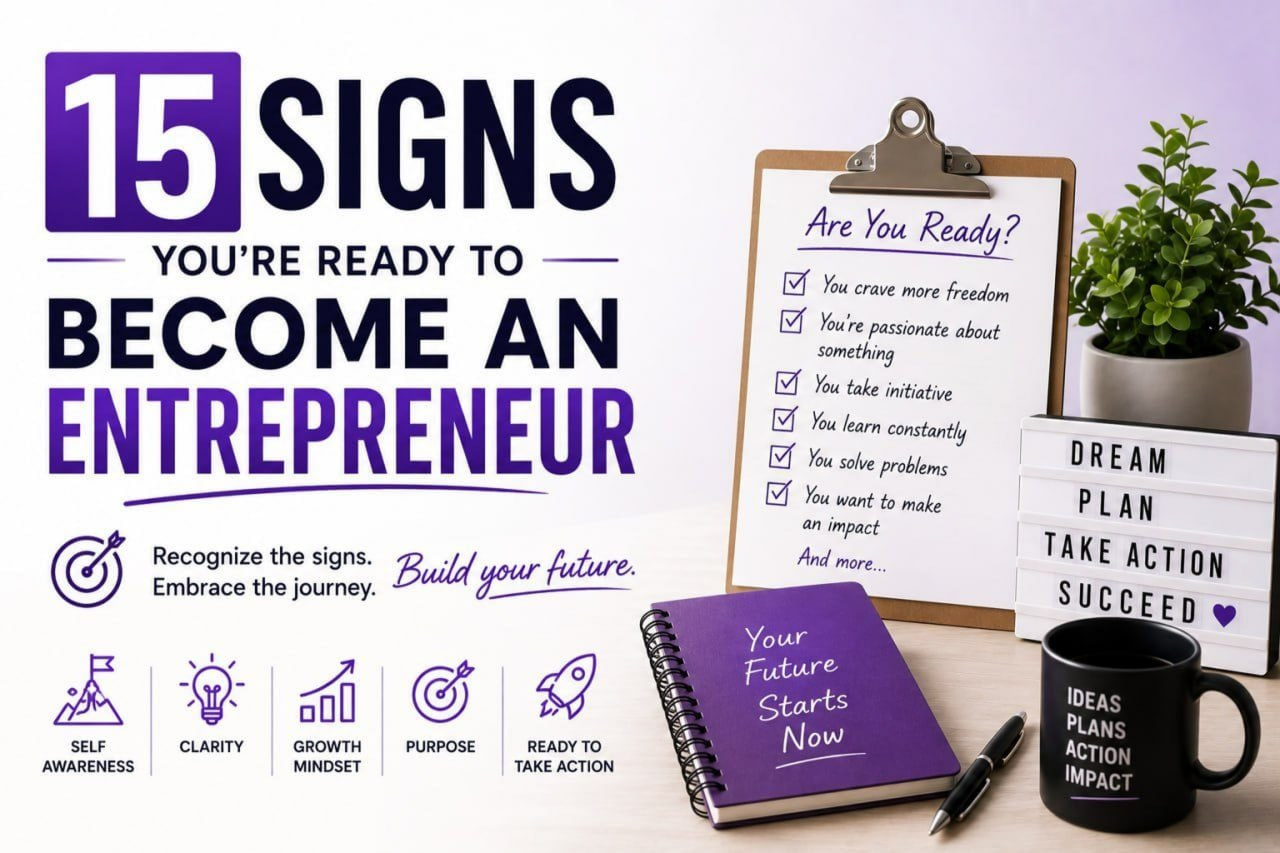
    15 Signs You’re Ready to Become an Entrepreneur

    Somewhere between “I have an idea” and “I actually started my business,” most people get stuck asking the same question: am I really ready to do this? It’s a fair question. Deciding to become an entrepreneur isn’t just a career move it’s a shift in identity, income structure, and daily life.

    Here’s the truth: nobody feels 100% ready. Readiness isn’t a feeling you wait for it’s a pattern you can recognize in yourself, built from small, consistent signals rather than one dramatic lightning-bolt moment. If you’re weighing whether to start your own business, these 15 signs will help you separate genuine readiness from fear dressed up as “not the right time.”

    This matters because the cost of waiting is real. Every year spent waiting for certainty is a year of expertise, income potential, and momentum you don’t get back. On the flip side, jumping in without any of these signs present can lead to a business built on impulse rather than insight. The goal here isn’t to talk you into anything it’s to help you see your own readiness clearly, so you can move forward deliberately instead of guessing.

    1. You Can’t Stop Thinking About It

    If your business idea keeps showing up in the shower, during meetings, and right before bed, that’s not a passing daydream that’s a signal. Persistent, specific ideas (not vague “someday” fantasies) are one of the clearest early markers of an entrepreneurship journey beginning to take shape.

    2. You’ve Outgrown Your Current Role

    You’ve mastered your job. You could do it in your sleep, and the growth, challenge, or compensation you once had simply isn’t there anymore. When a role stops stretching you, it’s often a sign your ambition has outgrown the container you’re in.

    3. You Already Have In-Demand Expertise

    You don’t need to reinvent yourself to become an entrepreneur you likely already have the skills. If colleagues, friends, or clients regularly come to you for advice in your area of expertise, that’s a business asset, not just a reputation.

    4. You’re Willing to Trade Certainty for Ownership

    A steady paycheck is comfortable, but comfort and fulfillment aren’t the same thing. If you’re mentally ready to trade guaranteed income for the potential of building something that’s entirely yours, that’s a real mindset shift and a necessary one.

    5. You’ve Started Researching, Not Just Dreaming

    Browsing “how to start a business” is one thing. Actually researching business models, pricing structures, competitors, and legal setup is another. If you’ve moved from fantasy into fact-finding, you’re further along than you think.

    6. You Have (or Are Building) a Financial Cushion

    Readiness isn’t just emotional it’s financial. If you’re actively saving, budgeting, or restructuring your finances to prepare for a transition, you’re approaching entrepreneurship strategically instead of impulsively.

    7. You’re Comfortable With Discomfort

    Entrepreneurship guarantees uncertainty: unpredictable income, unclear timelines, and constant decision-making. You don’t have to love discomfort, but if you can tolerate it without shutting down, you have a critical trait most successful founders share.

    8. You Ask “How” Instead of “If”

    Notice your own language. “If I started a business” is exploratory. “How would I structure my pricing” or “how do I find my first clients” is operational. When your internal dialogue shifts from possibility to logistics, that’s momentum.

    9. You’ve Identified a Real Problem to Solve

    Every sustainable business exists to solve a specific problem for a specific person. If you can clearly articulate who you’d serve and what problem you’d solve for them, you already have the foundation of a business model not just an idea. This is different from having a general passion or skill; it means you can finish the sentence, “I help [specific person] achieve [specific outcome],” without rambling. That level of clarity usually only comes from paying close attention to real conversations, real frustrations, and real gaps in the market not from brainstorming alone in your head.

    10. You’re Willing to Start Small

    You don’t need a perfect five-year plan to start your own business. If you’re willing to start with an imperfect offer, a small first client, or a simple version of your idea, you understand that momentum matters more than perfection.

    11. You Seek Out Other Entrepreneurs

    Pay attention to who you’re drawn to lately are you gravitating toward founder stories, business podcasts, or entrepreneur communities? Seeking out people already living the path you want is a strong, often subconscious, sign of readiness.

    12. You’re Protective of Your Time

    If you’ve started guarding your evenings and weekends to work on a side project, learn a new skill, or plan your business, you’re already behaving like an entrepreneur treating your future business as a priority, not an afterthought.

    13. You Handle Rejection Without Quitting

    Entrepreneurship involves a steady stream of “no” from potential clients, partners, investors, or even your own self-doubt. It’s rarely a straight line from idea to income; most founders face rejection long before they see traction. If setbacks make you recalibrate rather than retreat if a “no” makes you ask “what can I adjust?” instead of “should I give up?” you have the resilience this path demands.

    14. You Want Ownership of Your Decisions

    Beyond money, many people become entrepreneurs because they want control – over their schedule, their strategy, and the direction of their work. If the idea of answering to no one (while being accountable to everyone, including yourself) excites more than it terrifies you, that’s telling.

    15. You’re Tired of Waiting for “Ready”

    This is the biggest sign of all. If you’ve read this whole list nodding along, but you’re still waiting to feel 100% certain before you start – recognize that clarity and confidence come from taking action, not from more preparation. Perfectionism is one of the most common obstacles standing between capable people and their first step.

    What to Do If You Recognize Yourself in This List

    Seeing yourself in several of these signs doesn’t mean you need to quit your job tomorrow. It means it’s time to move from reflection into structure. A successful entrepreneurship journey usually follows a clear sequence:

    1. Clarify your destination – get specific about the business you want to build and the lifestyle you’re building it for.
    2. Draw your personalized plan – define your niche, your ideal client, and your business model.
    3. Plan your route – branding, pricing, and marketing strategy.
    4. Start building – establish your business foundations, online presence, and early systems.
    5. Reach your milestones – acquire clients, manage cash flow, and grow with intention.

    Trying to build all five stages alone, from scratch, is exactly why so many aspiring founders stall out at “someday.” It’s not usually a lack of ability that stalls people it’s the sheer number of decisions happening at once, with no clear order and no one to sanity-check them. Having a roadmap — and someone who’s walked other founders through this exact process turns readiness into results, because you’re no longer guessing which step comes next or second-guessing every decision alone.

    How Do You Know You’re Truly Ready to Become an Entrepreneur?

    There’s no single “aha” moment that makes someone ready to start their own business. Readiness is cumulative a mix of mindset, financial preparation, market clarity, and resilience that builds over time. If you recognize even five or six of the signs above, you’re not early in your entrepreneurship journey. You’re likely closer to the starting line than you realize.

    Ready to Take the Next Step?

    You don’t have to have every answer before you begin you just need the next right step and a plan to guide you there. Amethyst Business Solutions helps women turn “I think I’m ready” into a clear, confident business roadmap, from your first idea to your first paying clients.

    Book your free 30-minute consultation and find out exactly where you are on your entrepreneurship journey and what your next step should be.


    Frequently Asked Questions

    How do I know if I’m ready to become an entrepreneur? 

    Readiness shows up as a combination of signs — persistent business ideas, in-demand skills, financial preparation, tolerance for uncertainty, and a shift from “if” to “how” in your thinking. Recognizing several of these traits in yourself is a strong indicator.

    Do I need savings before I start my own business? 

    While it’s possible to start small without significant savings, having a financial cushion reduces pressure and lets you make strategic decisions instead of reactive ones during your entrepreneurship journey.

    Can I become an entrepreneur while still working full-time? 

    Yes — many successful founders validate and build the early stages of their business on the side before transitioning out of full-time employment. This approach reduces financial risk while proving demand.

    What’s the first step to start your own business? 

    The first step is clarity: defining your niche, your ideal client, and the specific problem you solve. From there, a structured roadmap helps you build your business model, brand, and go-to-market strategy.

  • Women Entrepreneurs: The Complete Guide to Building a Profitable Online Business

    Women Entrepreneurs: The Complete Guide to Building a Profitable Online Business

    More women are launching online businesses than ever before, drawn by the flexibility, low startup costs, and unlimited potential of building something entirely their own. But turning an idea into a genuinely profitable online business takes more than passion and a great offer. It requires a clear strategy, strong financial foundations, and the right systems to support sustainable growth.

    This guide walks through everything women entrepreneurs need to know to build an online business that isn’t just active, but actually profitable from choosing the right business model to managing your finances like a CEO.

    Why Women Entrepreneurs Are Reshaping the Online Business Landscape

    Women-owned businesses have been growing at a faster rate than businesses overall for years, and the online space has become one of the most accessible paths to entrepreneurship. Coaching, consulting, e-commerce, digital products, and service-based businesses allow women to build income streams around their expertise and lifestyle needs, often while balancing family responsibilities or transitioning from corporate careers.

    But accessibility doesn’t guarantee profitability. Many women entrepreneur business owners launch with excitement, only to struggle with inconsistent income, unclear pricing, or the overwhelm of trying to do everything themselves. Building a profitable business requires intentional planning from day one not just a website and a social media page.

    Step 1: Choose a Business Model Built for Profit, Not Just Passion

    Passion matters, but profitability depends on choosing a business model that has real market demand and a sustainable path to revenue. Common profitable online business models for women entrepreneurs include:

    ●       Service-based businesses — coaching, consulting, done-for-you services, freelance expertise

    ●       Digital products — courses, templates, memberships, and digital downloads

    ●       E-commerce — physical products sold through your own store or third-party marketplaces

    ●       Hybrid models — combining services with digital products to create multiple income streams

    The key question isn’t just “what am I passionate about?” but “what problem am I solving, and are people willing to pay to solve it?” Validating demand before investing heavily in a business model saves both time and money.

    Step 2: Get Clear on Your Ideal Client

    One of the biggest profit killers for online businesses is trying to appeal to everyone. Instead, successful women entrepreneurs get specific about who they serve their challenges, goals, budget, and buying behavior. This clarity does several things at once:

    ●       Makes your marketing more effective, since your messaging speaks directly to a specific person’s pain points

    ●       Allows you to price based on the value you deliver to that specific client, rather than competing on price alone

    ●       Helps you create offers and content that actually convert, instead of generic content that gets ignored

    A narrower focus almost always leads to more profit than a broad, undefined audience.

    Step 3: Build a Pricing Strategy That Actually Supports Profitability

    Pricing is one of the areas where many online business owners especially those newer to entrepreneurship — undervalue themselves. Setting prices based on what feels comfortable, rather than what the business needs to be sustainable, is one of the fastest ways to end up working long hours for very little profit.

    A sound pricing strategy considers:

    ●       Your costs — including tools, subscriptions, contractors, and your own time

    ●       Your desired income — working backward from your financial goals to determine how many clients or sales you need

    ●       The value delivered — what results, transformation, or outcome your offer provides

    ●       Market positioning — pricing that reflects your expertise rather than competing purely on being the cheapest option

    This is where many entrepreneurs benefit from online business coaching or financial guidance, since it can be difficult to price objectively when you’re emotionally close to your own business.

    Step 4: Set Up Financial Systems From the Start

    It’s easy to focus entirely on sales and marketing while treating bookkeeping and financial management as an afterthought — but this is one of the most common reasons online businesses stall out or fail to become truly profitable. Revenue is not the same as profit, and without clear financial systems, it’s nearly impossible to know how your business is actually performing.

    Foundational financial systems for a profitable online business include:

    1.      Separate business and personal finances, including a dedicated business bank account

    2.      Consistent bookkeeping, so income and expenses are tracked accurately and in real time

    3.      A simple profit and loss review process, so you know monthly whether the business is actually profitable

    4.      Tax planning, so you’re setting aside the right amount and avoiding surprises

    5.      Cash flow forecasting, especially important for businesses with seasonal or inconsistent sales cycles

    Many women entrepreneurs delay this step, assuming it’s only necessary once the business is larger — but building these systems early prevents costly mistakes and gives you the financial clarity needed to make smart growth decisions.

    Step 5: Create a Marketing Strategy That Converts

    Visibility alone doesn’t create profitability conversion does. A strong marketing strategy for an online business typically includes:

    ●       A clear content strategy built around your ideal client’s questions and pain points, rather than posting randomly

    ●       An owned audience, such as an email list, so you’re not entirely dependent on social media algorithms

    ●       A defined sales process, whether that’s a sales page, discovery call, or automated funnel, that guides potential clients toward a purchase decision

    ●       Consistent follow-up, since most sales happen after multiple touchpoints, not the first interaction

    Women entrepreneurs who treat marketing as a strategic system, rather than a series of disconnected social media posts, tend to see far more consistent revenue.

    Step 6: Build Systems So the Business Doesn’t Depend Entirely on You

    Many online businesses hit a profit ceiling because the owner is doing everything content creation, client delivery, admin, bookkeeping, and customer service. Scaling profitably requires building systems and, eventually, delegating tasks that don’t require your specific expertise.

    This might include:

    ●       Outsourcing bookkeeping and financial management to a professional

    ●       Using templates and standard operating procedures for repetitive tasks

    ●       Hiring a virtual assistant or contractor for administrative work

    ●       Automating parts of your marketing and sales process

    Delegation isn’t just about freeing up time it directly impacts profitability by allowing you to focus your energy on the highest-value activities in your business.

    Step 7: Track the Right Metrics

    Profitability isn’t just about how much revenue you bring in it’s about understanding the full financial picture. Women entrepreneurs building a profitable online business should regularly track:

    ●       Gross revenue — total sales before expenses

    ●       Net profit — what’s actually left after all expenses

    ●       Profit margin — the percentage of revenue that becomes profit

    ●       Customer acquisition cost — how much it costs to gain a new client or customer

    ●       Client lifetime value — how much revenue a client generates over the full relationship

    Without tracking these numbers, it’s easy to feel busy and “successful” while the business is actually barely breaking even, or losing money once expenses are factored in.

    The Role of Online Business Coaching in Long-Term Success

    Building a profitable online business rarely happens in isolation. Many successful women entrepreneurs credit part of their growth to working with a coach, mentor, or financial partner who helps them see blind spots, make objective pricing decisions, and stay accountable to their goals.

    Good online business coaching typically helps with:

    ●       Clarifying strategy and business model decisions

    ●       Building confidence around pricing and sales conversations

    ●       Creating financial systems and reviewing performance objectively

    ●       Navigating growth decisions like hiring, expanding offers, or raising prices

    Rather than trying to learn everything through trial and error, working with the right support can significantly shorten the path to profitability.

    Common Mistakes That Keep Online Businesses From Becoming Profitable

    ●       Underpricing offers out of fear of rejection or lack of confidence

    ●       Ignoring bookkeeping until tax season creates a stressful scramble

    ●       Chasing every new marketing trend instead of building a consistent strategy

    ●       Trying to serve everyone instead of narrowing in on an ideal client

    ●       Reinvesting without a plan, spending on courses, tools, or ads without a clear return-on-investment strategy

    ●       Not separating business and personal finances, which makes it nearly impossible to understand true profitability

    Avoiding these common pitfalls puts women entrepreneurs significantly ahead of the curve when it comes to building sustainable, profitable businesses.

    Building a Business That’s Profitable, Not Just Busy

    Building a profitable online business as a woman entrepreneur takes more than a great idea it requires a defined business model, a clear ideal client, sound pricing, strong financial systems, and a marketing strategy built to convert. The entrepreneurs who succeed long-term are the ones who treat their business like a business from the start, tracking their numbers and making strategic decisions instead of just staying busy.

    At Amethyst Business Solutions, we support women entrepreneurs with the financial coaching, bookkeeping, and strategic guidance needed to turn an online business idea into a genuinely profitable venture. Whether you’re just starting out or ready to scale, having the right financial foundation makes all the difference.

    Frequently Asked Questions

    What makes an online business actually profitable, not just busy?

    Profitability comes from having a validated business model, sound pricing, low unnecessary overhead, and consistent tracking of revenue versus expenses not simply from generating sales or staying active online.

    How much should I charge as a new online business owner?

    Pricing should be based on your costs, desired income, and the value your offer provides not simply what feels comfortable or what competitors charge. Many entrepreneurs benefit from professional guidance when setting initial pricing.

    Do I need bookkeeping if I’m just starting my online business?

    Yes. Setting up bookkeeping and separating business finances from personal finances early prevents costly mistakes and gives you the financial clarity needed to make good business decisions as you grow.

    Is online business coaching worth it for new entrepreneurs?

    For many women entrepreneurs, coaching accelerates growth by providing objective feedback on pricing, strategy, and financial decisions helping avoid common, costly mistakes made when building a business alone.

  • Why Every Service Provider Needs a Clear Business Strategy

    Why Every Service Provider Needs a Clear Business Strategy

    Running a service-based business often feels like a constant juggling act. Between client work, invoicing, marketing, and day-to-day operations, it’s easy to spend every hour reacting to whatever is most urgent instead of working toward what actually matters. This is exactly why a clear business strategy for service providers isn’t optional it’s the foundation that separates businesses that grow predictably from those that stay stuck in survival mode.

    Whether you’re a consultant, coach, bookkeeper, designer, or agency owner, the quality of your services alone won’t guarantee success. You need a roadmap that connects your daily actions to your long-term goals. In this guide, we’ll break down why business strategy matters so much for service providers, what happens when it’s missing, and how to build one that actually works.

    What Is a Business Strategy, and Why Does It Matter for Service Providers?

    A business strategy is a defined plan that outlines how your company will achieve its goals who you serve, what makes you different, how you’ll price and deliver your services, and how you’ll grow sustainably over time. It’s the difference between “I offer bookkeeping services” and “I help small business owners in specific industries get audit-ready financials so they can secure funding and scale with confidence.”

    For service providers specifically, strategy matters more than most people realize because:

    ●       You’re selling expertise, not a product. Without a clear positioning strategy, it’s hard for potential clients to understand why they should choose you over another provider offering similar services.

    ●       Your time is your inventory. Unlike product businesses, you can’t simply produce more stock. Strategic business planning helps you decide which clients, services, and opportunities are worth your limited hours.

    ●       Growth requires intention. Service businesses rarely scale by accident. A defined entrepreneur success strategy ensures every new client, hire, or service offering moves you closer to your goals rather than further from them.

    Signs Your Business Is Missing a Clear Strategy

    Many service providers operate for years without a documented strategy and the symptoms tend to show up in predictable ways. You might recognize a few of these in your own business:

    1.      Inconsistent revenue. Some months are strong, others are lean, and there’s no clear pattern or plan to smooth things out.

    2.      Difficulty saying no. Without clarity on your ideal client or niche, you take on any project that comes your way, even ones that drain your energy or don’t pay well.

    3.      Burnout from doing everything yourself. Strategy includes decisions about delegation, systems, and outsourcing without it, you become the bottleneck in your own business.

    4.      Unclear messaging. If your website, proposals, or sales conversations struggle to explain what makes you different, that’s usually a sign of a missing strategic foundation, not a marketing problem.

    5.      No clear path to your next revenue milestone. You might have a general sense that you want to “grow,” but no concrete plan for how to get there.

    If any of these sound familiar, you’re not alone and the good news is that these are solvable problems once you commit to real business planning.

    The Core Elements of a Strong Business Strategy for Service Providers

    A workable strategy doesn’t need to be a 40-page document. It needs to be clear, honest, and specific enough to guide real decisions. Here are the essential components.

    1. A Defined Target Client

    Trying to serve everyone is one of the most common strategic mistakes service providers make. The most successful entrepreneurs narrow their focus to a specific type of client whose problems they deeply understand. This allows you to:

    ●       Tailor your messaging so it resonates immediately

    ●       Charge premium rates because you’re positioned as a specialist, not a generalist

    ●       Build referral relationships more easily, since your ideal clients know exactly who to send your way

    2. Clear Positioning and Differentiation

    Once you know who you serve, the next question is: why should they choose you? This is where many service providers struggle, because they compete on price instead of value. A strong strategy identifies your unique combination of expertise, process, and results, and builds your messaging around that instead of racing to the bottom on cost.

    3. A Sustainable Pricing Model

    Pricing is strategic, not just financial. Service providers who price reactively matching competitors or guessing — often undervalue their work. A clear strategy considers your costs, the value you deliver, your desired income, and your capacity, then builds a pricing structure that supports long-term profitability rather than just covering bills.

    4. Systems for Delivery and Operations

    Strategy isn’t only about growth and marketing — it’s also about how you actually run the business. Service providers who scale successfully typically have documented processes for onboarding clients, delivering work, and handling financial management. Without these systems, growth simply means more chaos.

    5. Financial Clarity and Planning

    You cannot make sound strategic decisions without understanding your numbers. This includes knowing your profit margins, cash flow patterns, and the true cost of delivering each service. This is one of the most overlooked pieces of business planning, and it’s where many service providers benefit from professional financial coaching or outsourced support, so strategic decisions are based on real data instead of guesswork.

    6. A Growth and Marketing Plan

    Finally, a strategy needs a plan for how you’ll attract and convert new clients consistently, rather than relying on referrals alone or scrambling when your pipeline runs dry.

    How a Clear Strategy Fuels Entrepreneur Success

    An effective entrepreneur success strategy isn’t just about hitting revenue targets it changes how you experience running your business day to day.

    It reduces decision fatigue. When you have a clear strategy, you’re not re-deciding your priorities every morning. You already know which opportunities align with your goals and which ones to decline.

    It improves cash flow predictability. Strategic business planning includes forecasting and financial goal-setting, which means fewer surprises and more confidence in your ability to cover expenses, pay yourself consistently, and reinvest in growth.

    It attracts better-fit clients. When your positioning and messaging are clear, you naturally filter out mismatched leads and attract the clients who value your expertise and are willing to pay for it.

    It creates room for delegation and growth. Once your strategy defines your systems and processes, you can start bringing on support whether that’s subcontractors, employees, or outsourced financial and administrative help without everything falling apart.

    It supports better financial decisions. Entrepreneurs with a clear strategy are better equipped to decide when to invest in new tools, hire help, raise prices, or expand into new services, because those decisions are tied to a bigger picture rather than made in isolation.

    Common Business Planning Mistakes Service Providers Make

    Even motivated entrepreneurs can fall into a few common traps when building their strategy:

    ●       Confusing activity with strategy. Being busy is not the same as being strategic. It’s possible to work long hours without making progress toward meaningful goals.

    ●       Skipping the financial side of planning. Many service providers focus their strategy entirely on marketing and client acquisition while ignoring pricing, cash flow, and profitability planning which are just as critical.

    ●       Setting the strategy once and never revisiting it. A good strategy is a living document. Markets shift, your skills grow, and your goals evolve, so your strategy should be reviewed regularly.

    ●       Not tracking the right numbers. Without accurate bookkeeping and financial reporting, it’s nearly impossible to know whether your strategy is actually working.

    ●       Trying to do it all alone. Many of the most successful service providers work with coaches, consultants, or financial partners to build and refine their strategy, rather than trying to figure everything out in isolation.

    How to Start Building Your Business Strategy Today

    If you don’t currently have a documented strategy, here’s a simple starting framework:

    6.      Clarify your ideal client. Write down who you serve best and why be specific about their challenges, goals, and what they value.

    7.      Define your differentiator. Identify what makes your approach, expertise, or results different from other providers in your space.

    8.      Review your financials. Understand your current profit margins, pricing, and cash flow before setting new goals.

    9.      Set 90-day priorities. Instead of an overwhelming annual plan, choose two or three priorities you can focus on in the next quarter.

    10.   Document your core processes. Write down how you onboard clients and deliver your services so the process isn’t only in your head.

    11.   Revisit and adjust quarterly. Treat your strategy as a working document that evolves as your business grows.

    Why Financial Clarity Is the Backbone of Strategic Planning

    It’s worth emphasizing this point: strategy without financial clarity is guesswork. You can have the best positioning and marketing plan in the world, but if you don’t understand your numbers, you won’t know whether your strategy is actually leading to profitability.

    This is where working with a financial and business coaching partner can make a meaningful difference. Instead of trying to interpret spreadsheets and forecasts on your own, service providers benefit from having someone who can translate the numbers into strategic direction helping you decide when to raise prices, when it’s safe to hire, and where your business is leaking money.

    Final Thoughts

    A clear business strategy for service providers isn’t a luxury reserved for large companies it’s a necessity for any entrepreneur who wants sustainable, predictable growth instead of constant reaction and stress. By defining your ideal client, clarifying your positioning, building sound financial systems, and revisiting your plan regularly, you create a foundation that supports long-term success rather than short-term survival.

    At Amethyst Business Solutions, we help service-based entrepreneurs build the financial clarity and strategic foundation their businesses need to grow with confidence. From bookkeeping and financial coaching to strategic business planning support, our goal is to help you turn your expertise into a thriving, sustainable business.

    Frequently Asked Questions

    Why do service providers need a business strategy more than other businesses?

    Because service providers sell time and expertise rather than physical products, strategic decisions around pricing, positioning, and client selection have an outsized impact on profitability and sustainability.

    How often should I revisit my business strategy?

    Most entrepreneurs benefit from a quarterly review, with a deeper annual planning session to reassess long-term goals and financial performance.

    What’s the first step in building a business strategy?

    Start by clarifying your ideal client and reviewing your current financial picture. Strategy built without financial clarity is difficult to execute effectively.

    Do I need a formal business plan document?

    Not necessarily. What matters most is having clear, written answers to key strategic questions who you serve, how you’re different, how you price, and how you plan to grow even if it’s not a formal, lengthy document.

  • How to Build Confidence as a New Entrepreneur

    How to Build Confidence as a New Entrepreneur

    Starting a business puts you in unfamiliar territory constantly: pricing conversations, visibility, decision-making with incomplete information. If you feel less confident now than you expected to, you’re not failing — you’re simply new at this. Building real confidence for entrepreneurs is a skill, not a personality trait you either have or don’t.

    I’ve worked with many new entrepreneurs who had strong skills but weak self-trust, and it showed up everywhere: underpricing, hesitating to be visible, second-guessing every decision. The shift wasn’t about becoming a different person. It was building a genuine entrepreneurial mindset through consistent, small actions.

    This guide walks you through exactly how to build lasting confidence, and where business confidence coaching can accelerate the process.

    1. What Does Confidence Actually Look Like for Entrepreneurs?

    Confidence for entrepreneurs isn’t the absence of fear or doubt. It’s the ability to make decisions, take action, and show up consistently despite uncertainty. It’s demonstrated through behavior, not just internal feeling.

    Signs of Genuine Entrepreneurial Confidence

    •    Making decisions with available information, without endless delay

    •    Stating prices and boundaries clearly, without over-explaining

    •    Showing up visibly despite fear of judgment

    •    Treating setbacks as information rather than proof of failure

    2. Why New Entrepreneurs Struggle With Confidence

    New entrepreneurs face unfamiliar decisions daily, without the structure or feedback loops of traditional employment. This uncertainty naturally triggers self-doubt, especially without a track record yet to point to.

    Psychological research on self-efficacy, a concept studied extensively by psychologist Albert Bandura, shows that confidence is built primarily through direct experience and small successes, not through waiting to feel ready.

    3. Confidence-Waiting vs. Confidence-Building: A Comparison

    Approach Confidence-Waiting Confidence-Building
    Mindset “I’ll act once I feel confident” “Confidence builds as I take action”
    Typical result Prolonged hesitation and delay Steady growth through experience
    Response to fear Avoidance Action despite discomfort
    Long-term outcome Confidence rarely fully arrives Confidence compounds over time

    4. The 5-Step Framework to Build Entrepreneurial Confidence

    Step 1: Take Small, Consistent Actions Despite Fear

    Choose manageable actions that stretch your comfort zone slightly, rather than waiting for fear to disappear entirely.

    Step 2: Track Your Evidence of Capability

    Keep a written record of wins, client results, and completed challenges to reference when self-doubt creeps in.

    Step 3: Reframe Fear as a Normal Part of Growth

    Recognize that fear often signals meaningful growth, not danger, and can coexist with confident action.

    Step 4: Set Decision Deadlines

    Give yourself a clear timeframe to decide, preventing the spiral of endless overthinking.

    Step 5: Surround Yourself With Supportive Accountability

    Connect with mentors, peers, or a coach who reinforces confident action and provides perspective during setbacks.

    Framework Summary: Take Action → Track Evidence → Reframe Fear → Set Deadlines → Build Support.

    5. Daily Habits That Strengthen an Entrepreneurial Mindset

    1.   Start each day by naming one confident action you’ll take, regardless of mood

    2.   Replace self-critical thoughts with factual, objective language

    3.   Review your wins list weekly, especially during high-pressure periods

    4.   Practice stating your prices or boundaries out loud before real conversations

    5.   Celebrate consistent effort, not just major outcomes

    6. Common Confidence Mistakes New Entrepreneurs Make

    •    Waiting to feel fully ready before launching or taking action

    •    Comparing your early stage to someone further along in their journey

    •    Treating every rejection as a reflection of your worth

    •    Avoiding visibility out of fear of judgment or criticism

    •    Seeking constant external validation instead of building self-trust

    7. Myth vs. Fact: Entrepreneurial Confidence Edition

    Myth Fact
    You need confidence before you can take action. Confidence typically builds through taking action, not before it.
    Confident entrepreneurs never feel fear or doubt. Confidence means acting despite fear, not the absence of fear.
    Confidence is a fixed trait you either have or don’t. Entrepreneurial confidence is a skill that can be developed with practice.
    Struggling with confidence means you’re not cut out for business. Confidence struggles are common among new entrepreneurs and are fixable, not disqualifying.

    8. Expert Tips From Business Confidence Coaching

    •    Revisit your evidence of capability regularly, especially before high-stakes decisions

    •    Practice decisions out loud or in writing before acting on them

    •    Work with a coach or mentor to shorten the confidence-building learning curve

    •    Treat confidence-building as an ongoing practice, not a one-time fix

    Inside my coaching programs, I help new entrepreneurs build a genuine entrepreneurial mindset through structured business confidence coaching, so confidence becomes something you practice and strengthen, not something you wait to feel.

    Related Reading on This Site

    See the Amethyst Business Solutions coaching page, the confidence and mindset coaching page, and the client success stories page for real examples of this mindset shift in action.

    Frequently Asked Questions

    How do I build confidence as a brand-new entrepreneur?

    Take small, consistent actions despite fear, track evidence of your capability, and reframe fear as a normal part of growth rather than a stop sign.

    Is confidence something you’re born with or can you build it?

    Confidence for entrepreneurs is largely built through direct experience and small successes, not an innate, fixed trait.

    Why do I feel less confident since starting my business?

    New, unfamiliar decisions without an established track record naturally trigger more self-doubt than the structure of traditional employment.

    What is an entrepreneurial mindset?

    It’s a way of thinking that supports decisive action, resilience, and self-trust, even amid uncertainty and incomplete information.

    How long does it take to build real entrepreneurial confidence?

    Meaningful shifts often begin within weeks of consistent practice, with deeper confidence building over several months of sustained action.

    Does business confidence coaching actually help?

    Yes. Coaching provides structure, accountability, and outside perspective that often accelerates confidence-building compared to working alone.

    How do I stop comparing myself to more established entrepreneurs?

    Focus on tracking your own evidence of progress and capability rather than measuring yourself against someone further along in their journey.

    What should I do when fear stops me from taking action?

    Take the smallest possible version of the action despite the fear, since confidence often builds through action, not before it.

    Can confidence struggles mean I’m not cut out for entrepreneurship?

    No. Confidence struggles are common among new entrepreneurs and are a fixable skill gap, not evidence of unsuitability.

    What’s the fastest way to build entrepreneurial confidence?

    Taking small, consistent actions and tracking evidence of your wins tends to build confidence faster than waiting to feel ready.

    Key Takeaways

    •    Confidence for entrepreneurs is built through action, not achieved before taking it.

    •    New entrepreneurs commonly struggle with confidence due to unfamiliar decisions and lack of track record.

    •    Tracking evidence of past wins helps reinforce genuine self-trust.

    •    Reframing fear as normal, rather than dangerous, supports a stronger entrepreneurial mindset.

    •    Common mistakes include waiting to feel ready and avoiding visibility out of fear.

    •    Business confidence coaching can accelerate the process through structure and accountability.

    Final Thoughts

    Building confidence for entrepreneurs isn’t about eliminating fear or waiting until you feel completely ready. It’s about taking consistent, small actions, tracking your evidence of capability, and reframing fear as a normal part of growth. When you strengthen your entrepreneurial mindset through practice rather than waiting, confidence becomes something you can rely on, even in uncertain moments.

    Ready to Build Real, Lasting Confidence in Your Business?

    If self-doubt has been holding you back from pricing confidently, showing up visibly, or making bold decisions, I can help. Through business confidence coaching, we’ll build the entrepreneurial mindset and practical habits that let you lead your business with genuine self-trust.

    Visit amethystbusinesssolutions.com to book a discovery call and start building the confidence your business needs.

  • The Best Marketing Strategies for Service-Based Businesses in 2026

    The Best Marketing Strategies for Service-Based Businesses in 2026

    Marketing has changed fast. Between AI search tools, shifting social platforms, and shrinking attention spans, what worked a few years ago doesn’t always work now. If you’re wondering which marketing strategies for service businesses actually still work in 2026, you’re asking a smart, necessary question.

    I’ve helped many service-based entrepreneurs cut through the noise and focus on what actually drives client acquisition, instead of chasing every new tactic that trends online.

    This guide breaks down the service business marketing strategies worth your time this year, and how to build a client acquisition strategy that doesn’t require constant reinvention.

    1. How Service Business Marketing Has Changed

    Service business marketing in 2026 reflects a few major shifts: AI-powered search tools now influence how people discover experts, attention is more fragmented across platforms, and trust-building has become even more central to conversion.

    Key Shifts Shaping 2026 Marketing

    •    Growth of AI search assistants influencing discovery and recommendations

    •    Increased skepticism toward overly polished or generic marketing

    •    Continued importance of authentic, relationship-based visibility

    •    Search engines rewarding clear, well-structured, helpful content

    2. Why Some Strategies Still Work While Others Fade

    Strategies rooted in genuine trust and clear value tend to remain effective across changing platforms and algorithms. Tactics that rely purely on gaming a specific platform’s algorithm tend to fade quickly as those platforms evolve.

    This is why a client acquisition strategy built on real relationships and clear positioning consistently outperforms short-term platform hacks over time.

    3. Organic vs. Paid Marketing in 2026: A Comparison

    Aspect Organic Marketing Paid Marketing
    Cost Time investment, lower direct cost Ongoing budget required
    Trust building Builds gradually through consistency Requires repeated exposure to build trust
    Longevity Compounds over time (SEO, content) Stops generating leads when spend stops
    Best for Service businesses building authority Businesses with proven offers ready to scale

    For most service businesses, a blended approach works best: organic strategies for sustainable authority, with paid options layered in once messaging and offers are proven.

    4. The 6-Step Modern Client Acquisition Strategy

    Step 1: Clarify Your Positioning for Search and Humans Alike

    Write clear, specific messaging that both potential clients and AI search tools can easily understand and summarize.

    Step 2: Choose One or Two Core Channels

    Focus your energy on the platforms where your ideal clients are most active, rather than spreading thin.

    Step 3: Publish Consistently Valuable Content

    Share insights that genuinely help your audience, not just promotional messaging.

    Step 4: Build an Email or Direct Contact List

    Own a direct line of communication with your audience that isn’t dependent on any single platform’s algorithm.

    Step 5: Strengthen Relationship-Based Outreach

    Combine content marketing with direct outreach, referrals, and partnerships for faster, more reliable results.

    Step 6: Track and Adjust Based on Real Data

    Review what’s actually generating leads and clients each quarter, and adjust your effort accordingly.

    Framework Summary: Clarify Positioning → Choose Channels → Publish Consistently → Build a List → Strengthen Outreach → Track and Adjust.

    5. Marketing Channels Worth Prioritizing This Year

    1.   LinkedIn and niche professional communities for B2B service businesses

    2.   Instagram or short-form video for consumer-facing service businesses

    3.   Email marketing for consistent, algorithm-independent relationship building

    4.   SEO-optimized website content for long-term organic visibility

    5.   Podcasts, guest content, and speaking for authority-building

    6. Getting Found by AI Search Tools and Assistants

    How to Optimize for AI-Driven Discovery

    •    Write clear, well-structured content that directly answers common questions

    •    Use descriptive headings and simple language that summarizes easily

    •    Keep your website and bios consistent and factually accurate across platforms

    •    Publish original insights and case studies, not just generic advice

    As AI search tools increasingly summarize and recommend experts, clarity and consistency in your service business marketing matter more than ever.

    7. Common Marketing Mistakes to Avoid in 2026

    •    Chasing every new platform or trend instead of mastering core channels

    •    Relying entirely on one platform’s algorithm for visibility

    •    Publishing generic content instead of original insights and experience

    •    Ignoring email or direct contact list building

    •    Neglecting clear, structured website content that search tools can easily summarize

    8. Myth vs. Fact: 2026 Marketing Edition

    Myth Fact
    You need to be active on every platform to succeed. Focusing on one or two core channels consistently outperforms scattered effort.
    AI search tools have replaced the need for good content. AI search tools reward clear, well-structured, genuinely helpful content even more.
    Paid ads are required to compete in 2026. Many service businesses still grow successfully through organic, relationship-based marketing.
    Marketing strategies need constant reinvention. Core strategies rooted in trust and clarity remain effective even as platforms change.

    9. Expert Tips for Staying Adaptable

    •    Review your channel performance quarterly, not just once a year

    •    Repurpose core content across formats instead of constantly creating from scratch

    •    Stay focused on clear, helpful content rather than chasing algorithm trends

    •    Build owned assets, like an email list, that don’t depend on any single platform

    Inside my coaching programs, I help service-based entrepreneurs build a client acquisition strategy that stays effective even as platforms and algorithms continue to shift.

    Related Reading on This Site

    See the Amethyst Business Solutions coaching page, the business strategy services page, and the client success stories page for real examples of service business marketing in action.

    Frequently Asked Questions

    What are the best marketing strategies for service businesses in 2026?

    The most effective strategies combine consistent organic content, relationship-based outreach, and clear, search-friendly positioning.

    Do I still need paid advertising to grow in 2026?

    Not necessarily. Many service businesses grow successfully through organic marketing, though paid ads can accelerate growth once messaging is proven.

    How do AI search tools affect service business marketing?

    AI search tools increasingly summarize and recommend experts based on clear, well-structured, helpful content, making clarity more important than ever.

    Which social platform is best for service business marketing?

    The best platform depends on where your ideal clients spend time; B2B businesses often favor LinkedIn, while consumer businesses may favor visual platforms.

    How important is email marketing in 2026?

    Very important. Email remains one of the few owned channels that isn’t dependent on a platform’s changing algorithm.

    What’s the biggest marketing mistake service businesses make?

    Spreading effort across too many platforms instead of consistently mastering one or two core channels.

    How often should I review my client acquisition strategy?

    Review your strategy and channel performance quarterly to stay aligned with what’s actually generating leads and clients.

    Is content marketing still effective for service businesses?

    Yes. Consistent, valuable content continues to build trust and supports both search engine and AI-search visibility.

    How do I optimize my website for AI search tools?

    Use clear headings, direct answers to common questions, and consistent, factual information across your website and profiles.

    Should I focus more on organic or paid marketing as a new service business?

    New service businesses often benefit from starting with organic marketing to build trust before investing in paid strategies.

    Key Takeaways

    •    Effective marketing strategies for service businesses in 2026 combine organic content, relationships, and search visibility.

    •    AI search tools reward clear, structured, genuinely helpful content more than ever.

    •    Owned channels like email remain essential, regardless of platform algorithm changes.

    •    Focusing on one or two core channels outperforms spreading effort too thin.

    •    A strong client acquisition strategy blends organic and, eventually, paid tactics.

    •    Reviewing and adjusting your strategy quarterly keeps your marketing effective as trends shift.

    Final Thoughts

    Marketing in 2026 rewards clarity, consistency, and genuine value more than chasing every new trend. The most effective marketing strategies for service businesses combine organic content, relationship-based outreach, and search-friendly positioning that works for both human readers and AI search tools. When you build a client acquisition strategy around trust rather than algorithm tricks, your marketing stays effective even as platforms continue to change.

    Ready to Build a Marketing Strategy That Actually Works?

    If you’re tired of chasing trends and ready for a client acquisition strategy that actually holds up over time, I can help. Inside my coaching programs, we work together on positioning, content, and outreach so your service business marketing generates real, consistent results.

    Visit amethystbusinesssolutions.com to book a discovery call and start building a marketing strategy that lasts.

  • Branding Mistakes That Prevent Women Entrepreneurs from Growing

    Branding Mistakes That Prevent Women Entrepreneurs from Growing

    You’re putting in the work. You’re posting, networking, and showing up — so why does growth still feel slow? Often, the answer isn’t effort. It’s one or two branding mistakes for entrepreneurs quietly working against you behind the scenes.

    I’ve reviewed countless brands built by talented, capable women, and the same handful of issues show up again and again. The good news is that once you spot them, they’re fixable — usually without a full rebrand.

    This guide breaks down the most common branding mistakes, how they block growth, and what a stronger personal branding strategy and entrepreneur marketing approach actually looks like.

    1. What Counts as a Branding Mistake?

    A branding mistake is any inconsistency or gap between how you want to be perceived and how your business actually presents itself to potential clients. These mistakes often go unnoticed by the business owner but are immediately felt by prospective clients.

    Categories of Branding Mistakes

    •    Positioning mistakes: unclear or overly broad messaging

    •    Consistency mistakes: mixed signals across platforms

    •    Visual mistakes: generic or mismatched design choices

    •    Proof mistakes: missing testimonials or credibility markers

    2. Why Branding Mistakes Quietly Limit Growth

    Branding mistakes rarely cause an obvious, single failure. Instead, they create small doubts that add up: a potential client scrolls past, hesitates, or chooses a competitor without fully understanding why.

    Trust research, including work referenced by the Edelman Trust Barometer, consistently shows that consistency and clarity are among the strongest predictors of whether someone trusts a brand enough to buy.

    3. Weak Branding vs. Strategic Branding: A Comparison

    Aspect Weak Branding Strategic Branding
    Messaging Vague, tries to appeal to everyone Specific, speaks to one ideal client
    Consistency Varies across platforms Aligned voice and message everywhere
    Proof Few or no testimonials shown Results and social proof front and center
    Outcome Slower trust-building, stalled growth Faster trust and stronger entrepreneur marketing

    4. The Top 7 Branding Mistakes for Entrepreneurs

    Mistake 1: Trying to Appeal to Everyone

    Broad messaging dilutes your impact. Clear positioning for a specific audience builds trust faster than trying to be relevant to everyone.

    Mistake 2: Inconsistent Messaging Across Platforms

    When your website, social media, and sales conversations say different things, potential clients feel confused rather than confident.

    Mistake 3: Leading With Services Instead of Outcomes

    Listing services without explaining the transformation clients receive makes your brand forgettable.

    Mistake 4: No Visible Proof or Testimonials

    Without social proof, potential clients have to take your word for it, which slows trust-building considerably.

    Mistake 5: Copying Another Entrepreneur’s Brand Voice

    Borrowed voice feels inauthentic and makes it harder to build a genuine connection with your audience.

    Mistake 6: Inconsistent Visibility

    Sporadic posting or outreach prevents the repeated exposure needed to build recognition and trust.

    Mistake 7: Outdated Positioning as You’ve Grown

    Many entrepreneurs outgrow their original branding but never update their messaging to reflect their current expertise.

    5. How to Audit Your Own Brand for These Mistakes

    1.   Review your website and social bios: do they say the same thing?

    2.   Ask a few ideal clients what they think you help people with

    3.   Check whether your last ten posts had a clear, consistent theme

    4.   Count how many testimonials or proof points are visible to a new visitor

    5.   Compare your current expertise to how you’re currently positioned

    6. Building a Personal Branding Strategy That Fixes Them

    Core Fixes for a Stronger Brand

    •    Write a single, clear positioning statement and use it everywhere

    •    Audit and align your messaging across all platforms

    •    Add testimonials and results prominently to your website and content

    •    Commit to consistent visibility on one primary platform

    7. Myth vs. Fact: Entrepreneur Branding Edition

    Myth Fact
    Branding is mostly about visuals like logos and colors. Positioning and messaging clarity matter more than visual design alone.
    Appealing to a broad audience gets more clients. Specific, niche-focused messaging tends to convert better than broad appeal.
    Once you build your brand, it’s done. Branding should evolve as your expertise and business grow.
    Small inconsistencies don’t really matter. Small inconsistencies accumulate and quietly erode trust over time.

    8. Expert Tips for Avoiding Future Branding Mistakes

    •    Revisit your positioning statement every 6–12 months as your business evolves

    •    Ask trusted colleagues or clients for honest feedback on brand clarity

    •    Keep a running list of testimonials and update your platforms regularly

    •    Avoid chasing every new trend — consistency builds more trust than novelty

    Inside my coaching programs, I help women entrepreneurs audit and rebuild their personal branding strategy, so their entrepreneur marketing actually reflects the expertise and results they deliver.

    Related Reading on This Site

    See the Amethyst Business Solutions coaching page, the personal branding services page, and the client success stories page for real brand transformations.

    Frequently Asked Questions

    What is the most common branding mistake entrepreneurs make?

    Trying to appeal to everyone instead of clearly positioning for a specific ideal client is one of the most common and costly mistakes.

    How do I know if my branding is inconsistent?

    Compare your website, social bios, and how you describe your work in conversation—if they tell different stories, your branding is inconsistent.

    Does branding really affect whether someone becomes a client?

    Yes. Clarity and consistency directly influence trust, which strongly affects a potential client’s decision to reach out or buy.

    How often should I update my personal branding strategy?

    Review and refine your branding every six to twelve months, or whenever your expertise and offers significantly evolve.

    Is it a mistake to change my brand voice over time?

    Not necessarily, but frequent, inconsistent shifts in voice can confuse your audience. Evolve intentionally, not randomly.

    Do I need a professional designer to fix branding mistakes?

    Not always. Many branding mistakes are about messaging and positioning clarity, which don’t require a full visual redesign.

    What’s the fastest branding mistake to fix?

    Adding visible testimonials and proof points is often one of the quickest, highest-impact fixes.

    How does entrepreneur marketing relate to branding?

    Strong marketing relies on clear branding; without consistent positioning, marketing efforts tend to feel scattered and less effective.

    Can outdated branding hurt an established business?

    Yes. Positioning that no longer reflects your current expertise can undersell your value and confuse potential clients.

    Should I hire a coach to fix branding mistakes?

    Coaching can help you spot blind spots in your branding that are difficult to see on your own, accelerating the fix.

    Key Takeaways

    •    Branding mistakes for entrepreneurs are often subtle but significantly slow down growth.

    •    Unclear positioning and inconsistent messaging are among the most common issues.

    •    Visible proof and testimonials build trust faster than claims alone.

    •    A strong personal branding strategy requires ongoing review, not a one-time fix.

    •    Consistency across platforms matters more than perfect visual design.

    •    Auditing your brand regularly helps catch mistakes before they cost you clients.

    Final Thoughts

    Most branding mistakes for entrepreneurs aren’t dramatic — they’re small inconsistencies and unclear messaging that quietly cost you trust and clients over time. When you fix your positioning, align your messaging, and show visible proof of your results, your personal branding strategy starts working for you instead of against you.

    Ready to Fix the Branding Mistakes Holding You Back?

    If you suspect your branding isn’t fully reflecting your expertise, I can help you find and fix what’s holding you back. Inside my coaching programs, we audit your positioning, messaging, and entrepreneur marketing so your brand finally matches the value you deliver.

    Visit amethystbusinesssolutions.com to book a discovery call and start building a brand that grows with you.

  • How to Create an Irresistible Offer That Clients Want to Buy

    How to Create an Irresistible Offer That Clients Want to Buy

    You can be talented, hardworking, and genuinely great at what you do — and still struggle to sell. Often, the problem isn’t you. It’s the offer. Learning how to create a profitable offer is one of the highest-leverage skills you can build as a service provider.

    I’ve helped many entrepreneurs realize their marketing wasn’t the problem — their offer was unclear, underpriced, or not positioned around what clients actually wanted. Once we fixed the offer, everything else got easier.

    This guide walks you through exactly how to build service business offers that feel like an easy yes, using a proven offer positioning strategy.

    1. What Makes an Offer Actually Profitable?

    A profitable offer clearly communicates the specific problem it solves, the outcome it delivers, and why it’s worth the investment. It’s not just a list of deliverables — it’s a promise of transformation.

    Core Elements of a Profitable Offer

    •    A specific problem the offer solves

    •    A clear, tangible outcome the client receives

    •    Pricing that reflects the value delivered

    •    A simple, understandable structure

    2. Why Great Work Doesn’t Always Sell Itself

    Many talented entrepreneurs assume quality alone will attract clients. But if potential clients don’t clearly understand what they’re getting or why it matters, even excellent work goes unnoticed.

    Marketing research consistently shows that clarity, not complexity, drives buying decisions — people need to immediately understand the value before they’ll invest.

    3. Feature-Based vs. Outcome-Based Offers: A Comparison

    Aspect Feature-Based Offer Outcome-Based Offer
    Focus What’s included (calls, deliverables) What the client achieves
    Client understanding Requires more explanation Immediately clear value
    Pricing power Often lower, compared on features Higher, tied to results
    Conversion Slower decision-making Faster, more confident buying decisions

    Shifting from a feature-based to an outcome-based offer is one of the most effective ways to increase both conversion and pricing power.

    4. The 6-Step Framework to Build a Profitable Offer

    Step 1: Identify a Specific, Painful Problem

    Choose a problem your ideal client actively wants solved, not just something you enjoy doing.

    Step 2: Define the Tangible Outcome

    Get specific about what changes for the client by the end of working with you.

    Step 3: Map the Delivery Process

    Outline exactly how you’ll get the client from their current problem to the desired outcome.

    Step 4: Name Your Offer Clearly

    Choose a name that reflects the outcome or transformation, not just a generic service description.

    Step 5: Price Based on Value

    Set your price according to the outcome’s worth to the client, not just the time it takes you to deliver.

    Step 6: Test and Refine With Real Clients

    Launch your offer, gather feedback, and refine the structure, messaging, or pricing based on real results.

    Framework Summary: Identify Problem → Define Outcome → Map Delivery → Name Offer → Price for Value → Test and Refine.

    5. How to Apply Offer Positioning Strategy

    1.   Speak directly to the specific client situation your offer addresses

    2.   Lead with the transformation, not the process or tools involved

    3.   Differentiate your offer clearly from similar options in the market

    4.   Use client language, not internal jargon, to describe the outcome

    5.   Highlight what makes your particular approach uniquely effective

    6. Structuring and Pricing Your Offer

    Structuring Considerations

    •    Decide between one-time, package, or retainer-based delivery

    •    Include clear scope boundaries to prevent scope creep

    •    Consider tiered options for different levels of investment

    •    Keep the structure simple enough to explain in one or two sentences

    7. Common Offer Mistakes to Avoid

    •    Describing deliverables instead of outcomes

    •    Making the offer too broad or trying to solve too many problems at once

    •    Underpricing to compensate for unclear positioning

    •    Overcomplicating the structure with too many components

    •    Failing to test and refine the offer based on client feedback

    8. Myth vs. Fact: Offer Creation Edition

    Myth Fact
    More features make an offer more valuable. Clarity and outcome focus typically increase perceived value more than added features.
    Your offer should appeal to as many people as possible. A specific offer for a defined problem converts better than a broad, general one.
    Pricing should be based on time spent. Value-based pricing tied to outcomes usually supports higher profitability.
    A great offer never needs to change. Successful offers are refined over time based on client feedback and results.

    9. Expert Tips for Refining Your Offer Over Time

    •    Ask past clients what almost stopped them from buying

    •    Track which parts of your offer clients value most in feedback

    •    Revisit your offer’s name and positioning every 6–12 months

    •    Simplify before you add — most offers benefit from less complexity, not more

    Inside my coaching programs, I help entrepreneurs apply a proven offer positioning strategy to build service business offers that clients are genuinely excited to say yes to.

    Related Reading on This Site

    See the Amethyst Business Solutions coaching page, the business strategy services page, and the client success stories page for real examples of offer transformations.

    Frequently Asked Questions

    What makes an offer profitable versus just available?

    A profitable offer clearly solves a specific problem, delivers a defined outcome, and is priced according to that value, not just time spent.

    How do I know if my offer needs to change?

    If potential clients frequently hesitate, ask a lot of clarifying questions, or compare you mainly on price, your offer likely needs clearer positioning.

    Should I focus on outcomes or deliverables in my offer description?

    Outcomes. Clients care most about the result they’ll get, not the individual tasks or deliverables involved.

    What is offer positioning strategy?

    It’s the approach of clearly communicating your offer’s unique value and fit for a specific client situation, differentiating it from alternatives.

    How many offers should a service business have?

    Most service businesses perform best with one to three clear offers rather than many overlapping or unclear options.

    Should I price my offer based on my time or the client’s results?

    Pricing based on the value and results delivered typically supports greater profitability than pricing based solely on time.

    How do I test a new offer before fully launching it?

    Offer it to a small group of clients first, gather feedback, and refine the structure and messaging before a full launch.

    What’s the biggest mistake in offer creation?

    Describing what’s included instead of the outcome delivered is one of the most common and costly offer mistakes.

    Can I have tiered pricing within one offer?

    Yes. Tiered options can work well, as long as each tier’s value and outcome remain clear and distinct.

    How often should I revisit my service business offers?

    Review your offers every six to twelve months, or whenever client feedback suggests a shift is needed.

    Key Takeaways

    •    A profitable offer clearly communicates the outcome, not just the deliverables.

    •    Outcome-based offers typically convert better and support higher pricing than feature-based offers.

    •    Offer positioning strategy focuses on clarity, differentiation, and client language.

    •    Simple, well-structured offers are easier for clients to say yes to.

    •    Testing and refining your offer based on real feedback improves it over time.

    •    Common mistakes include vague positioning, overcomplication, and underpricing.

    Final Thoughts

    Learning how to create a profitable offer is one of the most valuable skills you can develop as a service provider. When your offer clearly solves a specific problem, delivers a defined outcome, and is priced according to its true value, selling stops feeling like convincing and starts feeling like a natural yes. A strong offer positioning strategy makes your service business offers the obvious choice for the right clients.

    Ready to Build an Offer Clients Are Excited to Buy?

    If your current offer isn’t converting the way your expertise deserves, I can help you rebuild it from the ground up. Inside my coaching programs, we work together on offer positioning strategy, pricing, and messaging so your service business offers become an easy, confident yes for the right clients.

    Visit amethystbusinesssolutions.com to book a discovery call and start creating a truly profitable offer.

  • The Ultimate Business Roadmap for First-Time Entrepreneurs

    The Ultimate Business Roadmap for First-Time Entrepreneurs

    Starting a business for the first time feels a lot like standing at the base of a mountain with no map. You know the summit exists. You just don’t know which trail gets you there without wasting months on false starts. That’s exactly why every first-time founder needs a business roadmap for beginners before they spend a single dollar on branding, tools, or ads.

    This guide breaks down a complete entrepreneur roadmap you can actually follow, step by step, whether you’re leaving a 9-to-5 or building a business on the side. No fluff, no jargon, just the startup business planning framework that turns “I have an idea” into “I have a business.”

    Why First-Time Entrepreneurs Need a Roadmap, Not Just Motivation

    Motivation gets you started. It doesn’t get you through month four when clients aren’t calling and the to-do list feels endless. A structured roadmap does what motivation can’t: it tells you what to do next, in what order, so you stop spinning your wheels on tasks that don’t move the needle.

    Most first-time entrepreneurs fail not because their idea was bad, but because they built in the wrong order — spending on a logo before validating the offer, or launching a website before defining who it’s actually for. A clear roadmap prevents that.

    The 5-Stage Business Roadmap for Beginners

    Think of this as your GPS for entrepreneurship. Each stage builds on the one before it, so resist the urge to skip ahead.

    Stage 1: Decide on Your Destination

    Before any planning happens, get radically clear on three things:

    •       What does success actually look like for you — income, freedom, impact?

    •       Who do you need to become to run this business well?

    •       What lifestyle are you building this business to support?

    Skipping this step is why so many entrepreneurs build a business they later resent. Destination clarity is the foundation every other stage rests on.

    Stage 2: Draw Your Personalized Business Map

    This is where startup business planning gets concrete. You need:

    •       A profitable product or service that solves a real, specific problem

    •       A defined niche or ideal client, not “everyone who might want this”

    •       A simple business model that shows how money actually moves in

    •       A one-page business plan you can revisit and revise monthly

    You don’t need a 40-page business plan. You need one page that’s specific enough to act on.

    Stage 3: Plan Your Route

    With your destination and map set, plan the strategies that get you there:

    •       Branding that reflects who you serve, not just what looks nice

    •       Pricing built on value delivered, not guesswork or competitor-copying

    •       A sales process you can repeat, not reinvent every time

    •       A marketing strategy matched to where your ideal clients actually spend time

    Stage 4: Hit the Road

    Implementation is where most entrepreneur roadmaps get abandoned, because this is the unglamorous middle. Here’s what belongs in this stage:

    1.      Set up your legal and financial business foundations

    2.      Build a simple, functional online presence, not a perfect one

    3.      Solve the inevitable technical hiccups without letting them stall you

    4.      Start building trust and community with your first audience

    5.      Create a repeatable day-to-day management rhythm

    Progress beats perfection at this stage, every time.

    Stage 5: Arrive at the Destination

    The final stretch is where a business starts to feel real and sustainable:

    •       Acquiring your first paying clients consistently

    •       Hiring your first support, when the time is right

    •       Understanding your numbers well enough to make confident decisions

    •       Mastering cash flow so growth doesn’t outpace stability

    Common Roadmap Mistakes First-Time Founders Make

    •       Building the website before validating the offer

    •       Chasing every marketing channel instead of mastering one

    •       Underpricing out of fear instead of pricing on value

    •       Waiting for “ready” instead of taking the next visible step

    As business coach Brian Tracy put it, a goal without a plan is just a dream. A roadmap is what turns the dream into a sequence of doable actions.

    How Long Should Your Roadmap Take?

    Most first-time entrepreneurs can move from idea to a live, functioning business in about 12 weeks when they follow a structured roadmap instead of building reactively. That timeline shortens dramatically with guidance, because you stop guessing which step comes next.

    FAQs About Building a Business Roadmap

    What is a business roadmap for beginners?

    It’s a step-by-step plan that sequences the decisions and actions a first-time entrepreneur needs, from clarifying their goal to acquiring their first clients so they build in the right order instead of guessing.

    Do I need a business roadmap if I already have a business idea?

    Yes. An idea tells you what you want to build. A roadmap tells you how to build it, in what order, and how to avoid the common mistakes that stall first-time founders.

    How is an entrepreneur roadmap different from a business plan?

    A business plan is a document. An entrepreneur roadmap is a process, it includes the plan, but also the sequencing, milestones, and implementation steps that turn that plan into a running business.

    Ready to stop guessing and start building? Amethyst Business Solutions helps first-time entrepreneurs create a personalized MAP and launch their business in as little as 12 weeks. Book your free 30-minute consultation at amethystbusinesssolutions.com.
  • How to Get Your First 10 Clients Without Paid Advertising 

    How to Get Your First 10 Clients Without Paid Advertising 

    You don’t need a big ad budget to land your first clients. You need a clear process. Most new service providers assume paid ads are the fastest path to revenue, but for first-time entrepreneurs, organic client acquisition is usually faster, cheaper, and builds a stronger foundation, because it forces you to get specific about who you help and why.

    Here’s exactly how to get your first clients using strategies that cost time and consistency, not ad spend.

    Why Organic Client Acquisition Works Better Early On

    Paid ads can bring traffic before you’ve validated your offer, your pricing, or your message which means you can burn budget testing things organic methods would have taught you for free. Early on, organic client acquisition forces the muscle-building that every service business needs: clear positioning, real conversations, and word-of-mouth trust.

    Step 1: Get Painfully Specific About Who You Serve

    “Small business owners” is not a niche. “Solo consultants who are drowning in admin work and ready to hire their first assistant” is a niche. The more specific your ideal client, the easier every part of this process becomes, from messaging to outreach to referrals.

    Step 2: Turn Your Existing Network Into Your First Pipeline

    Your first clients are almost never strangers. They come from people who already trust you.

    •       List 30–50 people who know, like, or have worked with you before

    •       Reach out personally, not with a mass post, but a direct message

    •       Tell them specifically what you’re doing and who you help

    •       Ask directly: do they know anyone who fits, or need it themselves?

    This single step accounts for a large share of first clients for most new service businesses, precisely because trust is already built.

    Step 3: Show Up Where Your Ideal Clients Already Are

    Service business marketing without ad spend means meeting people where they already gather, instead of trying to build an audience from zero.

    •       Join 2–3 online communities or forums your ideal client frequents

    •       Answer questions genuinely before you ever mention your services

    •       Attend local or virtual networking events tied to your niche

    •       Guest on podcasts or contribute to newsletters your audience follows

    The goal isn’t visibility for its own sake — it’s becoming a familiar, helpful presence before you make any ask.

    Step 4: Publish Content That Demonstrates, Not Just Announces

    Content is one of the most sustainable organic client acquisition channels because it works while you’re not actively selling. The key is demonstrating your expertise rather than announcing it.

    1.      Share one specific, useful insight per post, not general motivation

    2.      Answer a real question your ideal client has asked you before

    3.      Show your process or a mini case study, even from early results

    4.      End with a soft, low-pressure invitation to reach out

    Consistency beats virality here. Ten thoughtful posts over ten weeks will outperform one viral post you can’t repeat.

    Step 5: Make Referrals Part of the Process, Not an Afterthought

    Referrals shouldn’t happen by accident. Build them into how you work:

    •       Ask happy clients directly: “Do you know one or two people who’d benefit from this?”

    •       Make it easy, give them exact language to pass along

    •       Follow up warmly instead of leaving it to chance

    •       Thank every referral publicly or personally to reinforce the behavior

    Step 6: Offer a Low-Risk Entry Point

    Your first clients are often more willing to try a smaller, lower-commitment offer than your full program or retainer. A short paid audit, a single strategy session, or a small starter package can convert warm leads faster while still building your portfolio and testimonials.

    What to Avoid When Getting Your First Clients

    •       Waiting for a “perfect” website before reaching out to anyone

    •       Posting generically instead of speaking to one specific person

    •       Undercharging out of fear instead of offering a smaller-scoped package

    •       Going silent after one outreach message instead of following up

    FAQs About Getting Your First Clients

    How long does it take to get your first clients organically?

    Most new service providers land their first few clients within 4–8 weeks when they combine direct outreach to their network with consistent visibility in relevant communities.

    Is organic client acquisition better than paid ads for beginners?

    For most first-time entrepreneurs, yes. Organic strategies cost time rather than money, and they validate your offer and messaging before you invest in paid promotion.

    What’s the fastest way to get my first client this week?

    Reach out personally to people in your existing network who fit your niche or know someone who does. Direct, personal outreach converts faster than any public post.

    Want a done-for-you client acquisition plan instead of piecing it together alone? Amethyst Business Solutions helps service providers build a repeatable path to their first clients as part of a complete business roadmap. Book your free 30-minute consultation at amethystbusinesssolutions.com.
  • How to Leave Your Corporate Job and Start a Business You Love

    How to Leave Your Corporate Job and Start a Business You Love

    You’ve thought about it during boring meetings, on your commute, and late at night when you can’t sleep: what if you didn’t go back on Monday? If you’re ready to leave your job and start a business, you’re not alone and you don’t have to do it recklessly. A thoughtful transition can protect your finances while still getting you out the door.

    I’ve guided many corporate professionals through this exact transition. The ones who succeed aren’t the ones who quit impulsively. They’re the ones who plan their exit with the same strategic thinking they’d bring to any major business decision.

    This guide walks you through exactly how to plan your exit, what a realistic career change entrepreneur timeline looks like, and where business transition coaching can make the process far less overwhelming.

    1. Is It Actually Possible to Leave Your Job and Start a Business?

    Yes, but it works best as a planned transition, not an impulsive leap. Thousands of professionals successfully leave your job and start a business every year by validating their idea, building savings, and easing into entrepreneurship strategically.

    What Makes a Transition Successful

    •    A validated business idea with early paying clients or customers

    •    A financial runway that covers several months of expenses

    •    A clear plan for health insurance, taxes, and other logistics

    •    Realistic expectations about the first year of income

    2. Signs You’re Ready for a Career Change Into Entrepreneurship

    •    You’ve already tested your business idea in some form, even informally

    •    You have savings or a plan to cover several months of expenses

    •    You feel pulled toward the work, not just away from your current job

    •    You’ve researched your market and know there’s real demand

    •    You have a support system, including mentors or coaching, in place

    3. Quitting Cold Turkey vs. a Planned Transition

    Aspect Quitting Cold Turkey Planned Transition
    Financial risk High – no income buffer Lower — runway and part-time testing
    Validation Often untested idea Idea tested with real clients first
    Stress level Higher, urgent pressure to earn Lower, more room to build steadily
    Long-term outcome Higher risk of early failure Stronger foundation for business transition coaching to build on

    A planned transition doesn’t mean waiting forever. It means leaving with a strategy instead of leaving out of frustration alone.

    4. The 6-Step Framework to Leave Your Job and Start a Business

    Step 1: Validate Your Business Idea

    Confirm real demand by talking to potential clients or offering a small paid version of your service before quitting.

    Step 2: Build Your Financial Runway

    Save enough to cover three to twelve months of expenses, depending on your risk tolerance and industry.

    Step 3: Test Your Offer Part-Time

    Take on early clients or customers while still employed to confirm your offer works before it’s your only income source.

    Step 4: Set a Clear Exit Timeline

    Choose a specific date or milestone (such as reaching a revenue target) that triggers your transition, rather than leaving it open-ended.

    Step 5: Handle the Logistics Early

    Research health insurance, business registration, taxes, and banking well before your last day.

    Step 6: Give Notice and Transition Professionally

    Leave on good terms. Former employers and colleagues often become valuable referral sources for a new business.

    5. How Much Financial Runway You Actually Need

    The right runway depends on your expenses, industry, and how quickly your business can realistically generate revenue.

    1.   Calculate your minimum monthly expenses, including any new business costs

    2.   Aim for at least three to six months of runway as a baseline

    3.   Add a buffer for slower-than-expected revenue in the first year

    4.   Consider part-time or freelance income during the early transition period

    6. Testing Your Business Idea Before You Quit

    Low-Risk Ways to Validate Your Idea

    •    Offer a paid pilot or beta version of your service to a small group

    •    Freelance in your target industry on evenings or weekends

    •    Run a small marketing test to gauge interest before building the full offer

    •    Get feedback and testimonials from early clients to strengthen your positioning

    7. Common Mistakes New Career Change Entrepreneurs Make

    •    Quitting before validating there’s real demand for the business

    •    Underestimating how long it takes to reach consistent income

    •    Skipping financial planning for taxes, insurance, and irregular income

    •    Trying to replicate a full corporate salary immediately

    •    Not seeking business transition coaching or mentorship during the shift

    8. Myth vs. Fact: Leaving Corporate Edition

    Myth Fact
    You have to quit suddenly to be serious about your business. A planned transition with validated demand often leads to stronger long-term outcomes.
    You need six figures saved before you can leave. The right runway depends on your expenses and business model, not a fixed universal number.
    Entrepreneurship guarantees more freedom immediately. The first year often requires significant effort before freedom and flexibility increase.
    You should have it all figured out before starting. Many successful career change entrepreneurs refine their business model after they start.

    9. Expert Tips for a Smoother Transition

    •    Start building your professional network outside your current company early

    •    Keep a written record of your wins and testimonials as you test your offer

    •    Get support through business transition coaching to avoid common early missteps

    •    Revisit your financial plan monthly during the first year of your business

    Inside my coaching programs, I help corporate professionals plan a strategic transition into entrepreneurship, so leaving your job and starting a business feels like a confident decision, not a leap of faith.

    Related Reading on This Site

    See the Amethyst Business Solutions coaching page, the business strategy services page, and the client success stories page for real examples of successful career transitions.

    Frequently Asked Questions

    How do I know if I’m ready to leave my job and start a business?

    You’re likely ready if you’ve validated the demand for your idea, built a financial runway, and have a clear plan for the transition, not just frustration with your current job.

    How much savings do I need before quitting my job?

    Most experts recommend three to twelve months of expenses saved, depending on your industry and how quickly your business can generate income.

    Should I quit my job before or after starting my business?

    Testing your business idea part-time before quitting is generally lower risk and helps validate demand before you rely on it fully.

    What is business transition coaching?

    It’s coaching support specifically focused on helping professionals plan and execute a strategic shift from employment into entrepreneurship.

    How long does it typically take to replace a corporate salary?

    This varies widely, but many career change entrepreneurs take one to two years to reach consistent income comparable to their previous salary.

    What should I do about health insurance when I leave my job?

    Research options like marketplace plans, COBRA, or a spouse’s plan well before your last day to avoid a coverage gap.

    Is it risky to tell my employer I’m planning to leave and start a business?

    Timing matters. Many professionals wait until they have a clear exit plan before disclosing their intentions to minimize workplace risk.

    Can I start a business part-time while still employed?

    Yes, as long as it doesn’t conflict with your employment agreement. This is often the safest way to validate a business idea.

    What’s the biggest mistake people make when leaving a corporate job?

    Quitting without validating demand or building enough financial runway is one of the most common and costly mistakes.

    How can coaching help with this transition?

    Coaching provides structure, accountability, and strategic guidance, helping you avoid common pitfalls and move through the transition with more confidence.

    Key Takeaways

    •    Leaving your job to start a business works best as a planned transition, not an impulsive decision.

    •    Validating your business idea before quitting significantly reduces financial risk.

    •    Financial runway should reflect your expenses and realistic time to consistent income.

    •    Testing your offer part-time while employed is one of the safest ways to confirm demand.

    •    Common mistakes include underestimating timelines and skipping financial planning.

    •    Business transition coaching can help you avoid costly missteps during the shift.

    Final Thoughts

    Deciding to leave your job and start a business is one of the biggest decisions you’ll make in your career but it doesn’t have to be reckless. With a validated idea, a realistic financial runway, and a clear exit plan, you can move from employee to entrepreneur with confidence instead of fear. The right support during this career change can be the difference between a stressful leap and a strategic, sustainable transition.

    Ready to Plan Your Transition With Confidence?

    If you’re ready to leave your job and start a business without leaving your financial security to chance, I can help. Through business transition coaching, we’ll build a clear, strategic plan so your shift into entrepreneurship is confident, not chaotic.

    Visit amethystbusinesssolutions.com to book a discovery call and start planning your transition today.

  • How Women Consultants Can Build a Six-Figure Business

    How Women Consultants Can Build a Six-Figure Business

    You have the expertise. You’ve delivered real results for clients or employers for years. So why does building a thriving women consultants business still feel like an uphill climb? The truth is, expertise alone doesn’t create six-figure revenue — strategy, positioning, and consistent execution do.

    I’ve worked with many independent consultants who were exceptional at their craft but stuck at inconsistent, unpredictable income. The shift that changed everything wasn’t more certifications. It was building real consulting business growth systems around their expertise.

    This guide breaks down exactly how women consultants build sustainable, six-figure businesses, and where working with a business coach for consultants can accelerate the process.

    1. What Does a Six-Figure Women Consultants Business Look Like?

    A six-figure women consultants business typically combines a clearly defined niche, premium pricing, and a repeatable system for attracting and converting clients. It’s built on consistent revenue, not sporadic project wins.

    Core Traits of Six-Figure Consulting Businesses

    •    A specific, well-defined niche and target client

    •    Value-based or premium project pricing, not just hourly billing

    •    A consistent lead generation system, not reliance on referrals alone

    •    Scalable service offers, such as packaged programs or retainers

    2. Why Many Consultants Plateau Below Six Figures

    Many talented consultants stay stuck in inconsistent income because they rely entirely on referrals, undercharge for their expertise, or take on any project regardless of fit.

    •    No clear niche, leading to inconsistent positioning

    •    Underpricing based on hours instead of value delivered

    •    No proactive lead generation system beyond word-of-mouth

    •    Taking on misaligned projects that drain time and energy

    3. Generalist vs. Niche Consulting: A Comparison

    Aspect Generalist Consulting Niche Consulting
    Positioning Broad, appeals to many industries Specific, appeals to a defined audience
    Pricing power Often lower, more competition Higher, seen as specialized expertise
    Marketing Harder to message clearly Easier to target and communicate value
    Growth potential Slower, less differentiated Stronger consulting business growth trajectory

    Niching down often feels counterintuitive, but it consistently supports stronger positioning and higher consulting business growth than staying broad.

    4. The 6-Step Framework to Build a Six-Figure Consulting Business

    Step 1: Define Your Niche and Ideal Client

    Choose a specific industry, problem, or client type to focus on, even if it feels limiting at first.

    Step 2: Package Your Expertise Into Clear Offers

    Move away from fully custom, undefined engagements toward structured packages or programs with clear scope and pricing.

    Step 3: Shift to Value-Based Pricing

    Price based on the outcome and impact of your work, not just the hours it takes to deliver.

    Step 4: Build a Consistent Lead Generation System

    Develop a repeatable way to attract new clients beyond referrals, such as content, networking, or strategic partnerships.

    Step 5: Streamline Your Delivery Process

    Create templates, frameworks, and systems so each engagement doesn’t require reinventing your approach from scratch.

    Step 6: Track Metrics and Adjust Quarterly

    Review revenue, pipeline, and profitability regularly, and adjust your niche, pricing, or offers as needed.

    5. Pricing Strategies That Support Consulting Business Growth

    1.   Price project-based work around the client’s expected outcome or ROI

    2.   Offer tiered packages so clients can choose their level of investment

    3.   Build in retainers for ongoing strategic support, not just one-off projects

    4.   Revisit and raise your pricing as your results and case studies grow

    6. Lead Generation Strategies for Independent Consultants

    Organic Strategies

    •    Publish niche-specific insights on one primary platform consistently

    •    Build a referral system by proactively asking satisfied clients

    •    Offer speaking engagements or guest content in your niche

    Relationship-Based Strategies

    •    Partner with complementary consultants or agencies for referrals

    •    Stay visible in professional communities relevant to your niche

    •    Follow up consistently with warm leads instead of letting them go cold

    7. Common Mistakes That Keep Consultants Stuck

    •    Staying a generalist to avoid “missing out” on potential clients

    •    Relying solely on referrals instead of building a lead generation system

    •    Undercharging based on hours rather than the value delivered

    •    Customizing every engagement instead of building repeatable offers

    •    Not tracking which clients or projects are actually most profitable

    8. Myth vs. Fact: Consulting Business Edition

    Myth Fact
    Niching down limits your income potential. A clear niche often increases pricing power and consulting business growth.
    Referrals alone are enough to sustain a consulting business. A proactive lead generation system creates more consistent, predictable revenue.
    Hourly billing is the fairest pricing model. Value-based pricing often better reflects the true impact of consulting work.
    You need a large team to reach six figures. Many independent, solo women consultants reach six figures through strategic positioning and systems.

    9. Expert Tips From a Business Coach for Consultants

    •    Revisit your niche and offers every 6–12 months as your expertise deepens

    •    Document case studies and results to strengthen future pricing conversations

    •    Build referral relationships intentionally, not passively

    •    Invest in coaching or mentorship to shorten your learning curve

    As a business coach for consultants, I help women consultants clarify their niche, shift to value-based pricing, and build the lead generation systems needed to reach and sustain six-figure revenue.

    Related Reading on This Site

    See the Amethyst Business Solutions coaching page, the consulting business strategy page, and the client success stories page for real examples of consultants scaling their businesses.

    Frequently Asked Questions

    How do women consultants typically reach six-figure revenue?

    By combining a clear niche, value-based pricing, consistent lead generation, and scalable service packages rather than relying on referrals alone.

    Is niching down really necessary for consulting business growth?

    While not strictly required, a clear niche typically strengthens positioning, pricing power, and marketing effectiveness.

    Should I switch from hourly to value-based pricing?

    For most consultants, value-based or project-based pricing better reflects the impact of the work and supports higher revenue potential.

    How can I generate consulting leads beyond referrals?

    Combine organic content, proactive networking, strategic partnerships, and consistent follow-up to build a reliable lead pipeline.

    What does a business coach for consultants actually help with?

    A business coach for consultants typically helps with niche clarity, pricing strategy, lead generation, and scalable systems for delivery.

    How long does it take to build a six-figure consulting business?

    Timelines vary, but many consultants see significant growth within 12 to 24 months of implementing a clear niche and pricing strategy.

    Can solo consultants really reach six figures without a team?

    Yes. Many independent consultants reach six figures through strong positioning, premium pricing, and efficient systems, without hiring a team.

    What’s the biggest pricing mistake consultants make?

    Underpricing based on hours rather than pricing according to the value and outcomes delivered to the client.

    How often should I revisit my consulting offers and pricing?

    Review your offers and pricing every six to twelve months, or whenever your experience and results significantly increase.

    Is it too late to niche down if I’ve been a generalist for years?

    No. Many established consultants successfully reposition around a niche, often leading to stronger consulting business growth.

    Key Takeaways

    •    A thriving women consultants business relies on niche clarity, not broad generalist positioning.

    •    Value-based pricing typically supports stronger consulting business growth than hourly billing.

    •    Consistent lead generation, not referrals alone, creates predictable revenue.

    •    Packaging expertise into clear offers makes delivery more scalable and profitable.

    •    Common mistakes include underpricing and over-customizing every engagement.

    •    A business coach for consultants can accelerate the shift from inconsistent income to six-figure revenue.

    Final Thoughts

    Building a six-figure women consultants business isn’t about working more hours or taking on every possible project. It’s about niching down, pricing based on value, and building systems that generate consistent leads and revenue. When you combine strategic consulting business growth practices with the right support, six-figure income becomes a realistic milestone, not a distant goal.

    Ready to Scale Your Consulting Business to Six Figures?

    If you’re ready to move from inconsistent projects to predictable, scalable revenue, I can help. As a business coach for consultants, I work with women consultants to clarify their niche, implement value-based pricing, and build the lead generation systems that support real consulting business growth.

    Visit amethystbusinesssolutions.com to book a discovery call and start building your six-figure consulting business.

  • Building a Sustainable Business: Systems, Strategy, and Growth

    Building a Sustainable Business: Systems, Strategy, and Growth

    Growth feels exciting until it starts to break you. If you’ve ever hit a busy season and felt like your business was running you instead of the other way around, you’re not alone. Sustainable business growth isn’t about doing more — it’s about building the systems and strategy that let your business grow without burning you out.

    I’ve worked with many women entrepreneurs who hit six figures and still felt like they were drowning. The common thread was always the same: they had demand, but no scalable business systems to support it. Growth without structure creates chaos, not success.

    This guide walks you through a clear business growth strategy, the systems that make growth sustainable, and how to scale without sacrificing your energy, quality, or sanity.

    1. What Is Sustainable Business Growth?

    Sustainable business growth is the strategic expansion of revenue, capacity, and impact using repeatable systems, rather than constant manual effort. It prioritizes long-term stability over short bursts of unsustainable hustle.

    Core Elements of Sustainable Growth

    •    Predictable systems for delivery, marketing, and operations

    •    A pricing model that supports profit, not just revenue volume

    •    Clear boundaries around capacity and workload

    •    Data-driven decisions instead of reactive scrambling

    2. Why Growth Without Systems Leads to Burnout

    When demand increases faster than your systems can support, everything falls on you personally: client delivery, admin, marketing, and problem-solving. This is one of the most common reasons ambitious entrepreneurs burn out right as their business starts to succeed.

    Research on entrepreneurial burnout consistently points to lack of structure and unsustainable workload, not lack of ambition, as the leading cause of founder exhaustion.

    3. Hustle Growth vs. Sustainable Growth: A Comparison

    Aspect Hustle Growth Sustainable Growth
    Approach Constant manual effort Repeatable systems and delegation
    Pace Fast but unstable Steady and scalable
    Risk High burnout risk Lower burnout risk
    Long-term outcome Often plateaus or collapses Supports lasting business growth strategy

    Hustle growth can create short-term wins, but scalable business systems are what allow a business to keep growing without requiring more and more of your personal time.

    4. The 6-Step Framework for Sustainable Business Growth

    Step 1: Audit Your Current Capacity

    Identify where your time is going and which tasks truly require your personal involvement versus what could be systematized or delegated.

    Step 2: Document Your Core Processes

    Write down your repeatable workflows: client onboarding, delivery, marketing, and follow-up. Documentation is the foundation of scalable business systems.

    Step 3: Identify Your Growth Bottlenecks

    Determine what’s actually limiting growth: is it leads, conversion, delivery capacity, or pricing? Solve the true bottleneck first.

    Step 4: Build or Improve Supporting Systems

    Set up tools, templates, or team support for the processes you documented, so growth doesn’t depend entirely on your personal bandwidth.

    Step 5: Revisit Your Pricing and Offer Structure

    Ensure your pricing supports profit at scale, not just at your current capacity. Sustainable growth requires margin, not just volume.

    Step 6: Set Growth Metrics and Review Regularly

    Track key numbers monthly: revenue, capacity, client satisfaction, and profit margin, and adjust your business growth strategy accordingly.

    Framework Summary: Audit Capacity → Document Processes → Identify Bottlenecks → Build Systems → Revisit Pricing → Track Metrics.

    5. How to Build Scalable Business Systems

    1.   Create standard operating procedures (SOPs) for repeatable tasks

    2.   Use templates for proposals, emails, and client onboarding

    3.   Automate scheduling, invoicing, and follow-up where possible

    4.   Delegate or outsource tasks outside your zone of genius

    5.   Build a simple client management system to track leads and projects

    6. Core Elements of a Strong Business Growth Strategy

    Strategic Pillars

    •    Clear positioning that attracts the right clients consistently

    •    A pricing model that scales profitably, not just proportionally

    •    Marketing systems that don’t rely entirely on your daily presence

    •    Operational systems that support consistent quality at higher volume

    7. Common Mistakes That Undermine Sustainable Growth

    •    Scaling marketing before delivery systems can support the demand

    •    Keeping pricing flat as workload and complexity increase

    •    Trying to do everything personally instead of building systems

    •    No clear metrics to guide growth decisions

    •    Ignoring burnout warning signs until capacity fully breaks down

    8. Myth vs. Fact: Business Growth Edition

    Myth Fact
    Growth always requires working more hours. Sustainable business growth relies on systems and delegation, not just more personal effort.
    Scalable systems are only for large companies. Even solo entrepreneurs benefit from documented, repeatable systems as they grow.
    More leads always equal more growth. Growth also depends on delivery capacity, pricing, and systems, not leads alone.
    Burnout is just part of being an entrepreneur. Burnout is often a sign of missing systems and boundaries, not an unavoidable cost of growth.

    9. Expert Tips for Long-Term Scalability

    •    Revisit your systems every time you hit a new revenue milestone

    •    Build in review points before adding new offers or services

    •    Protect delivery quality over rapid, unsystematic expansion

    •    Invest in support (team, tools, or coaching) before you’re overwhelmed, not after

    Inside my coaching programs, I help women entrepreneurs build a business growth strategy paired with the systems and confidence needed to scale sustainably, without sacrificing their wellbeing.

    Related Reading on This Site

    See the amethyst business solutions coaching page, the business strategy services page, and the client success stories page for real examples of sustainable growth in action.

    Frequently Asked Questions

    What is sustainable business growth?

    It’s the strategic expansion of a business through repeatable systems and sound decisions, rather than constant manual effort, so growth doesn’t lead to burnout.

    How is business growth strategy different from marketing strategy?

    Business growth strategy includes marketing, but also pricing, systems, operations, and capacity planning across the entire business.

    What are scalable business systems?

    They are documented, repeatable processes—like SOPs, templates, and automation—that allow a business to grow without relying entirely on the founder’s personal time.

    Why does growth sometimes lead to burnout?

    Burnout often occurs when demand increases faster than a business’s systems and capacity can support, forcing the founder to absorb the gap personally.

    What’s the first step to building scalable systems?

    Start by documenting your core recurring processes, such as client onboarding and delivery, so they no longer rely solely on memory or manual effort.

    Should I focus on more leads or better systems first?

    If delivery or capacity is already strained, building systems first is usually more effective than adding more leads.

    How often should I review my business growth strategy?

    Review your strategy and key metrics monthly, with a deeper strategic review each quarter or at major revenue milestones.

    Can a solo entrepreneur build scalable systems?

    Yes. Even solo entrepreneurs benefit significantly from documented processes, templates, and automation as they grow.

    Does sustainable growth mean growing slower?

    Not necessarily. It means growing in a way that’s supported by systems, which often makes growth faster and more stable long term.

    How do I know if my business needs better systems?

    Signs include feeling overwhelmed by routine tasks, inconsistent client experience, and growth stalling despite strong demand.

    Key Takeaways

    •    Sustainable business growth relies on systems and strategy, not constant hustle.

    •    Growth without scalable business systems is one of the leading causes of entrepreneurial burnout.

    •    A strong business growth strategy includes pricing, systems, and operations—not just marketing.

    •    Documenting core processes is the first step toward scalability.

    •    Solving the true growth bottleneck matters more than simply generating more leads.

    •    Reviewing systems and metrics regularly keeps growth sustainable as your business evolves.

    Final Thoughts

    Sustainable business growth isn’t about working harder or saying yes to everything. It’s about building the systems and strategy that let your business expand without requiring more and more of you personally. When you combine a clear business growth strategy with scalable business systems, growth becomes something you can sustain—not something that eventually burns you out.

    Ready to Build a Business That Grows Without Burning You Out?

    If you’re ready to move from constant hustle to sustainable, systems-supported growth, I can help. Inside my coaching programs, we work together on business growth strategy, scalable systems, and the confidence to lead a business that grows on your terms.

    Visit https://amethystbusinesssolutions.com to book a discovery call and start building sustainable business growth today.

  • From Self-Doubt to CEO Mindset: Confidence Tips for Women Entrepreneurs

    From Self-Doubt to CEO Mindset: Confidence Tips for Women Entrepreneurs

    You can have the perfect offer, a solid strategy, and real expertise — and still hold yourself back. If self-doubt keeps showing up right when you need to make a bold decision, raise your prices, or put yourself out there, you’re not broken. You’re missing a CEO mindset for women entrepreneurs that supports the business you’re building.

    I’ve coached many talented, capable women who had every qualification to succeed but were quietly sabotaged by self-doubt. The shift that changed everything wasn’t more credentials. It was building genuine entrepreneurial confidence and a mindset that matched their ambition.

    This guide walks you through what a CEO mindset actually looks like, practical confidence tips, and how to build a women business mindset that supports sustainable growth instead of constant self-doubt.

    1. What Is a CEO Mindset for Women Entrepreneurs?

    A CEO mindset for women entrepreneurs is a way of thinking and making decisions that reflects self-trust, ownership, and resilience, rather than fear or self-doubt. It’s less about title and more about how you show up in your business daily.

    Core Traits of a CEO Mindset

    •    Self-trust in decision-making, even without full certainty

    •    Ownership of outcomes, both successes and setbacks

    •    Resilience when facing rejection or setbacks

    •    Willingness to be visible and take up space professionally

    2. Why Self-Doubt Shows Up More for Women in Business

    Research on workplace confidence, including studies referenced by organizations like the American Psychological Association, has shown that women are more likely to underestimate their competence, often referred to as impostor syndrome, even when objectively qualified.

    This isn’t a personal flaw — it’s a pattern shaped by social conditioning, lack of representation in leadership, and years of being taught to minimize rather than assert. Recognizing this pattern is the first step toward shifting it.

    3. Self-Doubt vs. CEO Mindset: A Side-by-Side Comparison

    Situation Self-Doubt Response CEO Mindset Response
    Pricing a service Undercharge to avoid rejection Price based on value, hold the line confidently
    Receiving feedback Internalize as personal failure Evaluate objectively, adjust if useful
    Making a decision Delay, seek endless validation Decide with available information, adjust as needed
    Visibility Avoid being seen or heard Show up consistently despite discomfort

    4. The 5-Step Framework to Build a CEO Mindset

    Step 1: Name the Self-Doubt Pattern

    Identify when and where self-doubt shows up most: pricing, visibility, decision-making. Awareness interrupts the automatic reaction.

    Step 2: Separate Facts From Fear-Based Stories

    Ask: what do I actually know to be true here, versus what am I assuming out of fear? This creates space for clearer decisions.

    Step 3: Practice Decisive Action in Small Moments

    Build the decision-making muscle with low-stakes choices before applying it to bigger business decisions.

    Step 4: Reframe Rejection as Information

    Treat a “no” as data about fit or timing, not a verdict on your worth or capability.

    Step 5: Reinforce Identity Through Action

    Confidence often follows action, not the other way around. Each aligned action reinforces your identity as a capable leader.

    Framework Summary: Name the Pattern → Separate Fact From Fear → Practice Decisiveness → Reframe Rejection → Reinforce Through Action.

    5. Practical Entrepreneurial Confidence Tips

    1.   Keep a running list of past wins and client results to reference when doubt creeps in

    2.   Set a decision deadline for yourself to avoid endless overthinking

    3.   Practice stating your prices and boundaries out loud before real conversations

    4.   Surround yourself with peers or mentors who model strong entrepreneurial confidence

    5.   Track how often your fears actually come true versus how often they don’t

    6. Building a Strong Women Business Mindset Daily

    Daily Mindset Practices

    •    Start the day by naming one intentional, confident action you’ll take

    •    Replace self-critical inner dialogue with objective, factual language

    •    Review your goals and values regularly to stay grounded in your “why”

    •    Celebrate small wins consistently, not just major milestones

    7. Common Confidence Mistakes to Avoid

    •    Waiting to feel fully confident before taking action

    •    Comparing your early stage to someone else’s highlight reel

    •    Apologizing excessively in professional communication

    •    Seeking constant external validation instead of building self-trust

    •    Avoiding visibility out of fear of judgment or failure

    8. Myth vs. Fact: CEO Mindset Edition

    Myth Fact
    Confidence must come before action. Confidence often builds through taking action, not before it.
    A CEO mindset means never feeling doubt. It means acting decisively and effectively despite occasional doubt.
    Self-doubt means you’re not cut out for leadership. Self-doubt is common even among highly successful leaders and can be actively worked through.
    Confidence is a fixed personality trait. Entrepreneurial confidence is a skill that can be built and strengthened over time.

    9. Expert Tips for Sustaining Confidence Long Term

    •    Revisit your wins list regularly, especially during high-pressure periods

    •    Build a support system of mentors or coaches who reinforce your growth

    •    Set boundaries that protect your energy and decision-making clarity

    •    Treat mindset work as ongoing, not a one-time fix

    Inside my coaching programs, I help women entrepreneurs build a genuine CEO mindset paired with practical strategy, so confidence isn’t just a feeling it’s reflected in real business decisions and results.

    Related Reading on This Site

    See the amethyst business solutions coaching page, the confidence and mindset coaching page, and the client success stories page for real examples of this mindset shift in action.

    Frequently Asked Questions

    What is a CEO mindset for women entrepreneurs?

    It’s a way of thinking rooted in self-trust, ownership, and resilience that allows you to lead your business confidently, even amid uncertainty.

    Why do women entrepreneurs experience more self-doubt?

    Social conditioning and underrepresentation in leadership often contribute to women underestimating their competence, a pattern known as impostor syndrome.

    Can entrepreneurial confidence really be built, or is it innate?

    Confidence is a skill that can be built through consistent action, reflection, and reframing, regardless of natural personality.

    How do I stop self-doubt from affecting my pricing decisions?

    Practice separating facts from fear-based assumptions, and anchor your pricing in the value you deliver rather than your comfort level.

    What’s the fastest way to build a CEO mindset?

    Taking small, decisive actions consistently often builds confidence faster than waiting to feel fully ready.

    How is a women business mindset different from general business mindset advice?

    It specifically addresses patterns like impostor syndrome and conditioned self-minimization that disproportionately affect women in business.

    Does having a CEO mindset mean I’ll never feel afraid?

    No. It means acting effectively and decisively despite fear, not eliminating fear entirely.

    How can I stay confident during business setbacks?

    Reframe setbacks as information rather than personal failure, and revisit past wins to stay grounded in your capability.

    What role does community play in building entrepreneurial confidence?

    Surrounding yourself with supportive peers or mentors reinforces confident behavior and provides perspective during difficult moments.

    How long does it take to build a strong CEO mindset?

    Meaningful shifts often begin within weeks of consistent practice, with deeper, lasting change developing over several months.

    Key Takeaways

    •    A CEO mindset for women entrepreneurs is built through self-trust, ownership, and resilience not the absence of doubt.

    •    Self-doubt is a common, conditioned pattern, not a reflection of actual capability.

    •    Entrepreneurial confidence is a skill that can be built through consistent, intentional action.

    •    Confidence often follows action, rather than needing to come first.

    •    Reframing rejection as information helps sustain a strong women business mindset.

    •    Ongoing mindset practices, not one-time fixes, support long-term confidence.

    Final Thoughts

    Moving from self-doubt to a genuine CEO mindset for women entrepreneurs isn’t about eliminating fear entirely. It’s about building the self-trust and decisive action that let you lead your business with confidence, even when uncertainty is present. When you pair practical entrepreneurial confidence tips with consistent action, you build a women business mindset strong enough to support real, lasting growth.

    Ready to Lead Your Business With Real Confidence?

    If self-doubt has been holding you back from pricing confidently, showing up visibly, or making bold business decisions, I can help. Inside my coaching programs, we work together on building a genuine CEO mindset paired with strategic action, so confidence becomes part of how you lead not something you’re waiting to feel.

    Visit https://amethystbusinesssolutions.com to book a discovery call and start building the confident mindset your business deserves.

  • Client Attraction Strategies That Actually Work for New Entrepreneurs

    Client Attraction Strategies That Actually Work for New Entrepreneurs

    When you’re just starting out, the question that keeps you up at night usually isn’t “how do I deliver great work?” It’s “how do I actually get clients?” If you’ve tried posting randomly, waiting for referrals, or hoping the right person finds you, you already know that hope is not a strategy. Effective client attraction strategies require intention, consistency, and a clear system not luck.

    I’ve worked with dozens of new women entrepreneurs who had real skill but no steady stream of clients. The turning point was never a new logo or a fancier website. It was building a repeatable system to attract, nurture, and convert the right people into paying clients.

    This guide walks you through proven client attraction strategies, how to get coaching clients specifically, and how to set up lead generation for service businesses that doesn’t rely on chasing people or feeling salesy.

    1. What Are Client Attraction Strategies?

    Client attraction strategies are the intentional methods a business uses to consistently draw in ideal clients, rather than waiting passively for referrals or inquiries. They combine positioning, visibility, and a clear conversion path so the right people find you, trust you, and take action.

    Core Components of Client Attraction

    •    Clear messaging that speaks directly to your ideal client’s problem

    •    Consistent visibility where your audience already spends time

    •    A lead generation system that captures interest before the sale

    •    A simple, low-friction path from “interested” to “booked”

    2. Why New Entrepreneurs Struggle to Get Clients

    Most new entrepreneurs don’t struggle because their offer is bad. They struggle because they’re relying on inconsistent, reactive tactics instead of a proven system.

    •    Posting on social media without a clear call to action

    •    Waiting for referrals instead of generating leads proactively

    •    Talking about services instead of the client’s transformation

    •    No consistent way to capture and follow up with interested leads

    3. Outbound vs. Inbound Client Attraction: What’s the Difference?

    Understanding the difference between outbound and inbound client attraction strategies helps you choose the right mix for your stage of business.

    Aspect Outbound Attraction Inbound Attraction
    Approach You reach out directly to prospects Prospects come to you through content and visibility
    Speed Faster initial results Slower to build, more sustainable long term
    Examples Cold outreach, networking, referral asks Content marketing, SEO, social media, speaking
    Best for New businesses needing fast traction Established visibility and long-term lead generation

    Most new entrepreneurs need both: outbound efforts to generate early momentum, and inbound lead generation for service businesses to build sustainable growth over time.

    4. The 6-Step Client Attraction Framework

    Step 1: Clarify Your Ideal Client

    Define exactly who you serve, their biggest pain point, and the outcome they want most. Vague targeting produces vague results.

    Step 2: Craft a Clear, Compelling Offer

    State what you help clients achieve in simple, specific language. Avoid jargon that requires explanation.

    Step 3: Choose One Primary Visibility Channel

    Pick the platform where your ideal clients already spend time, and commit to consistent presence there before expanding.

    Step 4: Build a Lead Capture System

    Create a simple way to capture interested prospects: a newsletter, a free resource, or a discovery call booking link.

    Step 5: Nurture Leads With Value

    Follow up consistently with helpful content, insights, or check-ins so you stay top of mind before someone is ready to buy.

    Step 6: Create a Simple Conversion Path

    Make it easy for interested leads to take the next step, whether that’s booking a call, replying to an email, or filling out a form.

    5. How to Get Coaching Clients Specifically

    Coaches often struggle because their value is intangible and harder to demonstrate upfront. Here’s how to get coaching clients consistently:

    1.   Offer a low-commitment entry point, like a free discovery call or short workshop

    2.   Share client transformation stories, not just tips and advice

    3.   Use social proof and testimonials prominently in your marketing

    4.   Host live conversations (webinars, lives, Q&As) to build trust quickly

    5.   Follow up with warm leads instead of assuming they’ll come back on their own

    6. Lead Generation for Service Businesses: Practical Tactics

    Organic Tactics

    •    Publish consistent, value-driven content on one main platform

    •    Optimize your website and bio for your ideal client’s search terms

    •    Build an email list with a relevant free resource

    •    Ask for referrals proactively, not passively

    Relationship-Based Tactics

    •    Partner with complementary entrepreneurs for referrals

    •    Attend or speak at niche-relevant events and communities

    •    Offer strategic guest content or podcast interviews

    7. Common Client Attraction Mistakes to Avoid

    •    Trying every platform at once instead of mastering one

    •    Talking only about services instead of client outcomes

    •    No clear next step or call to action in your content

    •    Inconsistent posting or outreach schedule

    •    Never following up with interested leads

    •    Underestimating the power of direct, personal outreach

    8. Myth vs. Fact: Client Attraction Edition

    Myth Fact
    You need to be on every social platform. Consistency on one primary platform outperforms scattered effort across many.
    Clients will find you if your work is good enough. Visibility and a clear conversion path are required, regardless of skill level.
    Cold outreach doesn’t work anymore. Thoughtful, personalized outreach still generates real client relationships.
    Lead generation requires a big budget. Many effective lead generation for service businesses tactics are organic and low-cost.

    9. Expert Tips for Consistent Client Flow

    •    Track where your best clients actually come from, and double down there

    •    Give your audience a clear, specific next step in every piece of content

    •    Don’t wait for perfect messaging to start refine as you go

    •    Pair visibility efforts with genuine relationship-building, not just broadcasting

    Inside my coaching programs, I help women entrepreneurs build client attraction strategies that align with their strengths, so growing a client base feels sustainable, not exhausting.

    Related Reading on This Site

    See the amethyst business solutions coaching page, the personal branding services page, and the client success stories page for real examples of these strategies in action.

    Frequently Asked Questions

    What are the best client attraction strategies for beginners?

    Start with clarifying your ideal client, choosing one visibility platform, and building a simple lead capture and follow-up system.

    How do I get coaching clients without a big following?

    Focus on relationship-based tactics like discovery calls, referrals, and warm outreach rather than relying only on audience size.

    What is lead generation for service businesses?

    It’s the process of attracting and capturing potential client interest through content, referrals, and outreach before converting them into paying clients.

    How long does it take to see results from client attraction strategies?

    Outbound efforts can produce leads within weeks, while inbound strategies like content and SEO typically take 3–6 months to build momentum.

    Should I focus on outbound or inbound strategies first?

    New entrepreneurs often benefit from starting with outbound outreach for early traction, then building inbound systems for long-term growth.

    How many social platforms should I use to attract clients?

    One primary platform, used consistently, typically outperforms spreading effort thin across several.

    What’s the biggest mistake in client attraction?

    Failing to follow up with interested leads is one of the most common and costly mistakes.

    Do I need paid ads to generate leads?

    No. Many effective lead generation tactics are organic, including referrals, content, and direct outreach.

    How do I know if my messaging is attracting the right clients?

    Track who is engaging and inquiring if it’s not your ideal client, revisit your positioning and messaging clarity.

    What role does follow-up play in client attraction?

    Consistent, value-driven follow-up is often what converts an interested lead into a paying client.

    Key Takeaways

    •    Client attraction strategies work best as a repeatable system, not random effort.

    •    A mix of outbound and inbound tactics gives new entrepreneurs both fast traction and sustainable growth.

    •    Getting coaching clients often depends more on trust-building and follow-up than audience size.

    •    Lead generation for service businesses doesn’t require a big budget consistency and clarity matter most.

    •    Following up with interested leads is one of the highest-leverage, most overlooked steps.

    •    Choosing one primary channel and mastering it beats spreading effort across many platforms.

    Final Thoughts

    Attracting clients consistently isn’t about luck, and it isn’t about being everywhere at once. It’s about building a clear, repeatable system: knowing exactly who you serve, showing up consistently where they are, and making it easy for them to say yes. When you combine strong client attraction strategies with genuine follow-through, growing your business stops feeling unpredictable and starts feeling sustainable.

    Ready to Build a Client Attraction System That Works?

    If you’re ready to stop guessing and start attracting clients consistently, I can help you build a client attraction strategy tailored to your strengths and your business. Inside my coaching programs, we work together on positioning, lead generation, and the confidence to convert conversations into clients.

    Visit https://amethystbusinesssolutions.com to book a discovery call and start building a steady stream of the right clients.

  • Why Most New Businesses Fail and How to Avoid Common Mistakes

    Why Most New Businesses Fail and How to Avoid Common Mistakes

    Starting a business is exciting. But the statistics are sobering: a large percentage of new businesses don’t make it past their first few years. If you’re building a business right now, understanding common business startup mistakes isn’t about fear it’s about awareness. Knowing what typically derails new entrepreneurs gives you the power to avoid the same traps.

    I’ve coached many women entrepreneurs at the very beginning of their journey, and the businesses that last share a common thread: they’re built with clear positioning, sound pricing, and a realistic plan not just passion alone.

    This guide breaks down the most common business startup mistakes, practical entrepreneurship tips to avoid them, and what actually drives small business success in the long run.

    1. Why Do Most New Businesses Fail?

    Business startup mistakes are rarely about a single bad decision. They usually stem from a combination of unclear positioning, poor financial planning, and inconsistent execution over time.

    According to U.S. Bureau of Labor Statistics data often cited in small business research, roughly half of new businesses close within their first five years. The good news: most of the underlying causes are predictable and preventable.

    Top Root Causes of Business Failure

    •    No clear market need or validated demand

    •    Running out of cash due to poor financial planning

    •    Underpricing services or products

    •    Inconsistent or absent marketing strategy

    •    Trying to serve everyone instead of a defined niche

    2. The Top Business Startup Mistakes to Avoid

    Mistake 1: Skipping Market Validation

    Launching before confirming that real people want and will pay for your offer is one of the most common business startup mistakes.

    Mistake 2: Underpricing From the Start

    New entrepreneurs often price too low out of fear, which limits profitability and makes it harder to raise prices later.

    Mistake 3: No Clear Niche or Positioning

    Trying to appeal to everyone dilutes your message and makes marketing far less effective.

    Mistake 4: Poor Cash Flow Management

    Not tracking expenses, income, and runway closely enough leads to preventable financial strain.

    Mistake 5: Inconsistent Marketing

    Sporadic visibility efforts fail to build the trust needed for consistent client or customer flow.

    3. Failure Causes: Product-Focused vs. Market-Focused Businesses

    Approach Product-Focused Market-Focused
    Starting point “I have a great idea” “This is a validated need”
    Risk level Higher assumes demand Lower demand is confirmed first
    Marketing Explains the product Speaks directly to the problem
    Outcome Higher failure risk Stronger small business success odds

    Businesses built around a validated market need consistently show stronger long-term small business success than those built purely around a product idea.

    4. The 5-Step Framework to Build a Resilient Business

    Step 1: Validate Before You Build

    Talk to potential customers, run small tests, and confirm real demand before investing heavily in your offer.

    Step 2: Price for Profitability From Day One

    Build pricing around sustainable margins, not just what feels comfortable to charge as a beginner.

    Step 3: Define a Clear Niche

    Choose a specific audience and problem to solve first. You can expand later, but clarity accelerates early traction.

    Step 4: Build a Simple Financial System

    Track income, expenses, and cash flow monthly, even if your business is small. Awareness prevents avoidable crises.

    Step 5: Commit to Consistent Marketing

    Choose one marketing channel and show up reliably, rather than experimenting sporadically across many platforms.

    5. Entrepreneurship Tips for the First Year

    1.   Set realistic revenue goals based on validated demand, not hope

    2.   Build a simple 90-day plan instead of an overwhelming 5-year strategy

    3.   Track key metrics monthly: leads, conversions, revenue, expenses

    4.   Get support through mentorship or coaching early, not after struggling for years

    5.   Reinvest in visibility and positioning before adding unnecessary tools or software

    6. What Actually Drives Small Business Success

    Success Factors Backed by Research and Experience

    •    Clear positioning that speaks to a specific audience

    •    Sustainable pricing that supports profit, not just survival

    •    Consistent, focused marketing over time

    •    Strong cash flow awareness and planning

    •    Willingness to adapt based on real client feedback

    7. Common Mindset Mistakes New Entrepreneurs Make

    •    Waiting for perfect conditions before starting or launching

    •    Comparing early-stage progress to established competitors

    •    Avoiding visibility out of fear of judgment

    •    Treating pricing objections as personal rejection

    •    Trying to do everything alone instead of seeking guidance

    8. Myth vs. Fact: Business Failure Edition

    Myth Fact
    Businesses fail mainly because of bad ideas. Most failures stem from poor execution, pricing, and cash flow, not the idea itself.
    You need a large amount of funding to succeed. Many profitable small businesses launch lean and grow through validated demand.
    Passion alone determines success. Passion supports resilience, but strategy and positioning determine sustainability.
    Failure means you’re not cut out for entrepreneurship. Failure often reflects fixable, predictable business mistakes, not personal capability.

    9. Expert Tips for Long-Term Business Resilience

    •    Revisit your niche and pricing every 6–12 months as your business matures

    •    Build financial buffers before scaling spending or hiring

    •    Treat early customer feedback as data, not criticism

    •    Invest in confidence and strategic guidance, not just tactics

    Inside my coaching programs, I help new women entrepreneurs avoid these common business startup mistakes by building strategic positioning, sustainable pricing, and consistent marketing systems from the start.

    Related Reading on This Site

    See the amethyst business solutions coaching page, the business strategy services page, and the client success stories page for real examples of entrepreneurs building resilient businesses.

    Frequently Asked Questions

    What are the most common business startup mistakes?

    The most common mistakes include skipping market validation, underpricing, unclear niche positioning, poor cash flow management, and inconsistent marketing.

    Why do most new businesses fail in the first few years?

    Most failures result from a combination of unclear positioning, financial mismanagement, and lack of consistent marketing, rather than a single cause.

    How can I validate my business idea before launching?

    Talk directly to potential customers, offer a small test version of your product or service, and confirm people are willing to pay before scaling.

    Is underpricing really a major cause of business failure?

    Yes. Underpricing limits profitability, creates burnout, and makes it harder to reinvest in growth.

    What entrepreneurship tips matter most in the first year?

    Focus on validated demand, sustainable pricing, consistent marketing, and tracking key financial metrics monthly.

    How important is niche positioning for small business success?

    Very important. A clear niche makes marketing more effective and helps build trust faster with the right audience.

    Can a good business idea fail due to poor execution?

    Yes. Many failures come from weak execution, pricing, or marketing rather than a flawed idea itself.

    How do I manage cash flow as a new entrepreneur?

    Track income and expenses monthly, build a financial buffer, and avoid overspending before revenue is consistent.

    Does passion guarantee business success?

    No. Passion supports resilience, but strategic positioning, pricing, and marketing are what drive sustainable success.

    When should I get coaching or mentorship as a new entrepreneur?

    Early. Getting strategic guidance from the start helps you avoid common, costly mistakes rather than correcting them after years of struggle.

    Key Takeaways

    •    Most business startup mistakes come from unclear positioning, weak pricing, and inconsistent marketing not lack of effort.

    •    Validating demand before launching significantly reduces the risk of failure.

    •    Sustainable pricing from day one supports long-term profitability.

    •    Consistent, focused marketing outperforms sporadic effort across many platforms.

    •    Small business success depends more on strategy and execution than on passion alone.

    •    Getting coaching or mentorship early helps new entrepreneurs avoid preventable, costly mistakes.

    Final Thoughts

    Most new businesses don’t fail because the founder lacked passion or effort. They fail because of predictable, avoidable business startup mistakes: unclear positioning, underpricing, weak cash flow management, and inconsistent marketing. When you build your business with validated demand, sustainable pricing, and a consistent visibility strategy, you dramatically improve your odds of lasting small business success.

    Ready to Build a Business That Lasts?

    If you’re serious about avoiding common business startup mistakes and building a business with real staying power, I can help. Inside my coaching programs, we work together on positioning, pricing, and marketing strategy so your business is built on a strong, sustainable foundation from the start.

    Visit https://amethystbusinesssolutions.com/ to book a discovery call and start building your business the smart way.